
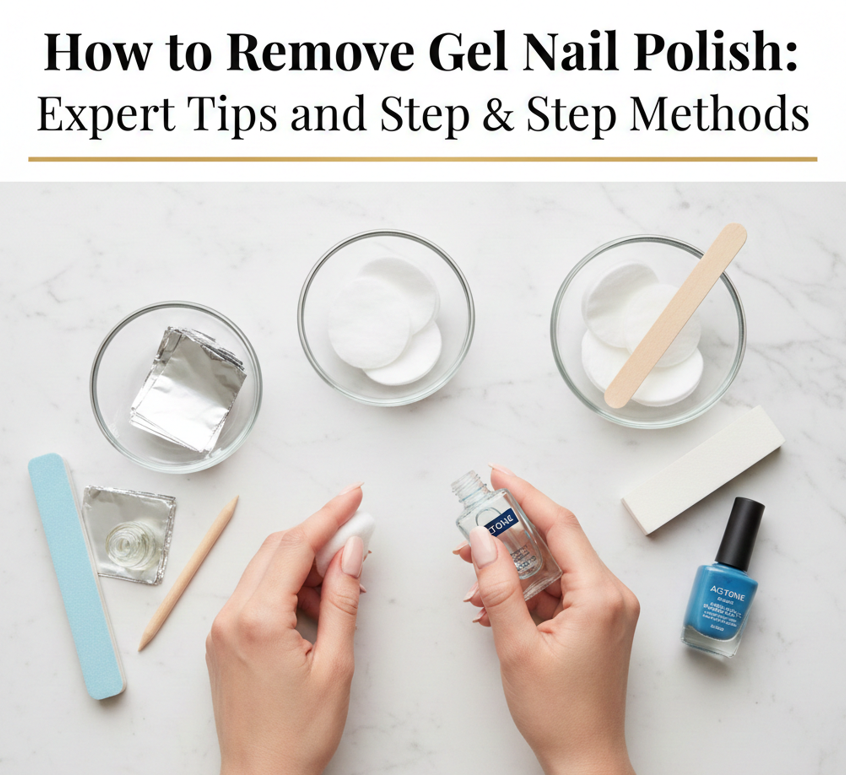
Removing gel nail polish can feel tricky because it adheres more strongly than regular nail polish. Gel polish requires careful removal to prevent damage to natural nails and surrounding skin. Whether you are at home or at a salon, knowing the proper methods ensures your nails stay healthy and intact.
This guide explains how to remove gel nail polish at home, with and without acetone, as well as tips for cleaning gel off clothes, toes, and skin. Step-by-step instructions, professional insights, and safety precautions will help you maintain a flawless manicure while protecting your nails.
How to Remove Gel Nail Polish at Home
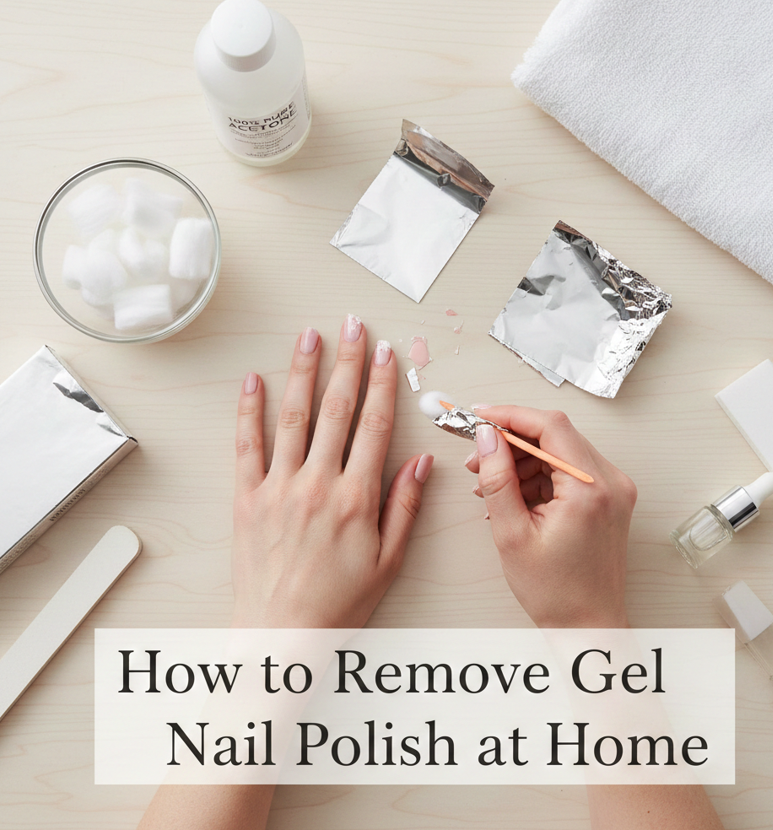
Removing gel nail polish at home can be safe and effective if done with proper techniques. Many people prefer home removal to avoid salon costs and gain convenience. The key is patience and preparation to avoid damaging the nail plate.
• Gather the right tools
Ensure you have acetone, cotton balls, aluminum foil, a nail file, and cuticle oil. These items create a complete setup for safe removal, reducing the risk of scraping or peeling too aggressively.
• Prep your nails gently
Buff the shiny top layer lightly with a nail file. This allows acetone or removal solution to penetrate more effectively, making gel polish soft enough to remove without harsh scraping.
• Use the soak-off method
Soak cotton balls in acetone and wrap them around each nail with aluminum foil. This method softens gel polish slowly and evenly, preventing nail damage while lifting the polish away.
• Apply gentle pressure when removing
After soaking for 10–15 minutes, gently push off gel with a wooden cuticle stick. Avoid forceful scraping, which can lead to thinning or splitting of the natural nail.
• Moisturize nails after removal
Acetone dries nails. Apply cuticle oil and a hand moisturizer to restore hydration and maintain nail strength after gel removal.
• Repeat the process if necessary
For stubborn layers, repeat soaking for 5–10 minutes. Patience ensures clean removal without harm, preserving nail health for your next manicure.
Also Read : How to Get Rid of Gnats: Effective Solutions for Your Home and Plants
How to Remove Gel Nail Polish Without Acetone
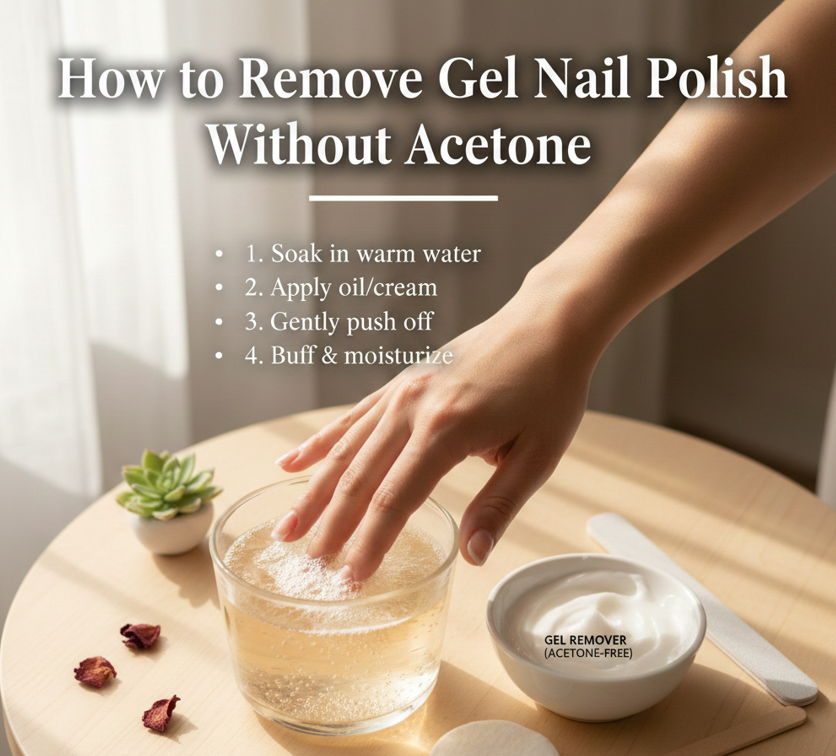
Acetone-free gel removal is ideal for sensitive nails or skin, and for those who prefer natural, less harsh methods. This approach may take slightly longer but minimizes dryness and irritation.
• Use warm water and gentle nail soak
Soaking nails in warm soapy water softens gel polish subtly. Patience is essential because the gel will take longer to loosen compared to acetone-based methods.
• Try oil-based removers
Natural oils like olive oil or coconut oil combined with gentle buffing can help lift thin layers of gel. Oils penetrate the edges and reduce friction, protecting nail integrity.
• Use a wooden cuticle stick carefully
Once gel softens, gently push off the polish with a cuticle stick. Avoid metal tools, which can scratch the nail surface and increase sensitivity.
• Apply exfoliating scrubs
Natural sugar or salt scrubs applied gently can help remove residual gel without chemicals. This also adds a nourishing effect to nails and cuticles.
• Keep nails moisturized throughout
Frequent application of cuticle oil or cream during removal prevents dehydration and strengthens nails.
• Be patient with removal time
Non-acetone methods require longer soak and repeated gentle pressure. Rushing can damage nails, so allow the process to progress naturally.
Also Read : How to Measure Ring Size: Accurate Methods for Men and Women
How to Remove Gel Nail Polish With Acetone
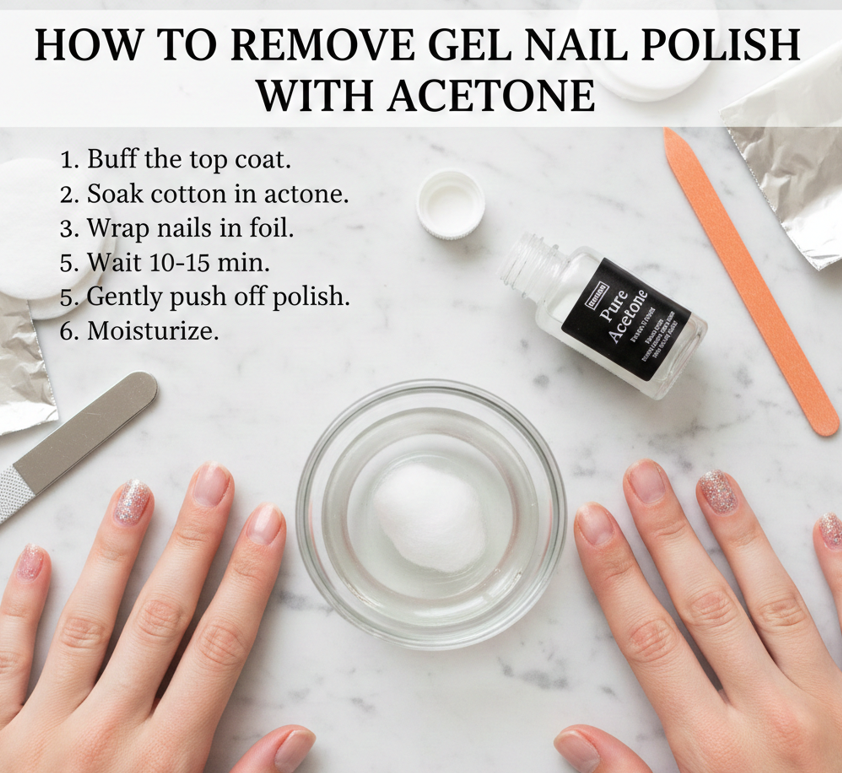
Acetone is the most common and effective gel polish remover. When used correctly, it quickly softens gel polish, making removal fast and efficient. Proper technique is essential to avoid over-drying nails.
• Choose high-quality acetone
Pure acetone is more effective than nail polish removers labeled “acetone-free,” which often take longer and require more effort.
• Protect surrounding skin
Apply petroleum jelly or cuticle cream around the nail to prevent excessive drying and irritation from acetone.
• Use the foil wrap technique
Soak a cotton ball in acetone, place it on the nail, and wrap with aluminum foil. This ensures uniform gel softening and prevents evaporation of acetone.
• Wait for 10–15 minutes
Allow sufficient soaking time for the gel polish to lift. Timing depends on the polish thickness and layers applied.
• Gently push off gel
Use a wooden stick or pusher to remove loosened polish. Avoid forceful scraping to protect the nail plate.
• Hydrate nails immediately
Apply cuticle oil and hand cream after removal to restore moisture and elasticity to nails.
Also Read : How to Get Rid of Mice: A Complete, Practical & Humane Guide
How to Remove Gel Nail Polish From Clothes
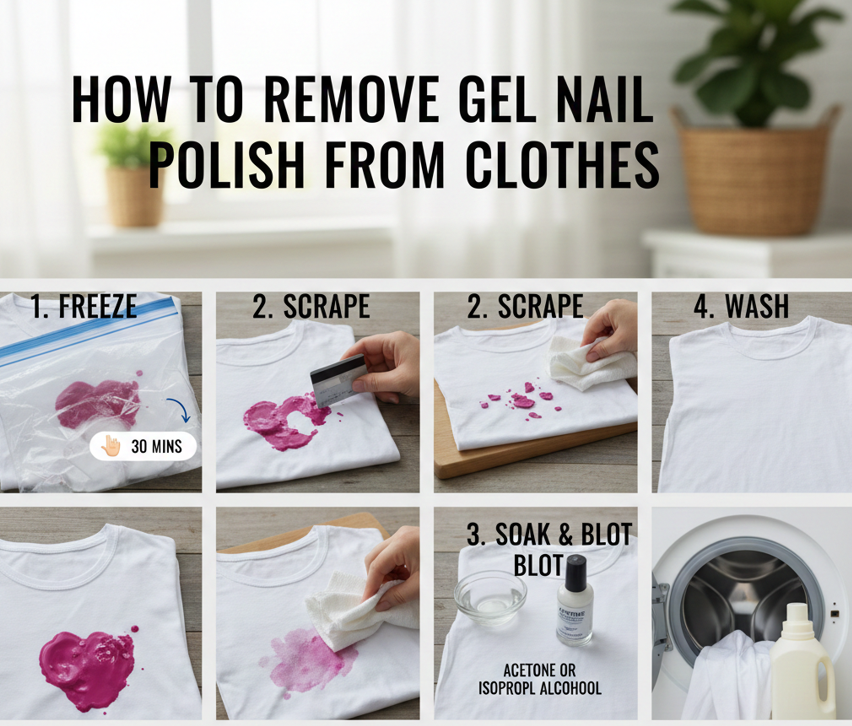
Accidental gel nail polish spills can stain fabrics. Quick action and careful methods prevent permanent damage.
• Act immediately
Fresh gel polish stains are easier to remove than dried ones. Blot gently to absorb excess polish without rubbing it further into the fibers.
• Use acetone cautiously
Apply a small amount on a cotton ball and dab the stain. Test on a hidden fabric area first to prevent discoloration or damage.
• Scrape off excess polish carefully
A dull knife or spoon can gently lift the gel without damaging clothing fibers. Avoid harsh scrubbing, which embeds the stain.
• Apply laundry stain remover
After initial removal, treat the area with a commercial stain remover or mild detergent. Allow the product to penetrate for optimal results.
• Wash as per fabric instructions
Follow the clothing label for washing temperature and method to avoid fabric damage.
• Repeat if necessary
Some gel polish stains may require multiple treatments before fully disappearing. Patience ensures complete removal without harming the garment.
Also Read : Noah Schnapp Height: How Tall He Is and His Growth Over the Years
How to Remove Gel Nail Polish From Toes
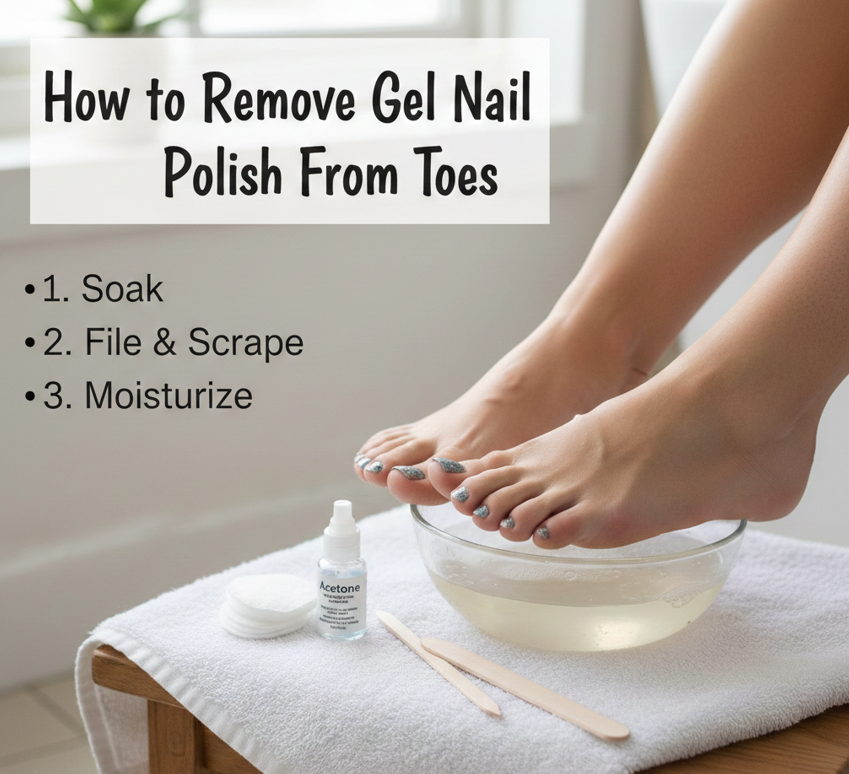
Gel polish on toenails can be challenging due to their thickness and curvature. Proper removal ensures healthy toenails and prevents damage.
• Clean and dry feet before removal
Ensure toenails are free from dirt and moisture. This makes acetone or oil-based removers more effective.
• Use a thicker cotton pad for toenails
Larger cotton pads hold acetone better and conform to the curved surface, ensuring even soaking.
• Wrap with foil for longer soaking
Toenails often need a slightly longer soak than fingernails. Wrapping each toe with foil retains acetone and softens gel thoroughly.
• Push off gel gently with cuticle stick
Once soft, remove polish using gentle pressure along the nail surface. Avoid scraping to prevent toenail splitting.
• Moisturize toes afterward
Acetone can dry toenails. Apply cuticle oil and foot cream to maintain flexibility and strength.
• Maintain foot hygiene
Regular cleaning prevents fungal infections or skin irritation after gel removal.
How to Remove Gel Nail Polish From Skin
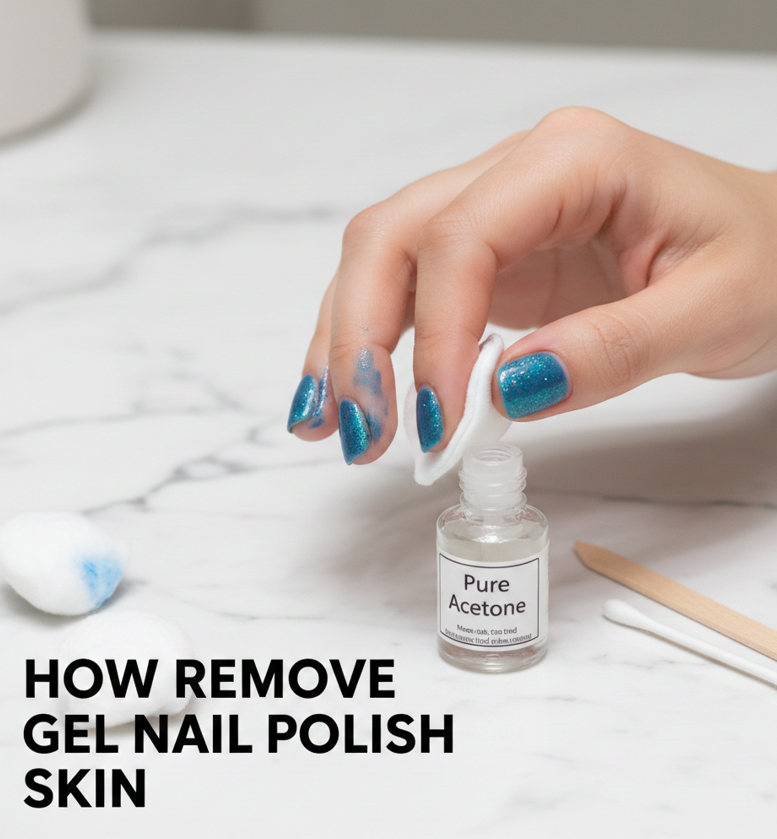
Gel polish often spreads onto cuticles and skin during application. Safe removal preserves skin health and prevents irritation.
• Use acetone-soaked cotton carefully
Apply acetone only on the polish area, avoiding prolonged contact with skin.
• Gently rub with a soft tool
A wooden stick or cotton swab can lift gel from cuticles without scratching the skin.
• Apply nourishing oil afterward
Use coconut or almond oil to restore moisture and prevent redness or peeling.
• Avoid peeling with fingers
Peeling can tear skin or damage nails. Always use a proper tool.
• Clean skin with mild soap
Remove residual acetone to prevent prolonged dryness.
• Repeat as needed
For stubborn spots, repeat the process carefully without overexposure.
Also Read : Gary Oldman Net Worth: How He Built His Hollywood Fortune
How to Remove Gel Nail Polish at Home Easily
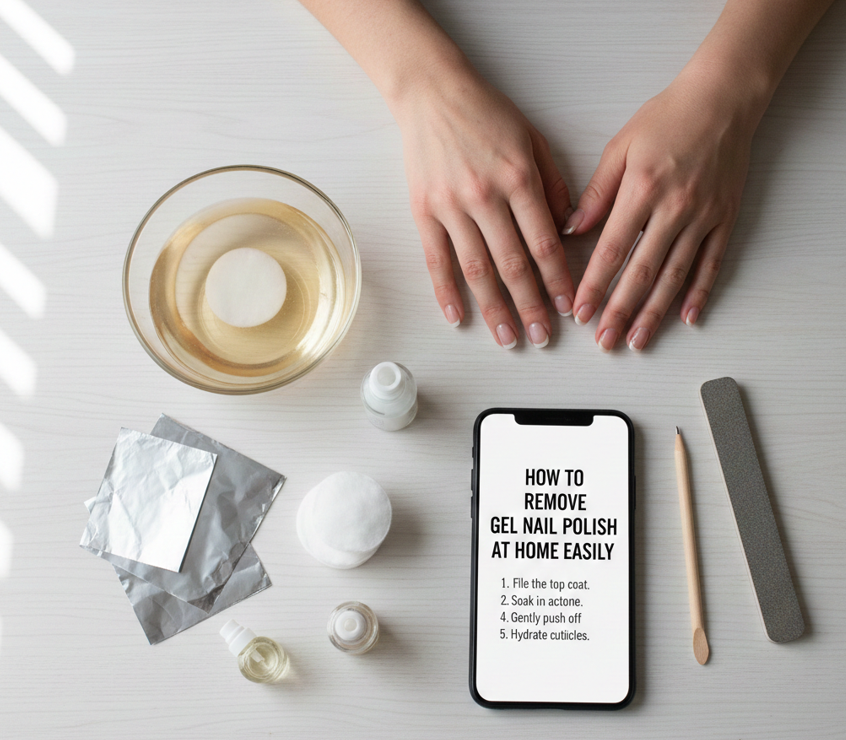
Ease and safety are crucial when removing gel polish at home. Following proven steps reduces effort, time, and risk of nail damage.
• Set up all tools before starting
Having acetone, cotton, foil, cuticle stick, and oil ready ensures smooth workflow.
• Use the foil soak-off method
This is widely recognized as the easiest and safest method for home gel removal.
• Buff gently before soaking
Sanding the shiny surface lightly accelerates removal and reduces soaking time.
• Check progress before forcing removal
Remove foil and gently push polish. If not soft, re-soak rather than scraping.
• Moisturize thoroughly after removal
Prevents brittle nails and ensures a healthy surface for the next manicure.
• Practice patience and consistency
Rushing or skipping steps increases risk of damage. Follow each step carefully for optimal results.
Conclusion
Learning how to remove gel nail polish properly protects nail health while ensuring a clean, smooth surface for your next manicure. Whether using acetone, natural alternatives, or home remedies, patience, gentle technique, and post-removal care are key.
By following the expert steps in this guide, you can remove gel nail polish safely, efficiently, and with minimal damage to nails, skin, or surrounding surfaces.
FAQs
Can I remove gel nail polish without acetone?
Yes, but it requires patience and often takes longer using oils, warm water, or buffing methods.
How long should I soak my nails in acetone?
Typically 10–15 minutes for fingernails and slightly longer for toenails.
Is it safe to peel off gel polish?
No, peeling damages nails and can lead to thinning or splitting.
Can gel polish stain my nails?
Occasionally, dark gel shades may leave slight staining; applying a base coat prevents this.
How often should I remove gel polish at home?
Generally every 2–3 weeks or when nails start to grow out, depending on nail health and polish thickness
Visit For More Information Go To entrepreneurideas