
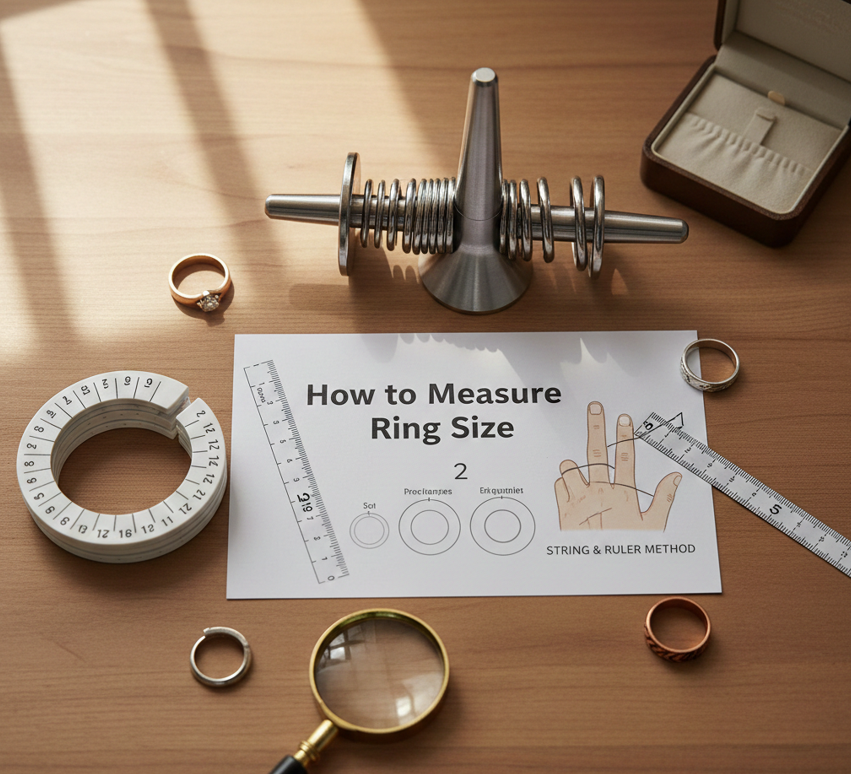
Finding the perfect ring is more than just choosing a style or metal; it starts with knowing the right size. Whether you are buying an engagement ring, wedding band, or fashion ring, learning how to measure ring size accurately ensures comfort, durability, and long-term satisfaction.
Measuring ring size might seem complicated, but with proper techniques and tools, you can determine your size at home or using simple devices. This guide covers all methods, including measuring with tape, string, paper, rulers, and even online tools, for men, women, and unisex rings.
By the end of this article, you will have a full understanding of how to measure ring size in cm, inches, or US/UK sizing standards, along with practical tips to avoid mistakes.
Why Knowing Your Ring Size Matters
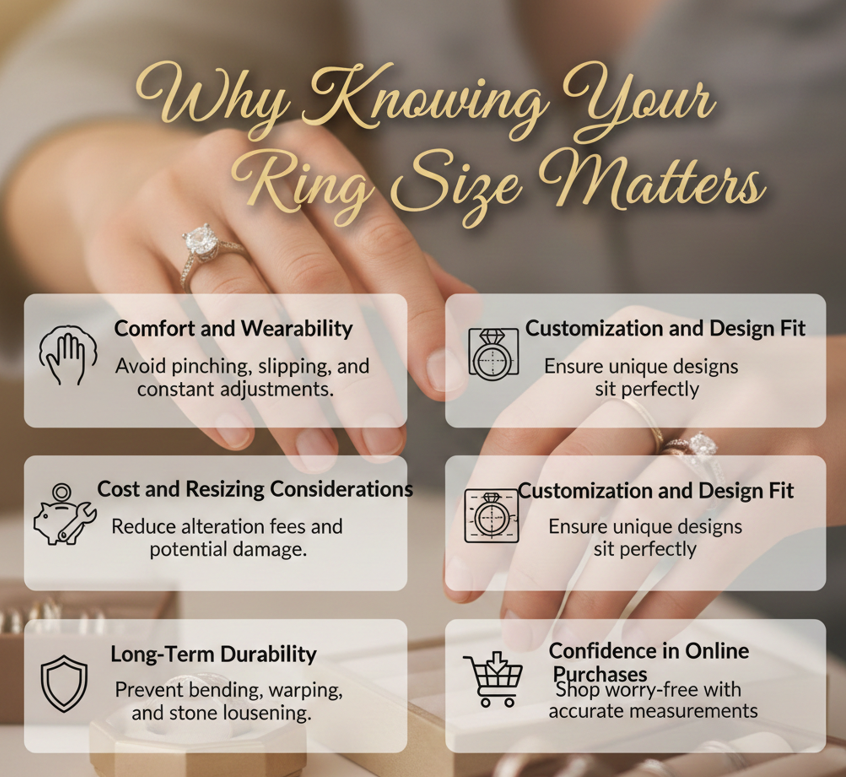
- Comfort and Wearability
A properly sized ring should slide on easily but stay snug enough to avoid slipping off. Rings that are too tight can be uncomfortable or harmful, while loose rings risk loss. Correct measurement ensures you wear your ring comfortably all day. - Cost and Resizing Considerations
Many rings, especially engagement or wedding rings, are expensive. Ordering the wrong size may require resizing, which can be costly or even impossible for certain designs, such as eternity bands. Accurate measurements reduce these risks. - Long-Term Durability
Rings that are too tight can cause stress on metals and gemstones. A correctly sized ring preserves the integrity of the piece and prolongs its lifespan. - Customization and Design Fit
Some rings, especially wide bands or intricate styles, require precise sizing for aesthetic and functional purposes. Knowing your ring size ensures your custom or designer ring fits perfectly. - Confidence in Online Purchases
When buying rings online, sizing accuracy is essential. Understanding measurement methods helps you confidently shop without physical trial, reducing returns and errors.
Also Read : Brooke Schofield Age: Insights Into Her Life and Milestones
Understanding Ring Size Standards

Ring sizes vary depending on countries and regions. Knowing these standards helps in accurate conversions.
US and Canada
- Ring sizes range from 3 to 13 for adults.
- Each full size increases by approximately 0.8 mm in diameter.
UK, Australia, and Ireland
- Letter-based system from A to Z.
- Each letter represents roughly 0.8 mm difference in inner circumference.
European and Asian Sizes
- Numeric system often based on millimeters (e.g., 50 mm inner circumference).
- Japanese sizes range from 1 to 30, based on circumference in mm.
How Size Conversions Work
- 1 US size ≈ 0.8 mm difference in diameter.
- 1 UK letter ≈ 0.8 mm difference in diameter.
- Always check a reliable ring size chart for cross-referencing.
Using proper conversion charts ensures you don’t accidentally order a ring that fits a different regional standard.
How to Measure Ring Size at Home
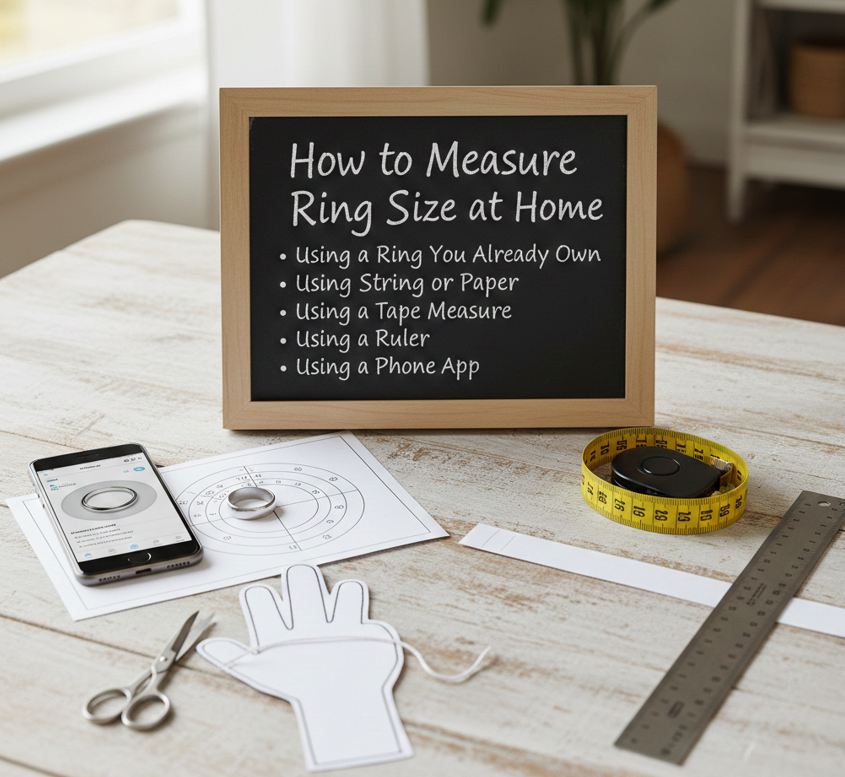
Measuring ring size at home can be done with everyday objects. Here are the most reliable techniques:
1. Using a Ring You Already Own
If you have a ring that fits well:
- Place it on a ruler or measuring tape.
- Measure the internal diameter from edge to edge.
- Use a conversion chart to determine your ring size in US, UK, or EU standards.
Tips:
- Measure at the widest point.
- Avoid measuring from rings that are too tight or worn on the wrong finger.
- Works for both men and women’s rings.
2. Using String or Paper
- Cut a thin strip of paper or string.
- Wrap it snugly around your finger.
- Mark the overlap point.
- Measure the length with a ruler (in cm or inches).
- Use a ring size chart to find the corresponding size.
Tips:
- Wrap string just tight enough to slide over your knuckle.
- Measure more than once to ensure accuracy.
- Works well for how to measure ring size without a sizer.
3. Using a Tape Measure
- Flexible measuring tape can wrap directly around your finger.
- Record the circumference in cm or inches.
- Compare with a size chart to find your ring size.
Advantages:
- Fast and convenient.
- Accurate if tape lies flat without twisting.
4. Using a Ruler
- If no tape or string is available, place your finger on a ruler.
- Measure the widest part of your finger in millimeters.
- Use conversion tables for US, UK, or EU sizes.
Note: Accuracy depends on finger shape; sometimes measuring multiple times is necessary.
5. Using a Phone App
- Certain apps can measure ring size by using your finger or an existing ring.
- Place the ring on your screen or use your finger scan.
- App calculates the size in multiple standards.
Apps are convenient but should be verified with a physical measurement for precise jewelry.
Also Read : Noah Schnapp Height: How Tall He Is and His Growth Over the Years
How to Measure Ring Size in CM and Inches
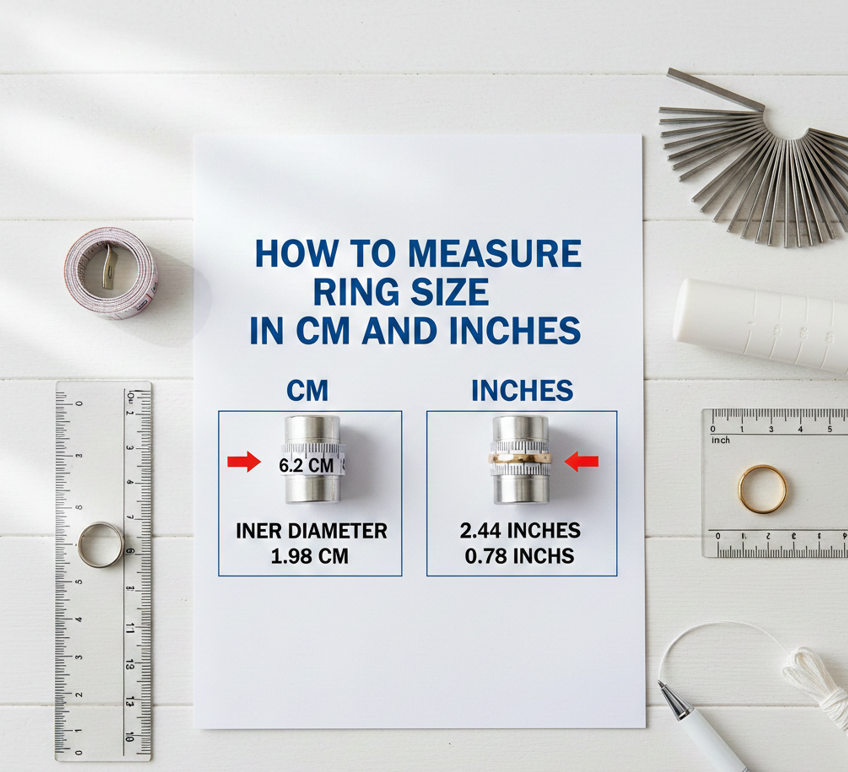
1. Measuring Circumference
- Wrap string or tape around the finger.
- Record measurement in centimeters or inches.
- Use charts to convert circumference to standard ring sizes.
Example:
- 5.0 cm ≈ US size 5
- 6.0 cm ≈ US size 8
2. Measuring Diameter
- Measure internal diameter of an existing ring in mm.
- Convert diameter to ring size using charts.
Tips:
- Inner diameter measurement is often more accurate than circumference.
- Measure multiple times to confirm consistency.
3. Consider Finger Shape
- Fingers swell during the day or in hot weather.
- Measure at different times to get the most accurate average.
4. Wide vs Narrow Bands
- Wider rings require slightly larger sizes.
- If measuring for a band wider than 6 mm, consider sizing up by half a size.
5. Record and Compare
- Keep a log of measurements in both cm and inches.
- Use authoritative charts to cross-check before purchasing.
Also Read : Gary Oldman Net Worth: How He Built His Hollywood Fortune
How to Measure Ring Size for Men and Women
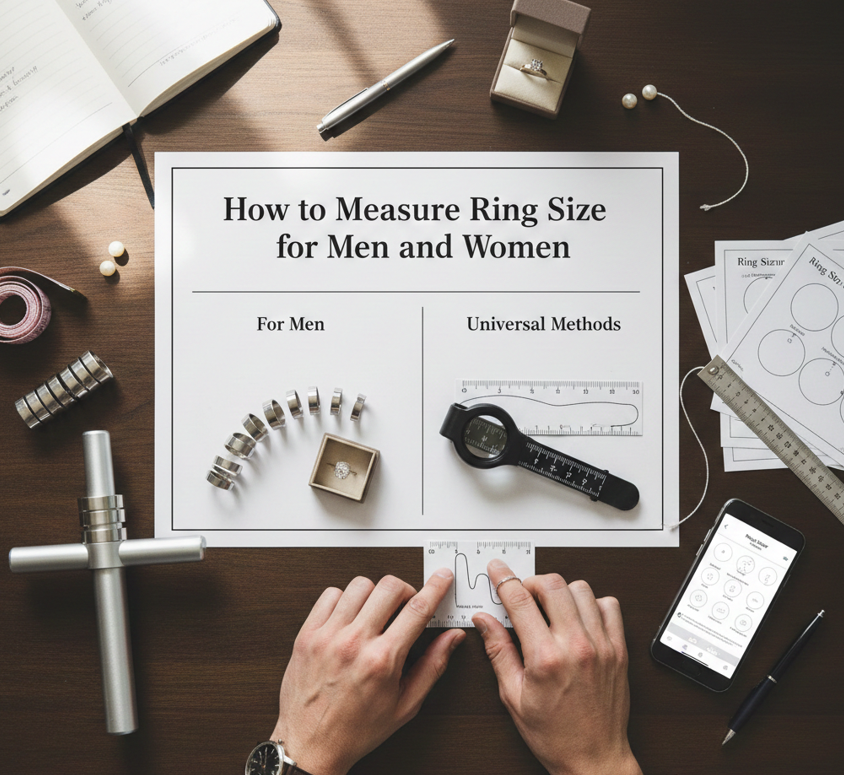
Men’s Ring Sizing
- Men’s fingers are generally larger, often US sizes 8–13.
- Measure multiple fingers as hand size varies.
- Wedding bands may require half or full size adjustments for comfort.
Women’s Ring Sizing
- Women’s sizes are generally US sizes 4–9.
- Knuckle size may affect fit; measure over the knuckle as well.
- Engagement rings require precise measurement for comfort over long wear.
Unisex and Adjustable Rings
- Some rings are designed to adjust slightly.
- Still, knowing the closest accurate size avoids sliding or discomfort.
Tips for Couples
- Measure both partners on the day you buy.
- Consider temperature and time of day for consistent sizing.
Adjusting for Finger Changes
- Fingers can swell with weight changes, pregnancy, or temperature.
- Choose slightly larger if unsure but avoid loose-fitting rings.
How to Measure Ring Size from a Ring
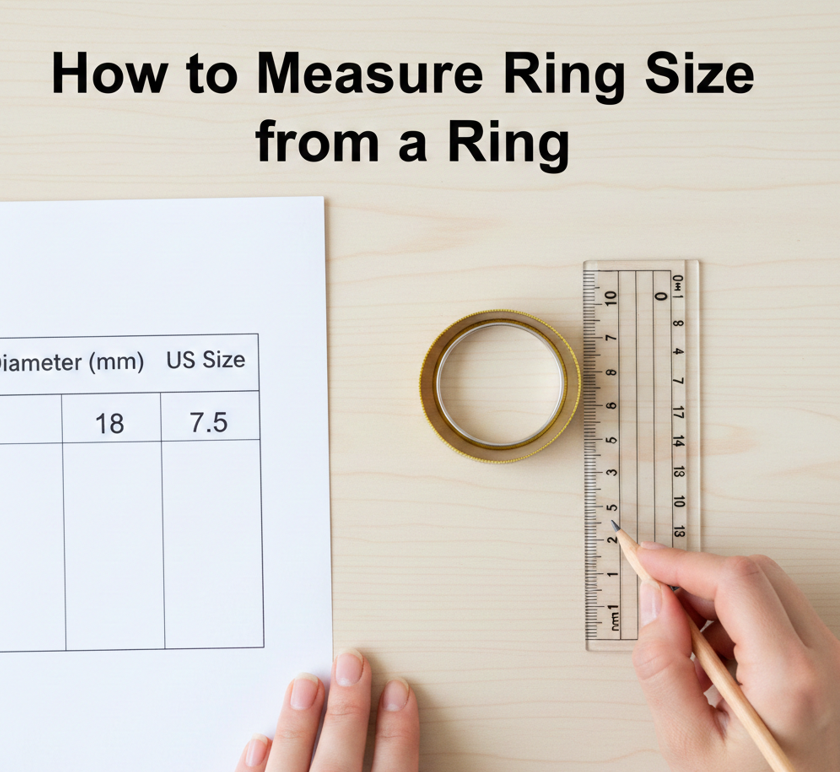
1. Measure Internal Diameter
- Place ring on a ruler.
- Measure edge to edge at the widest point.
- Compare with conversion chart.
2. Use Printable Ring Sizer
- Many jewelers provide PDFs to print and place your ring over.
- Align the inner circle to your ring’s edge for exact size.
3. Use a Caliper
- Vernier calipers can give precise internal diameter measurements.
- Particularly useful for expensive or custom rings.
4. Confirm with Multiple Methods
- Measure diameter and circumference.
- Cross-check with charts to avoid errors.
5. Consider Ring Shape
- Rounded bands vs. flat bands may fit differently.
- Inner measurement accuracy is key.
Also Read : Chase Stokes Height: A Comprehensive Look at His Life and Career
Tools and Methods Without a Ring Sizer
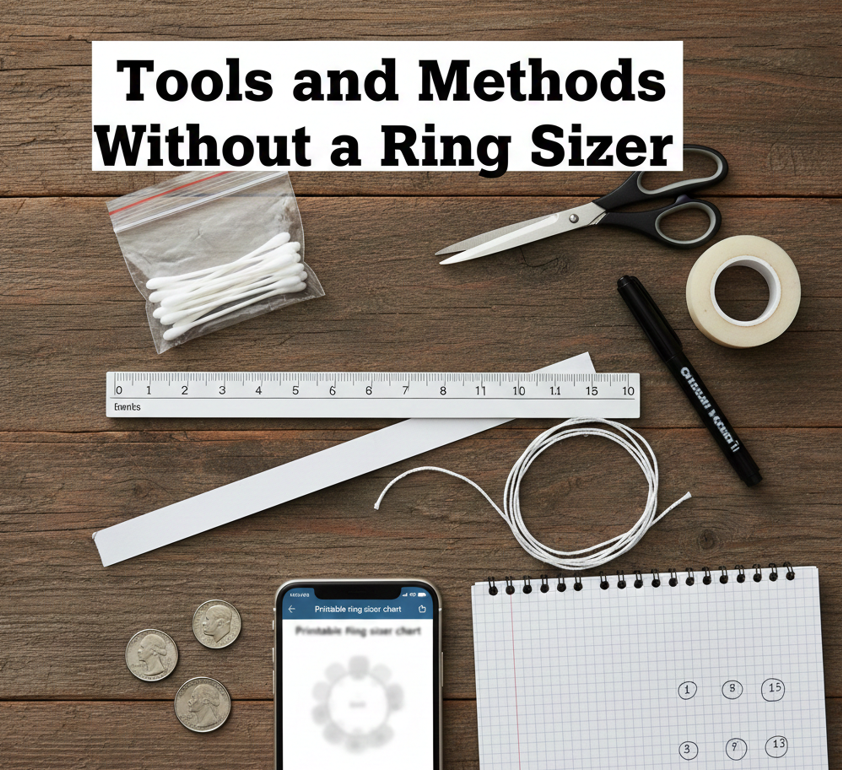
Not everyone has a professional sizer. Alternatives include:
String, Paper, or Tape
- Wrap around finger, mark, and measure with a ruler.
- Convert circumference to standard size.
Online Ring Size Calculators
- Enter circumference or diameter online.
- Receives US, UK, EU sizes instantly.
Printable Ring Guides
- Jewelers provide PDF sizers.
- Print, cut, and measure finger or existing ring.
Using Everyday Objects
- Pencil or coin measurements for diameter approximation.
- Caliper alternatives like small rulers for internal diameter.
Phone Apps
- Use augmented reality or screen measurements.
- Useful for online purchases when a physical sizer is unavailable.
Tips for Accurate Measurements
- Measure at Room Temperature
Fingers swell in heat or cold. Measure at normal temperature for comfort. - Measure Multiple Times
Measure several times to ensure consistency, especially with string or paper. - Consider Knuckle Size
Ring must slide over knuckle easily but remain snug on the base of the finger. - Choose Larger for Wide Bands
Add half size for rings wider than 6 mm to prevent tight fit. - Record Measurements in Both CM and Inches
Converting ensures you can purchase internationally without confusion.
Conclusion
Knowing how to measure ring size accurately is essential for comfort, aesthetics, and confidence in ring purchases. Whether using a ring you already own, a string or paper method, tape, phone apps, or online tools, understanding proper measurement ensures your rings fit perfectly. Always consider finger shape, band width, and regional sizing standards for best results. Accurate sizing saves money, reduces resizing hassles, and guarantees long-term satisfaction with your jewelry
FAQs About Measuring Ring Size
Q1: Can I measure ring size at home accurately?
Yes, using string, paper, tape measure, or an existing ring with a ruler gives accurate results when done carefully.
Q2: Do men’s and women’s sizes differ?
Yes, men’s sizes are generally larger. Use specific charts for men and women to ensure correct fit.
Q3: How do I measure ring size without a sizer?
String, paper, tape, printable guides, phone apps, or existing rings can all provide accurate measurements.
Q4: Should I measure multiple times?
Absolutely. Fingers swell or shrink throughout the day, so multiple measurements ensure consistency.
Q5: Can ring size change over time?
Yes, weight fluctuations, pregnancy, or swelling can slightly alter ring size
Visit For More Information Go To entrepreneurideas