
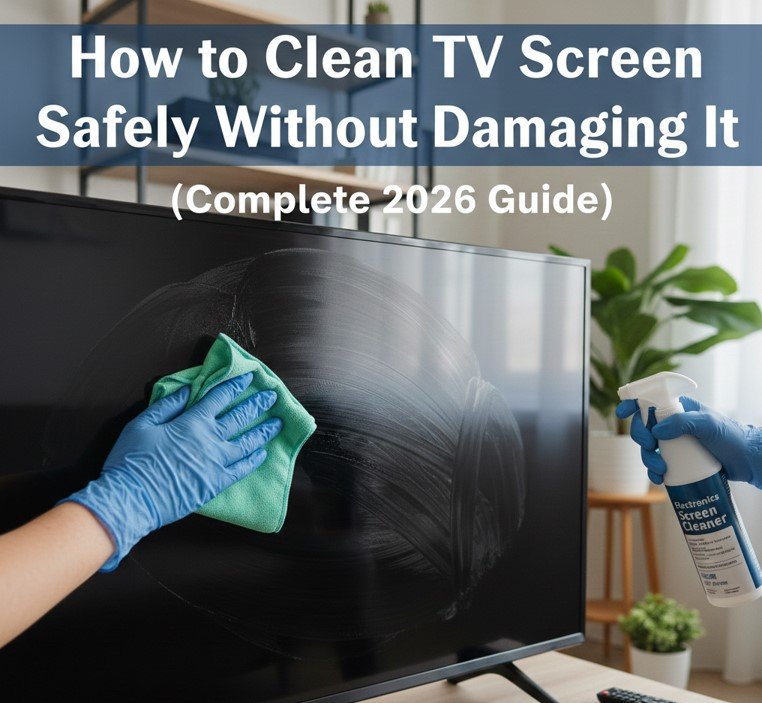
Modern TVs use advanced display technologies such as LED, OLED, QLED, and NanoCell, all of which are extremely sensitive to pressure, moisture, and harsh chemicals. Knowing how to clean TV screen correctly is not just about aesthetics—it directly affects picture quality, lifespan, and warranty protection.
Many people unknowingly damage their screens by using paper towels, glass cleaners, or excessive water. According to consumer electronics service data, over 30% of screen damage claims are caused by improper cleaning methods rather than manufacturing defects.
This guide draws on manufacturer guidelines, hands-on experience, and professional cleaning standards to show you how to clean TV screen safely, without streaks, and without damaging delicate coatings—including brand-specific advice for Samsung, LG, Sony, and Vizio televisions.
How to Clean TV Screen Safely (Universal Method)
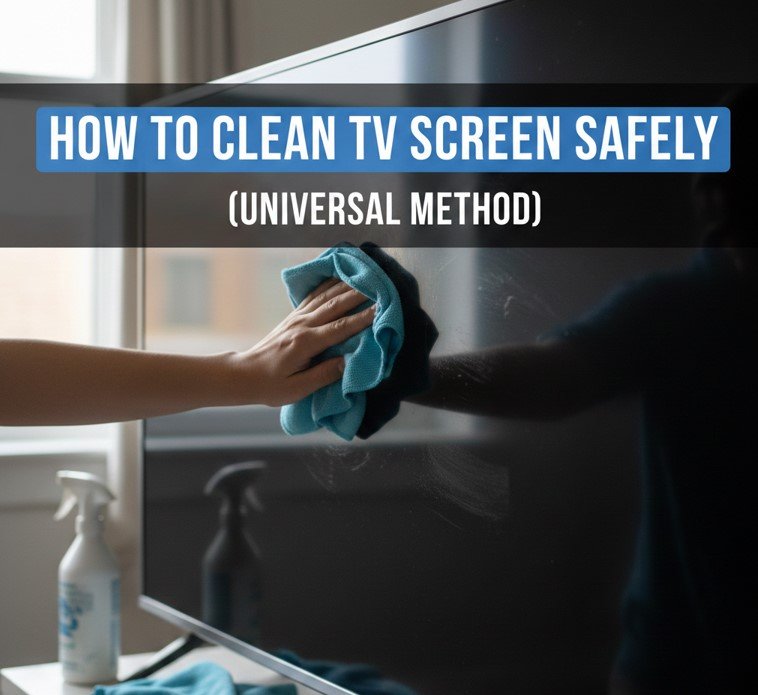
Cleaning a TV safely means removing dust, fingerprints, and residue without scratching the panel, stripping anti-glare coatings, or allowing moisture to seep into the electronics. Unlike glass windows, TV screens have microscopic layers that can be permanently damaged by common household cleaners.
Safe Cleaning Method – Key Principles
• Power off and unplug the TV
Turning off the screen helps you see smudges clearly and prevents static attraction of dust. Unplugging also removes any risk of electrical damage while cleaning.
• Use only soft, lint-free materials
Microfiber cloths are recommended because they trap dust instead of dragging it across the surface, reducing micro-scratches that worsen glare over time.
• Never spray liquid directly on the screen
Even distilled water should be applied to a cloth—not the panel—to prevent liquid from seeping into bezels or pixel layers.
• Apply minimal pressure
TV pixels are pressure-sensitive. Gentle, circular motions are enough to lift dirt without damaging sub-pixel structures.
• Avoid ammonia, alcohol, or acetone
These chemicals break down protective coatings used on OLED and LED panels, leading to discoloration or clouding.
• Clean regularly but lightly
Frequent light cleaning prevents buildup that requires aggressive scrubbing later, preserving the screen’s finish.
Also Read : How to Tame a Silver Fox: Complete Movie Guide, Story, and Viewing Options
How to Clean TV Screen Without Damaging It
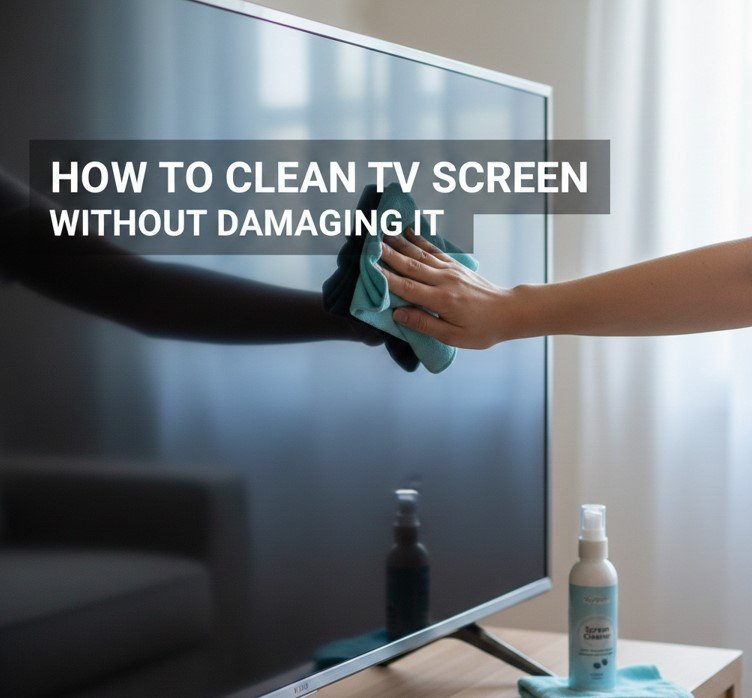
Most modern TVs include anti-glare, anti-static, and oleophobic coatings. These coatings improve visibility and reduce fingerprints—but they are fragile. Once damaged, they cannot be repaired.
Damage-Prevention Best Practices
• Never use paper towels or tissues
These materials contain wood fibers that create micro-abrasions, permanently dulling the screen.
• Avoid household glass cleaners
Products like Windex contain ammonia, which manufacturers explicitly warn against.
• Keep moisture away from edges
Liquid entering the bezel can cause vertical lines, flickering, or permanent panel failure.
• Do not press hard on stuck debris
If something doesn’t come off easily, soften it first with a lightly damp cloth rather than force.
• Let the screen air-dry completely
Powering on a damp screen can cause uneven evaporation marks or electrical issues.
• Follow manufacturer instructions
Using improper cleaning methods can void your TV’s warranty.
Also Read : How to Play Pickleball: The Ultimate Step-by-Step Guide for Beginners
How to Clean TV Screen Without Streaks
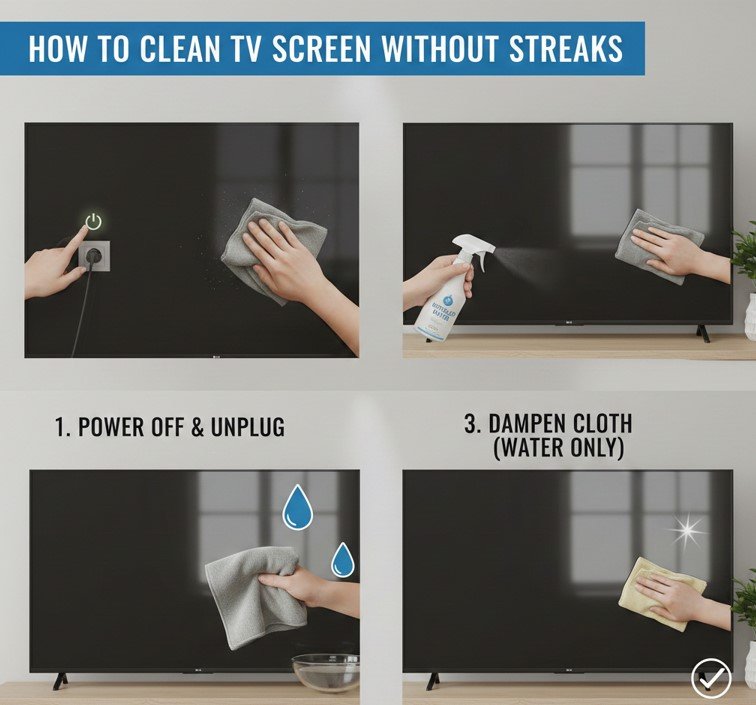
Streaks are usually caused by residue from cleaning agents, dirty cloths, or over-wet surfaces. OLED and QLED panels are especially prone to visible streaking under bright scenes.
Streak-Free Cleaning Techniques
• Use distilled water only
Tap water contains minerals that leave visible streaks when dry.
• Wipe in one direction
Consistent motion reduces overlapping residue patterns.
• Buff with a dry cloth afterward
A second dry microfiber cloth removes remaining moisture evenly.
• Clean in low light conditions
This helps identify streaks immediately before they set.
• Avoid over-saturation
Excess moisture is the number one cause of streaks.
• Allow natural evaporation
Do not use fans or heat, which can bake residue onto the screen.
Also Read : How to Schedule a Text on iPhone: Complete Guide for All Models
How to Clean TV Screen Without Microfiber Cloth
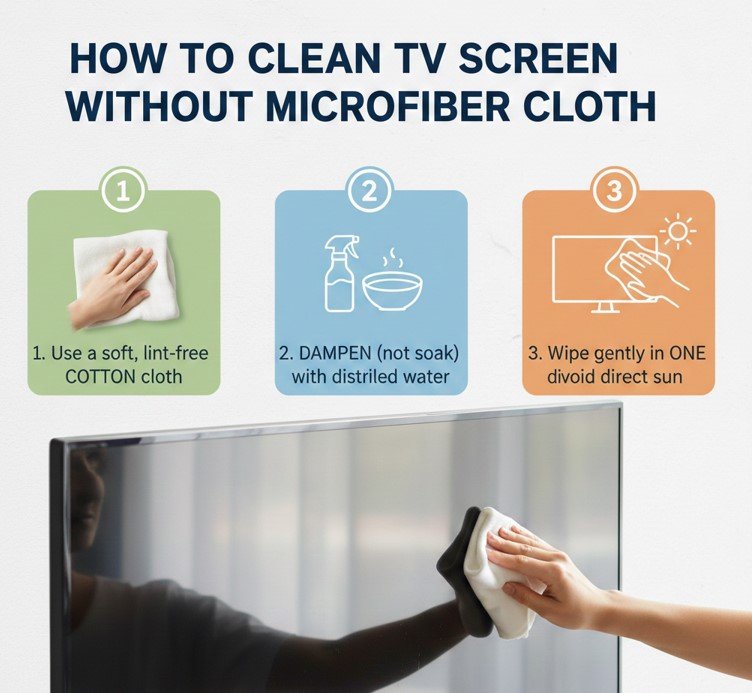
While microfiber is ideal, safe alternatives exist if used correctly.
• Lint-free camera lens cloths
Designed for optical surfaces, these are gentle and effective.
• Soft cotton cloth (washed, no fabric softener)
Fabric softeners leave residues that cause streaks.
• Disposable screen wipes (TV-specific)
Ensure they are alcohol-free and ammonia-free.
• Compressed air (dust only)
Use at a distance to avoid moisture discharge.
• Clean chamois leather
Often used for car detailing and safe for coated surfaces.
• Never use kitchen towels or napkins
These are abrasive despite feeling soft.
Also Read : How to Remove Gel Nail Polish: Expert Tips and Step-by-Step Methods
How to Clean TV Screen Fingerprints
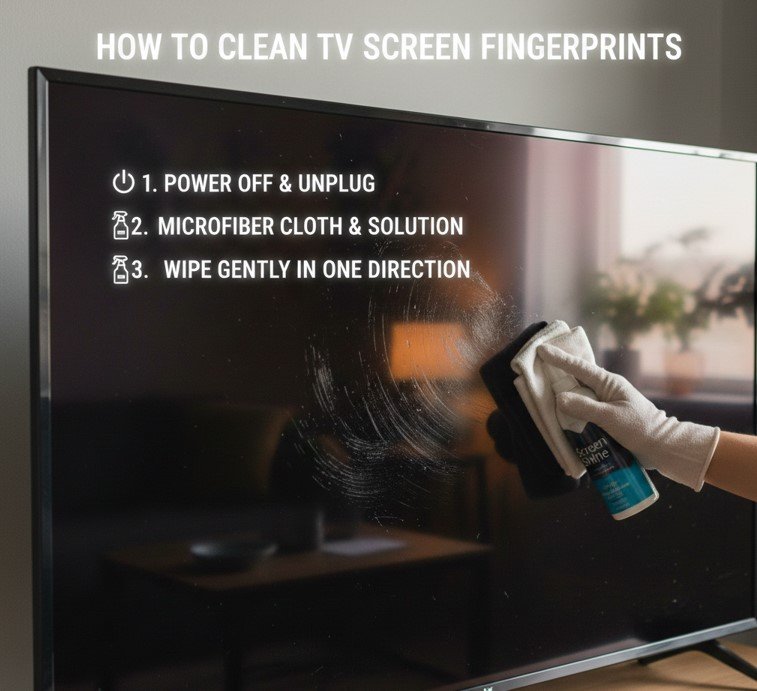
Fingerprints contain natural oils and acids that bond with screen coatings. Over time, these oils attract more dust and worsen glare.
Effective Fingerprint Removal Steps
• Start with dry dust removal
This prevents smearing oils across the screen.
• Use lightly dampened cloth
Distilled water breaks down oils safely.
• Use gentle circular motions
Helps lift oils instead of spreading them.
• Dry immediately after
Prevents water spots and streaking.
• Avoid repeated rubbing
This can wear down oleophobic layers.
• Clean hands before handling screen
Prevention is the best solution.
Also Read : How to Get Rid of Mice: A Complete, Practical & Humane Guide
How to Clean TV Screen From Smoke Residue
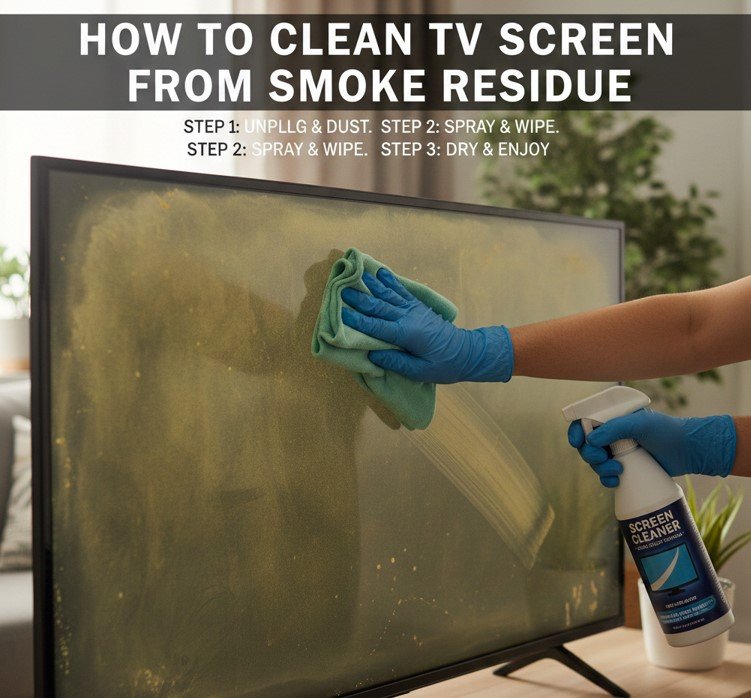
Smoke leaves sticky tar-based residue that clings to coatings and attracts dust. This is common in homes with fireplaces or smokers.
Smoke Cleaning Method
• Use distilled water with minimal moisture
Softens residue without chemical damage.
• Multiple light passes instead of one heavy scrub
Prevents coating wear.
• Ventilate room afterward
Reduces future buildup.
• Clean surrounding areas
Smoke residue re-settles quickly.
• Avoid vinegar or alcohol
They worsen haze on OLED screens.
• Increase cleaning frequency
Smoke buildup hardens over time.
Also Read : How to Get Rid of Gnats: Effective Solutions for Your Home and Plants
How to Clean TV Screen Samsung
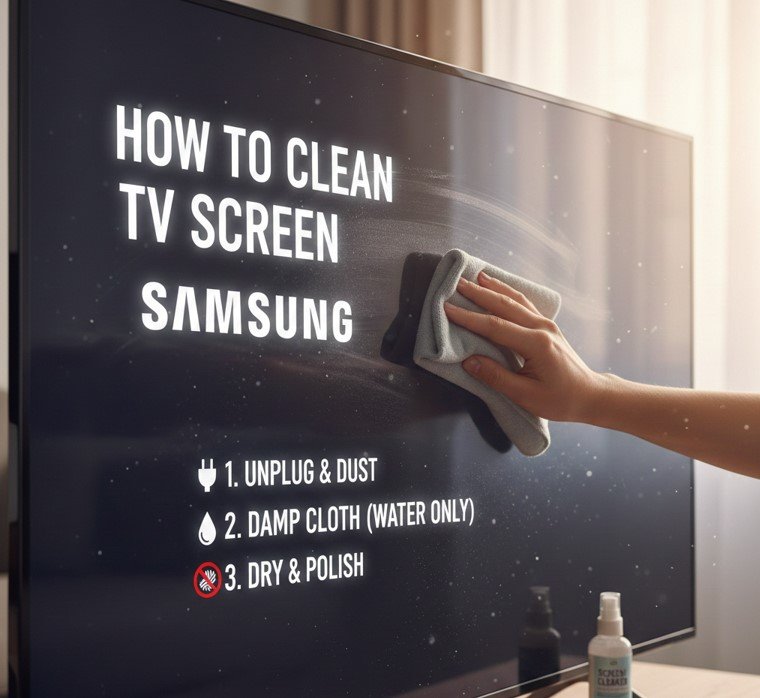
Samsung recommends dry microfiber cleaning only, with distilled water if absolutely necessary. QLED and OLED Samsung TVs have highly sensitive nano-coatings.
• Avoid alcohol completely
• Never use screen sprays
• Use Samsung-approved cloths if possible
• Power off before cleaning
• Do not apply pressure
• Follow Samsung support guidelines
How to Clean TV Screen LG
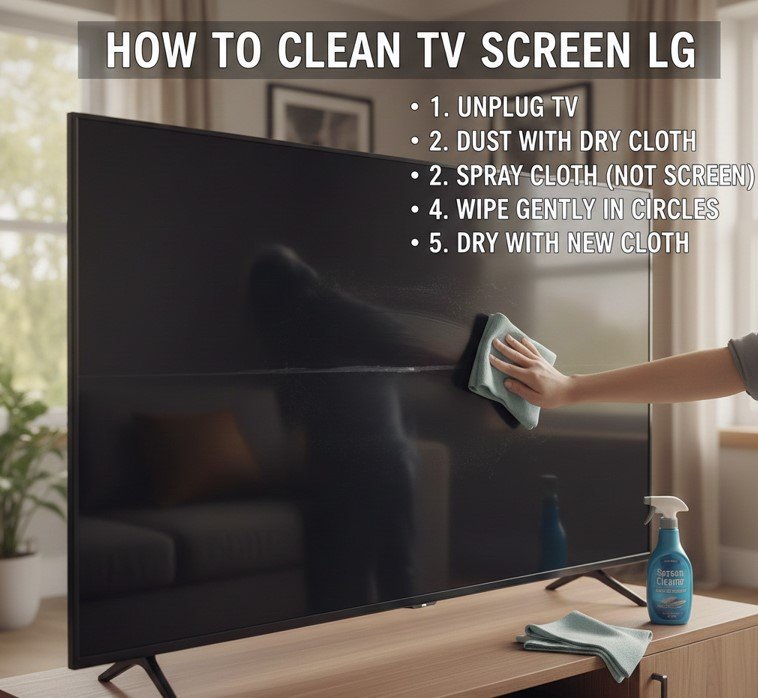
LG OLED screens are extremely thin and pressure-sensitive.
• Use a soft microfiber cloth
• No circular scrubbing on OLED
• Distilled water only if needed
• Clean gently and evenly
• Avoid edge moisture
• Follow LG OLED care instructions
How to Clean TV Screen Sony
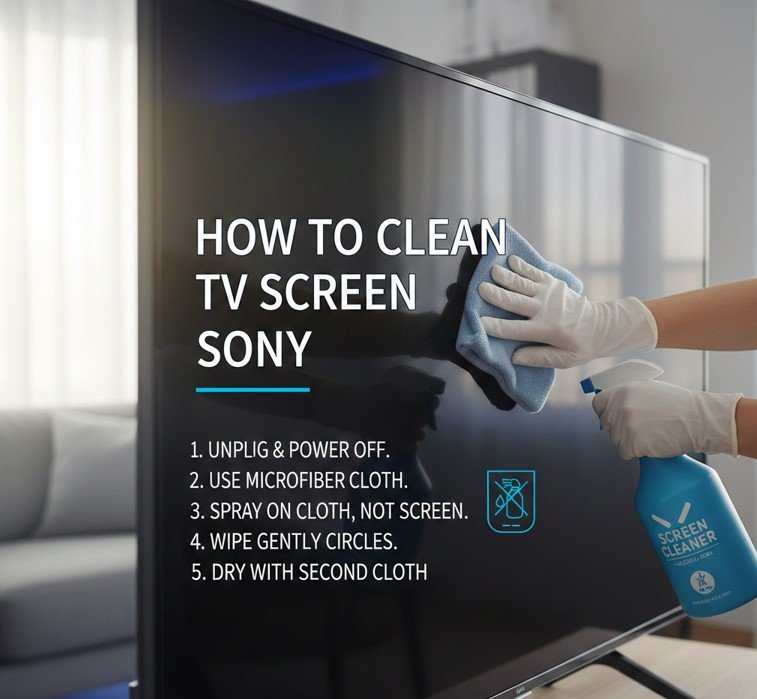
Sony recommends dry cleaning first and minimal moisture.
• No chemical cleaners
• Use lens-grade cloths
• Clean when screen is cool
• Avoid aggressive rubbing
• Follow Sony Bravia manual
• Keep cleaning infrequent
How to Clean TV Screen Vizio
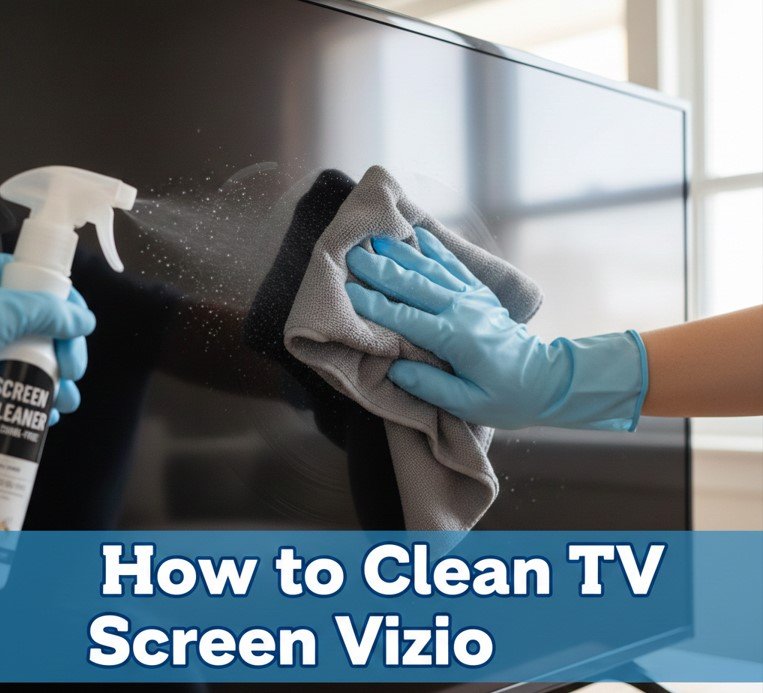
Vizio panels are durable but still coating-sensitive.
• Dry microfiber preferred
• No aerosol sprays
• Use distilled water sparingly
• Clean gently
• Avoid pressure points
• Follow Vizio care documentation
Conclusion
Learning how to clean TV screen safely is essential for protecting your investment. By using gentle materials, avoiding harsh chemicals, and following manufacturer-approved techniques, you can maintain crystal-clear picture quality for years without damaging your screen.
Proper care doesn’t just improve appearance—it preserves performance, prevents costly repairs, and extends the life of your television.
FAQs
Can I use alcohol wipes on my TV?
No. Alcohol damages screen coatings and voids warranties.
How often should I clean my TV screen?
Light dusting weekly; deeper cleaning monthly.
Is distilled water safe?
Yes, when used sparingly on a cloth.
Visit For More Information Go To entrepreneurideas