
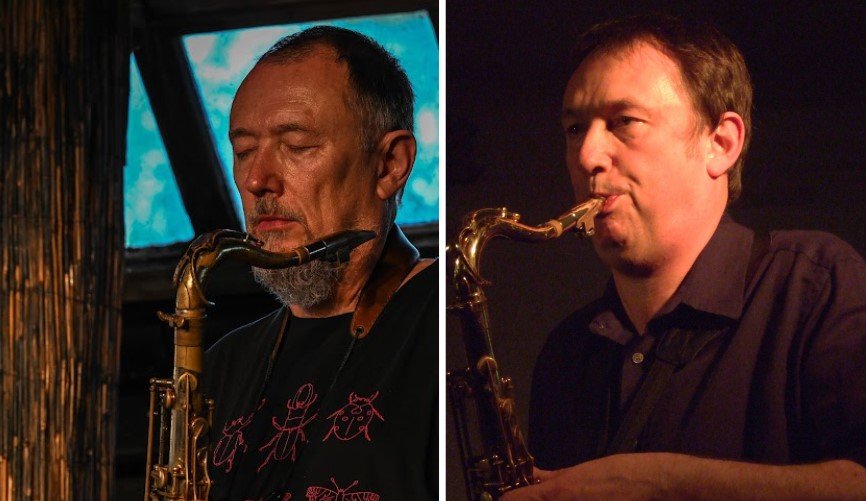
Among the most inventive and influential figures in contemporary jazz and experimental music, John Butcher has earned international acclaim for his innovative approach to the saxophone. Known for pushing the boundaries of sound, his music blends improvisation, acoustics, and artistic exploration in ways that defy convention. A leading figure in avant-garde performance, Butcher has built a career defined by creativity, technical mastery, and an unrelenting passion for musical discovery.
Quick Bio
| Full Name | John Butcher |
|---|---|
| Date of Birth | April 14, 1954 |
| Age (as of 2025) | 71 years |
| Place of Birth | Brighton, England |
| Nationality | British |
| Profession | Saxophonist, Composer, Improviser |
| Famous For | Experimental saxophone techniques and improvisational performances |
| Education | PhD in Theoretical Physics, University of Surrey |
| Musical Genres | Jazz, Avant-garde, Free Improvisation, Experimental Music |
| Years Active | 1980 – Present |
| Major Collaborations | Derek Bailey, Evan Parker, Sophie Agnel, Phil Minton |
| Notable Albums | The Geometry of Sentiment, Invisible Ear, Trace, Resonant Spaces |
| Instruments | Tenor Saxophone, Soprano Saxophone |
Early Life and Background

John Butcher was born in Brighton, England, on April 14, 1954. Growing up in the post-war era of the United Kingdom, he was surrounded by a cultural landscape rich in artistic innovation and experimentation. His early years were marked by a curiosity about both sound and science — two passions that would later merge into his creative identity.
As a child, Butcher was drawn to music not just as a form of entertainment but as a means of understanding the world. His exposure to classical and jazz musicians sparked an interest in composition and performance. Yet, it wasn’t until his teenage years that he developed a deep connection with the saxophone. Inspired by the works of early jazz greats like John Coltrane and Ornette Coleman, he began exploring the expressive potential of the instrument, developing a unique sound that would later define his career.
Age and Date of Birth

Born in 1954, John Butcher belongs to a generation that experienced the evolution of jazz from traditional forms to more abstract, experimental expressions. Now in his early seventies, he remains as active and innovative as ever. His decades-spanning career reflects a lifetime of dedication to sound exploration and creative improvisation.
The era he grew up in — the 1960s and 1970s — was a revolutionary period for music. Avant-garde jazz, electronic experimentation, and new compositional methods were taking center stage. This environment greatly influenced Butcher, helping shape his open-minded approach to performance and composition.
Physical Appearance

John Butcher carries a calm, intellectual demeanor that mirrors the thoughtfulness of his music. With his silver hair and thoughtful gaze, he projects the quiet confidence of an artist who has spent a lifetime mastering his craft. On stage, his movements are precise and deliberate, each note delivered with intention and control.
His performances are often described as meditative and commanding, with a physical intensity that reflects his deep engagement with sound. Audiences are drawn not only to his music but also to his presence — a balance of focus, humility, and creative energy that captivates listeners around the world.
Education and Musical Training
Before fully dedicating himself to music, John Butcher pursued an academic path that revealed his analytical mind. He earned a PhD in Theoretical Physics from the University of Surrey, where he studied subatomic particles and mathematical models. This background in science profoundly influenced his approach to sound, structure, and acoustics.
While completing his studies, Butcher continued to refine his saxophone skills, teaching himself advanced techniques and exploring the relationship between sound and space. His scientific understanding of resonance and frequency would later inform his experimental compositions and site-specific performances.
After completing his doctorate, he decided to focus entirely on music — a turning point that would lead to a groundbreaking career in jazz and improvisation.
Career Beginnings
John Butcher began his professional music career in the late 1970s, performing in small jazz and improvisation venues across the UK. Initially, he collaborated with local musicians exploring the boundaries of sound and composition. His early recordings reflected his fascination with free improvisation and the natural acoustic properties of his instrument.
One of his earliest and most significant collaborations was with guitarist Derek Bailey, a pioneer of free improvisation. Working with Bailey exposed Butcher to a new realm of creativity — one that emphasized spontaneity and sonic exploration over traditional harmony or rhythm. These experiences solidified his place within the experimental jazz community.
Rise to Prominence
During the 1980s and 1990s, John Butcher emerged as one of the leading figures in avant-garde saxophone performance. His solo recordings showcased his extraordinary control over extended techniques, including circular breathing, multiphonics, and overtones.
Albums like 13 Friendly Numbers and Invisible Ear brought him international recognition, earning praise for their innovative use of acoustics and silence. He also began performing globally, appearing at major music festivals and collaborating with artists from diverse backgrounds — from free jazz ensembles to electroacoustic composers.
By the turn of the millennium, Butcher’s reputation as a sound pioneer had been firmly established, and he was regarded as one of the most respected experimental saxophonists in Europe.
Musical Style and Influences
John Butcher is renowned for his unconventional and exploratory playing style. His approach to the saxophone redefines what the instrument can do, transforming it from a melodic voice into a tool for pure sonic exploration.
Rather than relying on standard jazz phrasing, Butcher focuses on texture, resonance, and spatial acoustics. His performances often involve real-time interaction with the environment, using the acoustics of a room or even natural surroundings to shape his sound.
Influenced by free jazz pioneers, contemporary classical composers, and electroacoustic innovators, Butcher has developed a musical language that is both intellectual and emotionally profound. His work bridges the gap between composition and improvisation, science and art, precision and spontaneity.
Major Works and Achievements
Throughout his career, John Butcher has released numerous influential recordings that have redefined the possibilities of the saxophone. Some of his most notable works include:
- The Geometry of Sentiment (2007) — an exploration of structure and improvisation.
- Resonant Spaces (2008) — recorded in unique acoustic locations across Scotland.
- Trace (2010) — a collaboration blending electronic textures with acoustic performance.
- Invisible Ear (2003) — praised for its subtle soundscapes and minimalist beauty.
He has also been honored with residencies, grants, and commissions from leading art institutions and has performed at major venues worldwide, including the Huddersfield Contemporary Music Festival and Berlin Jazz Festival.
Personal Life and Relationships
While John Butcher is known for his professional achievements, he maintains a private personal life. He is described by colleagues as thoughtful, humble, and deeply committed to his art. Though not much is publicly known about his family or relationships, his personality often shines through his music — introspective, curious, and deeply human.
His ability to channel emotion through experimental forms of expression reflects a sensitivity that resonates with audiences, regardless of their familiarity with avant-garde music.
Collaborations and Notable Performances
Over the years, John Butcher has collaborated with many renowned musicians, including Phil Minton, Sophie Agnel, Mats Gustafsson, and Evan Parker. These partnerships allowed him to explore a wide range of musical dialogues — from improvisational duets to large ensemble works.
His performances have taken him to international stages in Europe, North America, and Asia. Notably, his Resonant Spaces project stands out as a landmark achievement, featuring performances in unconventional acoustic environments such as caves, galleries, and abandoned buildings — turning each location into a musical collaborator.
Net Worth and Professional Success
With a career spanning over four decades, John Butcher has achieved both artistic and professional success. His estimated net worth is modest compared to mainstream performers but reflects a respected and sustainable career in the global jazz and experimental scene.
Beyond financial earnings, his true success lies in his enduring influence and the respect he commands among peers, scholars, and listeners. He has built a legacy of innovation that continues to inspire emerging musicians and sound artists around the world.
Legacy and Continuing Influence
The legacy of John Butcher rests on his fearless exploration of sound and his contribution to redefining the saxophone’s role in contemporary music. His work has inspired countless musicians to experiment with new techniques and to view improvisation as a form of discovery rather than performance.
Today, he remains active as a performer and recording artist, constantly exploring new territories of sound. His influence reaches across generations and genres, making him one of the most respected figures in modern improvisation and experimental composition.
Conclusion
John Butcher stands as a testament to the power of creativity, intellect, and passion in shaping modern music. From his roots in Brighton to his global influence as an avant-garde saxophonist, he has transformed the way audiences perceive sound and improvisation. His music challenges listeners to hear the world differently — to find beauty in the unexpected and meaning in the abstract. Through decades of innovation, John Butcher has proven that true artistry knows no limits.
FAQs
Who is John Butcher?
John Butcher is an English saxophone player and composer known for his experimental, improvisational, and avant-garde approach to music.
Where was John Butcher born?
He was born in Brighton, England, on April 14, 1954, and grew up with a passion for both music and science.
What is John Butcher famous for?
He is widely recognized for his innovative saxophone techniques and contributions to modern jazz and experimental sound art.
What instruments does John Butcher play?
John Butcher primarily plays the tenor and soprano saxophone, exploring their full acoustic and expressive potential.
What is John Butcher’s musical style?
His music focuses on free improvisation, extended techniques, and the interaction between sound and space.
What are some notable works by John Butcher?
His acclaimed albums include Resonant Spaces, The Geometry of Sentiment, and Invisible Ear.
Did John Butcher study music formally?
He holds a PhD in Theoretical Physics from the University of Surrey, which influences his scientific approach to sound.
Has John Butcher collaborated with other artists?
Yes, he has worked with many artists, including Derek Bailey, Phil Minton, and Evan Parker.
What genre does John Butcher belong to?
He is associated with free jazz, avant-garde, and experimental music, known for redefining saxophone performance.
Why is John Butcher important in modern music?
John Butcher is celebrated for expanding the boundaries of jazz and improvisation, inspiring generations of musicians worldwide.
Visit For More Information Go To entrepreneurideas