
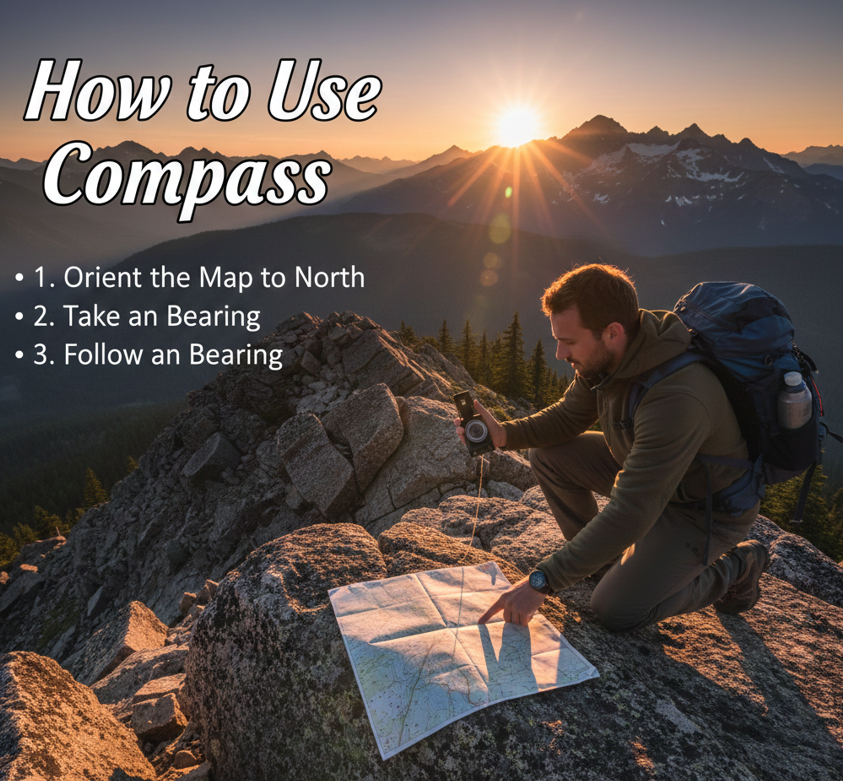
A compass is one of the most essential tools for navigation, whether you are exploring the wilderness, learning orientation skills, or playing games like Minecraft. Understanding how to use a compass correctly helps you determine direction, avoid getting lost, and plan routes efficiently.
This guide provides detailed instructions for beginners, children, and even gamers, covering compass use with or without maps. With step-by-step explanations, examples, and practical tips, you’ll gain confidence in navigating any environment.
Understanding the Basics of a Compass
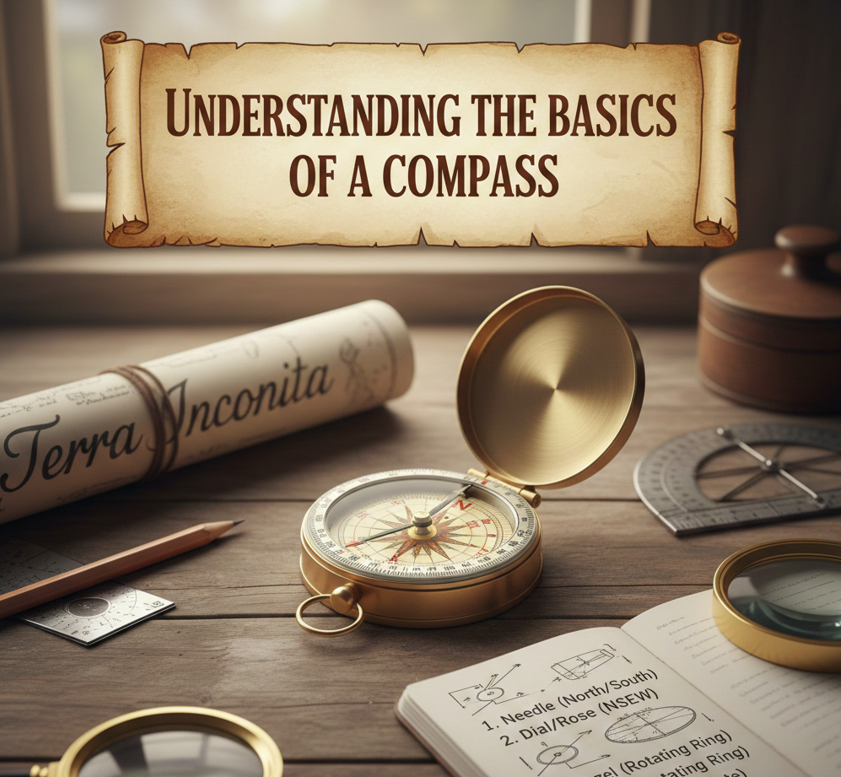
A compass is a navigational instrument that shows direction relative to the Earth’s magnetic poles. The most common types are magnetic compasses, which have a magnetized needle pointing north. Understanding the core components and functions of a compass is essential before using it effectively.
. Magnetic Needle: The needle is magnetized and aligns with the Earth’s magnetic field, indicating magnetic north. This simple feature allows you to orient yourself accurately in any environment. Proper handling avoids errors caused by nearby metal objects or electronic interference.
. Rotating Bezel: Many compasses have a rotating bezel marked with degrees (0–360°). This feature allows you to set a specific heading, follow bearings, and plan precise routes during outdoor activities. Understanding how to read the bezel is crucial for accurate navigation.
. Baseplate: The baseplate is a flat surface often marked with a ruler or scale. It helps in measuring distances on maps, aligning the compass with map features, and drawing accurate navigation lines.
. Direction of Travel Arrow: This arrow indicates the direction you need to move once you have set your bearing. Following this arrow ensures you stay on course.
. Orienting Lines and Arrow: These are inside the compass housing and align with map grids or magnetic north. They assist in adjusting for declination and improving precision when using maps.
. Declination Adjustment: Magnetic north and true north differ slightly depending on your location. Compasses with declination adjustment allow you to compensate for this variation, improving accuracy during navigation.
Also Read : How to Quit a Job: A Complete Guide to Leaving Gracefully
How to Use a Compass in Minecraft
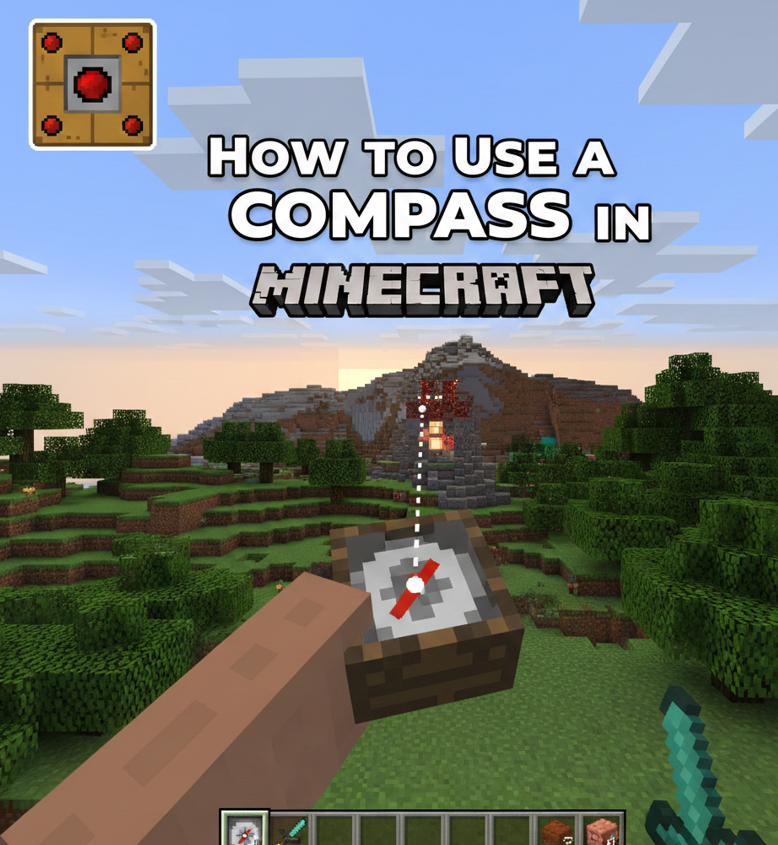
Minecraft uses compasses differently from real-life navigation. Instead of pointing to magnetic north, the Minecraft compass points to your spawn location, helping you find your way back home.
. Crafting a Compass: You need four iron ingots and one redstone. Place them in the crafting grid to make a compass, which becomes an essential tool for exploring. Crafting encourages players to gather resources and understand game mechanics.
. Finding Your Spawn Point: The compass needle always points to the world spawn. Even if you explore caves, forests, or mountains, following the compass brings you back to your original spawn or bed location.
. Navigating Biomes: Using the compass in combination with a map helps locate biomes and resources. You can mark areas of interest and return easily without getting lost.
. Combining With Maps: Place your compass in the crafting grid with paper to create a map. The compass keeps your position centered, making exploration more efficient and organized.
. Traveling Safely: When exploring dangerous environments like the Nether or the End, a compass provides a reference point (though it behaves differently in these dimensions). Planning routes prevents accidental wandering.
. Resource Management: Using a compass effectively allows efficient exploration without wasting food or materials. It improves survival strategies and overall game efficiency.
Also Read : How to Fix a Running Toilet: A Complete Step-by-Step Guide
How to Use a Compass Without a Map
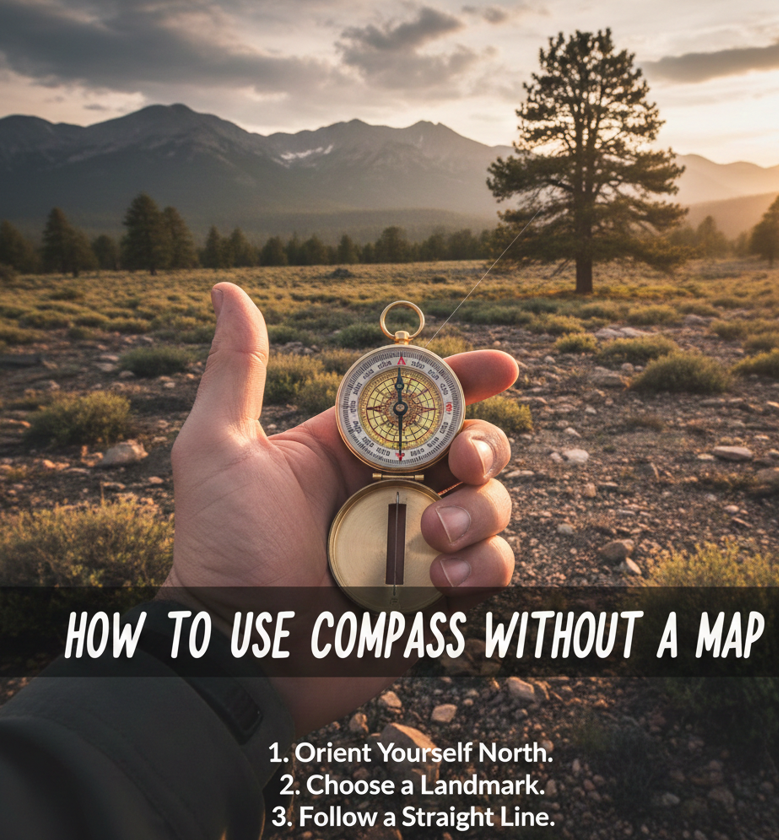
Using a compass without a map requires relying on bearings and landmarks. This skill is essential in survival situations or when exploring unknown terrain.
. Identify Magnetic North: Hold the compass flat and let the needle settle. The red end points north, helping you determine directions for travel without a map. Accuracy is key; ensure no metal objects interfere.
. Set a Bearing: Rotate the bezel to the desired direction of travel, aligning the orienting arrow with magnetic north. The direction of travel arrow then guides your movement.
. Use Landmarks: Identify trees, mountains, or rivers in your line of sight. Use the compass to maintain orientation and prevent deviations from your path.
. Track Progress: Take periodic readings to confirm your direction. Adjust for obstacles while keeping your original bearing in mind to reach your destination efficiently.
. Estimate Distance: Use pacing or natural markers to gauge distance. Combining compass bearings with estimation techniques ensures accurate navigation even without maps.
. Safety and Awareness: Always check surroundings for hazards and plan escape routes. A compass without a map can guide you but requires attention to detail and situational awareness.
Also Read : How to Get Rid of Drain Flies: Complete Expert Guide
How to Use a Compass and Map
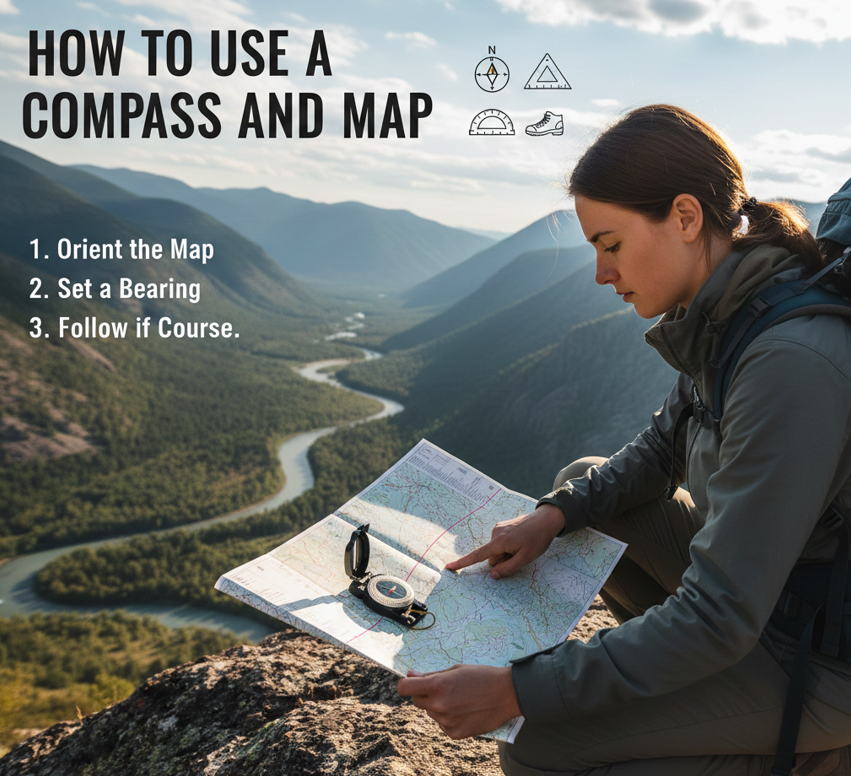
Combining a compass with a map allows precise navigation in unfamiliar terrain. This method is commonly used in hiking, orienteering, and military exercises.
. Align Map with North: Place the map on a flat surface and rotate it until north on the map aligns with the compass needle. This ensures directions on the map match real-world orientation.
. Determine Your Location: Use map features like rivers, roads, and landmarks along with compass bearings to pinpoint your exact position. Accurate location identification is critical for route planning.
. Set a Bearing to Destination: Identify your target location and use the compass to determine the bearing. Rotate the bezel to match the bearing and follow the direction of travel arrow.
. Adjust for Declination: Account for the difference between magnetic north and true north using declination adjustment. This improves accuracy when navigating long distances.
. Plan the Route: Trace the path using the map and compass. Identify obstacles and alternative routes. Pre-planning ensures safety and efficiency during the journey.
. Periodic Verification: Check bearings and landmarks frequently to confirm you’re on course. Continuous verification prevents getting lost and improves confidence in navigation.
Also Read : How to Endorse a Check: The Complete Step-by-Step Guide
How to Use a Compass for Kids
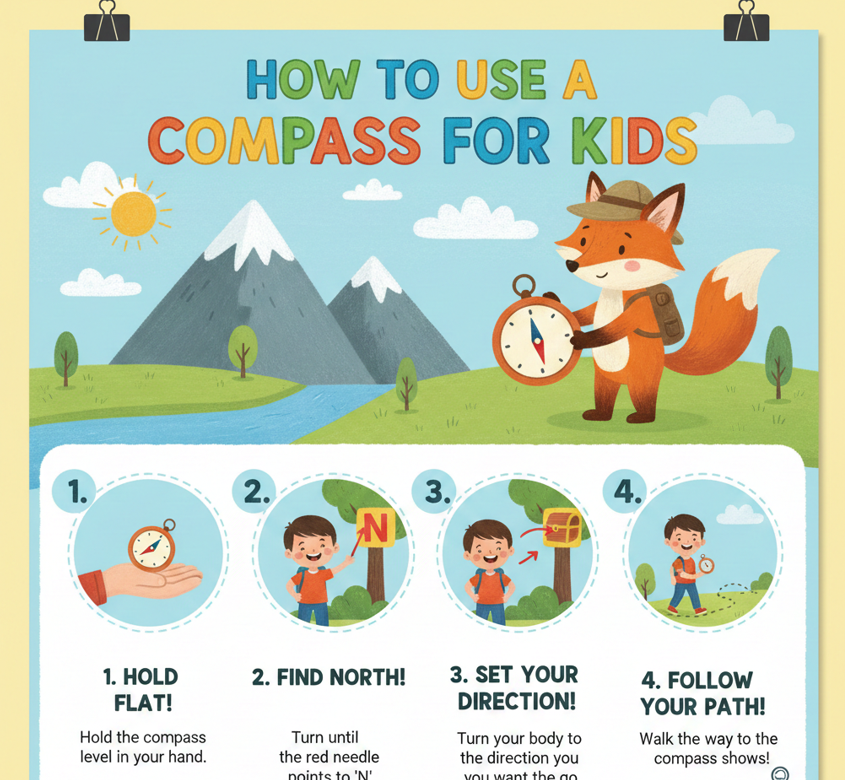
Teaching children how to use a compass combines fun, safety, and practical navigation skills. Learning orientation fosters problem-solving, confidence, and outdoor awareness.
. Start Simple: Begin by explaining magnetic north and the basic compass components in simple terms. Make it interactive to hold attention and improve comprehension.
. Practice Indoors: Children can practice pointing north and using bearings in a controlled environment before outdoor navigation. Familiarity reduces fear and builds confidence.
. Use Games: Create treasure hunts or scavenger hunts where the compass guides children to locations. Gamifying navigation increases engagement and understanding.
. Introduce Landmarks: Teach kids to identify nearby trees, buildings, or other features as reference points. Combining visual cues with compass use enhances spatial awareness.
. Explain Bearings in Simple Terms: Use terms like “walk towards the arrow” rather than technical jargon. This helps children grasp orientation and direction concepts.
. Safety First: Always supervise kids while practicing outdoors. Emphasize staying aware of surroundings and returning to a safe meeting point.
Also Read : How to Make Oobleck: The Complete Science-Backed Guide for Kids and Adults
How to Use a Compass for Beginners
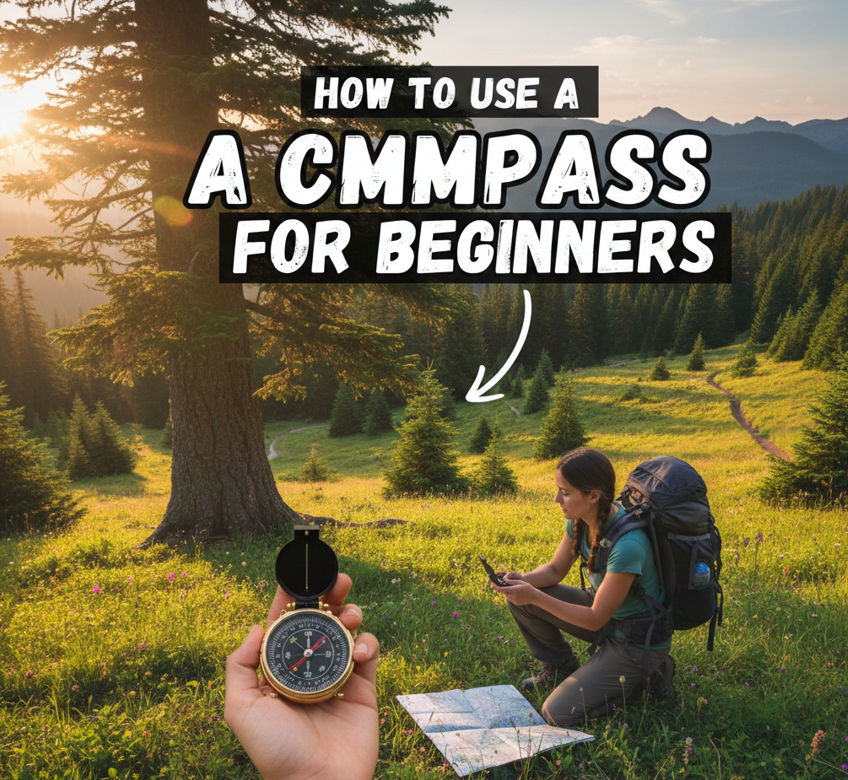
For beginners, mastering a compass requires understanding core principles, practicing regularly, and building confidence through practical application.
. Understand Compass Components: Learn about the needle, baseplate, rotating bezel, and orienting lines. Each part has a specific function that contributes to accurate navigation.
. Practice Holding the Compass: Keep it level and away from metal objects to avoid magnetic interference. Proper handling ensures the needle moves freely and accurately.
. Learn to Read Bearings: A bearing is the direction from your current location to a target point. Beginners should practice converting bearings to travel directions effectively.
. Combine with Maps: Using a compass alongside a map reinforces navigation concepts. Beginners learn to locate positions, plan routes, and adjust for declination.
. Simulate Real Scenarios: Practice in parks, trails, or open spaces to simulate real navigation challenges. Controlled practice enhances problem-solving and confidence.
. Continuous Verification: Regularly check bearings and landmarks to confirm accuracy. Beginners should understand that navigation is iterative, requiring adjustments and attention.
Also Read : How to Cancel Kindle Unlimited: The Complete Step-by-Step Guide
Conclusion
Learning how to use a compass is a vital skill for explorers, hikers, children, gamers, and beginners. Whether using it in Minecraft, with or without a map, or teaching children, understanding compass mechanics, bearings, and landmarks improves navigation skills and confidence. Regular practice and attention to detail ensure accuracy, safety, and enjoyment during every adventure.
FAQs
Q1: Can a compass be used indoors?
Yes, but metal objects and electronic devices may interfere with the needle, reducing accuracy.
Q2: How do I adjust for declination?
Check the local declination value and adjust your compass bezel or bearing accordingly to match true north.
Q3: Do Minecraft compasses work like real compasses?
No, they point to the spawn point instead of magnetic north, helping players find their home base in-game.
Visit For More Information Go To entrepreneurideas