
Learning how to thread a needle is one of the most fundamental skills in sewing, embroidery, tailoring, and textile repair. While it may appear simple, many people struggle with frayed thread ends, tiny needle eyes, poor lighting, or limited hand coordination. These small challenges can turn a basic task into a frustrating experience, especially for beginners or those working with fine needles.
This in-depth guide explains how to thread a needle using a needle threader, for hand sewing, with a small eye, for embroidery, and using simple needle-threading hacks. Each method is explained clearly and practically, drawing on sewing experience, textile best practices, and proven techniques used by professionals and hobbyists alike.
How to Thread a Needle With a Needle Threader
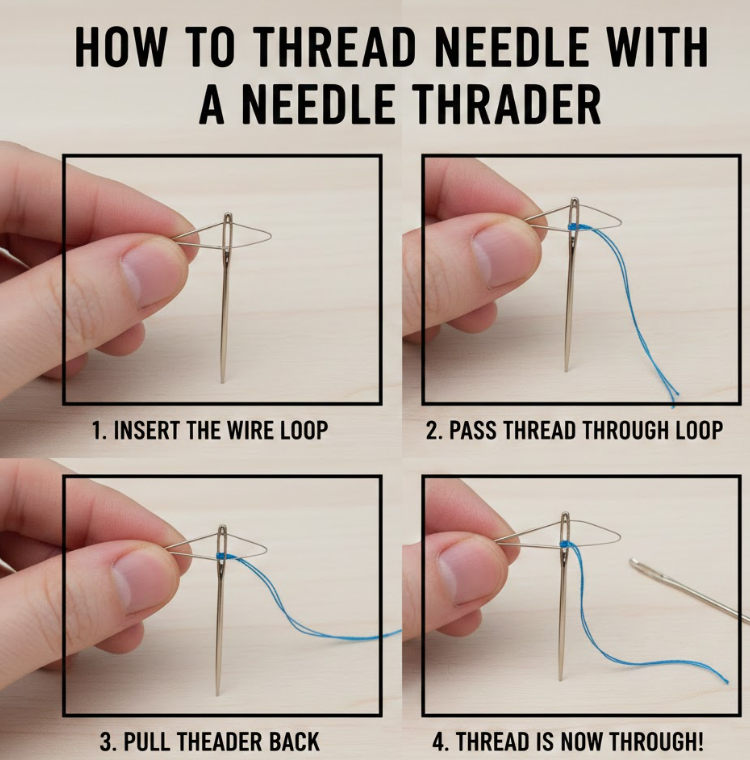
Using a needle threader is one of the most reliable and beginner-friendly ways to thread a needle, especially when dealing with small needle eyes or thick thread.
Understanding Needle Threaders and Their Benefits
• What a Needle Threader Does
A needle threader uses a thin wire loop to pull thread through the needle’s eye. This tool reduces eye strain and improves accuracy, making it ideal for people with vision challenges or shaky hands.
• Preparing the Thread for Threading
Before using the threader, trimming the thread end cleanly prevents fraying. A sharp cut ensures the thread slides smoothly through the wire loop without splitting.
• Correct Placement of the Threader
Insert the wire loop gently through the needle eye without forcing it. Proper alignment prevents bending or snapping the delicate wire.
• Securing the Thread in the Loop
Once the wire is through, place the thread inside the loop rather than pushing it. This technique minimizes resistance and prevents thread damage.
• Pulling the Thread Through Safely
Slow, steady motion helps guide the thread through the needle. Sudden pulling increases the risk of breaking the threader or slipping.
• When to Use a Needle Threader
Threaders are especially useful for quilting needles, fine hand-sewing needles, and embroidery needles with narrow eyes.
Also Read:- How to Shrink a Shirt: A Complete Practical Guide for the Perfect Fit
How to Thread a Needle for Hand Sewing
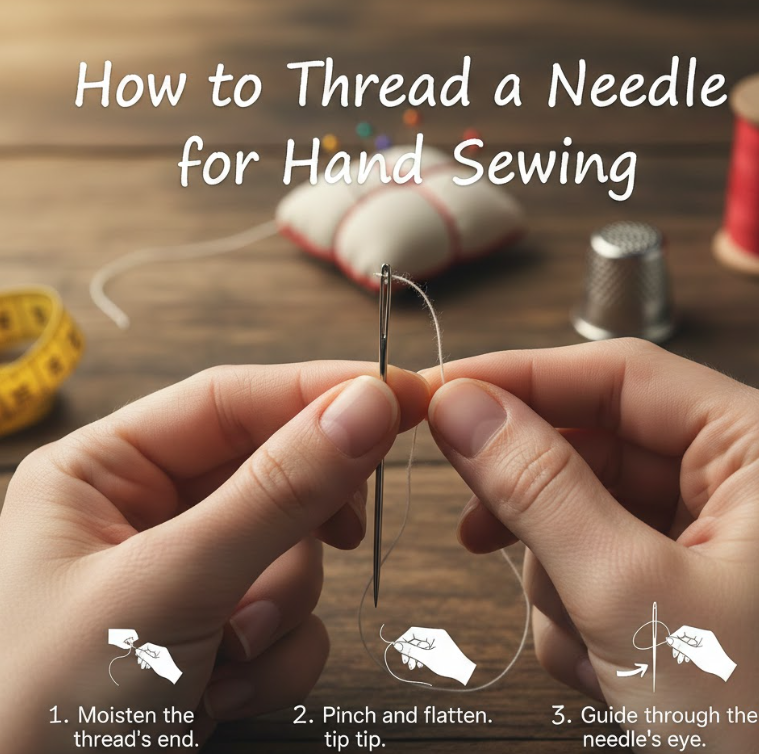
Hand sewing requires consistent thread control, proper needle selection, and careful handling to ensure smooth stitching and durability.
Hand Sewing Needle Threading Explained
• Choosing the Right Needle and Thread
Matching needle size with thread thickness prevents unnecessary friction. Thin thread works best with small needles, while thicker thread requires larger eyes.
• Cutting and Conditioning the Thread
Cutting thread at a slight angle creates a pointed tip that passes through the needle more easily. Conditioning with beeswax can reduce tangling.
• Stabilizing the Needle Properly
Holding the needle steady against a solid background improves visibility and accuracy. This technique is commonly used by professional tailors.
• Guiding the Thread Into the Eye
Rather than pushing the thread aggressively, guiding it gently improves success rates and prevents bending the needle.
• Securing the Thread End
Once threaded, pulling several inches through the eye prevents accidental unthreading during sewing.
• Practicing Hand Coordination
Developing muscle memory through repetition improves speed and accuracy over time.
Also Read:- How to Sew a Button: A Complete Beginner-to-Expert Guide for Long-Lasting Results
How to Thread a Needle With a Small Eye
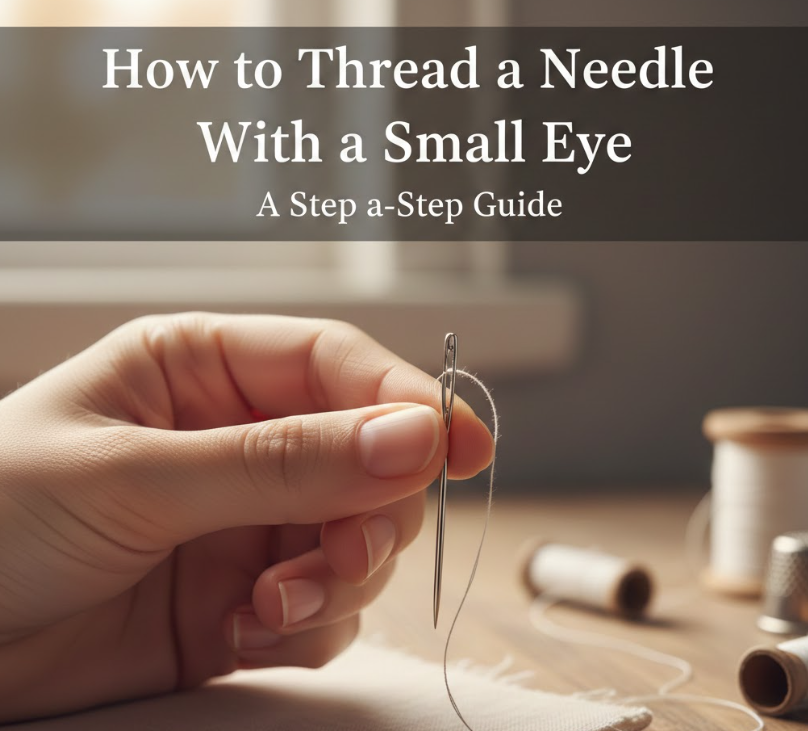
Small-eye needles are often used for fine fabrics, invisible stitches, or detailed work, making threading more challenging.
Techniques for Small-Eye Needle Threading
• Understanding Why Small Eyes Are Difficult
Small eyes reduce fabric damage but leave little room for error. Even minor thread fraying can prevent successful threading.
• Using Proper Lighting and Contrast
Bright lighting and a contrasting background make the needle eye easier to see. Many sewists use daylight lamps for precision.
• Flattening the Thread End
Flattening the thread between fingers or teeth creates a thinner profile that passes through narrow eyes more easily.
• Moistening the Thread Tip
Light moisture binds fibers together temporarily, reducing fraying and improving control.
• Thread-Over-Needle Method
Placing the thread over the needle eye and sliding it down helps guide the thread naturally into the opening.
• Patience and Precision
Small-eye threading rewards slow, controlled movements rather than force.
Also Read:- How to Tie a Gi Belt: A Step-by-Step Guide for Martial Artists
How to Thread a Needle for Embroidery
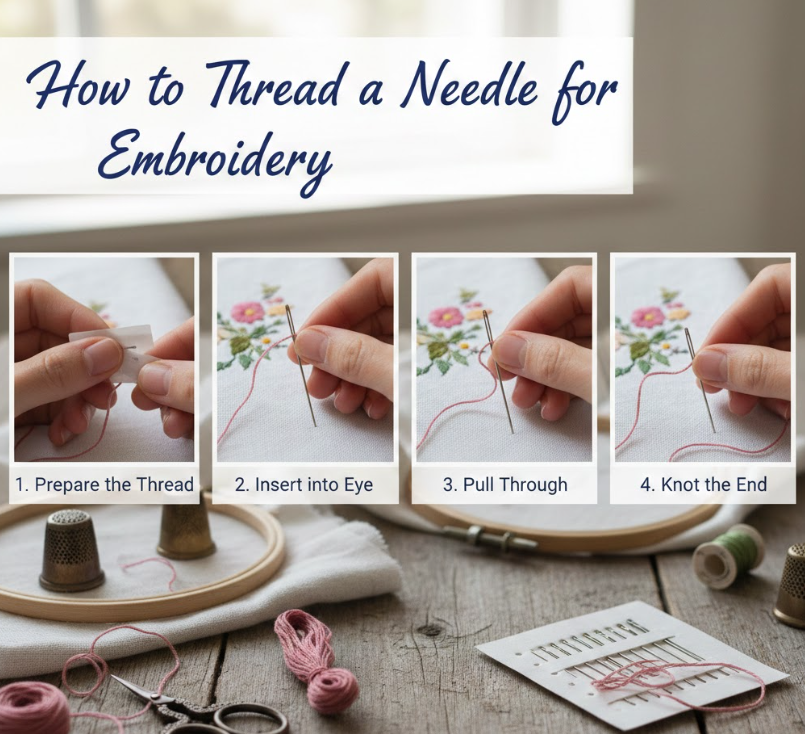
Embroidery threading differs from standard sewing because embroidery floss is thicker, multi-stranded, and often decorative.
Embroidery Needle Threading Techniques
• Separating Embroidery Floss Correctly
Most embroidery floss consists of six strands. Separating and recombining strands reduces bulk and improves threading success.
• Choosing the Correct Embroidery Needle
Embroidery needles have larger eyes designed for floss. Using the right needle prevents unnecessary frustration.
• Cutting Floss Cleanly
Sharp scissors ensure clean ends that pass through the needle eye without splitting.
• Threading Without Knotting
Embroidery typically avoids knots at the needle eye. Leaving a tail allows smoother stitching and better tension control.
• Managing Long Floss Lengths
Shorter lengths prevent tangling and make threading easier.
• Maintaining Thread Integrity
Avoid excessive pulling, which can cause floss to fray or weaken.
Also Read:- How to Texture a Wall: A Comprehensive Guide to Beautiful Wall Finishes
How to Thread a Needle Hack
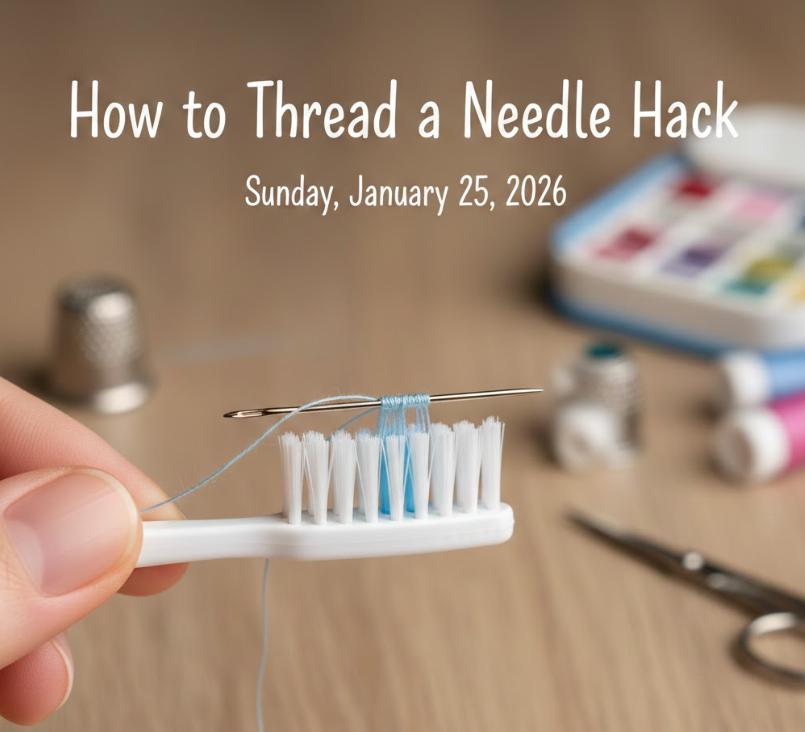
Simple threading hacks make needle threading faster and more accessible using everyday items and clever techniques.
Smart Needle Threading Hacks Explained
• Paper Threading Hack
Folding thread through a small piece of paper creates a stiff edge that passes easily through the needle eye.
• Dental Floss Trick
Dental floss works as a temporary threader, especially for stubborn small eyes.
• Tape-Tip Method
Wrapping clear tape around the thread end creates a firm tip that slides through the eye smoothly.
• Needle-Down Method
Lowering the needle onto the thread rather than pushing the thread upward improves control and accuracy.
• Magnification Tools
Using magnifying glasses or phone cameras enhances visibility for precise threading.
• Habit-Based Efficiency
Consistent setup habits reduce threading time and frustration over repeated tasks.
Also Read:- How to Tell if a Mango is Ripe: Ultimate Guide for Perfect Mangoes
Conclusion
Learning how to thread a needle is a foundational skill that improves every form of sewing and embroidery. Whether using a needle threader, working with a small eye, preparing embroidery floss, or applying clever hacks, the right technique transforms frustration into confidence. With patience, practice, and the correct tools, threading a needle becomes second nature.
FAQs
Q: Why does my thread keep fraying?
Dull scissors or low-quality thread are common causes.
Q: Is a needle threader better than hand threading?
Threaders improve speed and accuracy, especially for small needle eyes.
Q: Can children learn to thread needles?
Yes, with large-eye needles, proper supervision, and simple threaders
Visit For More Information Go To entrepreneurideas