
Learning how to sew a button is one of the most practical life skills anyone can master. A missing or loose button can make perfectly good clothing unusable, yet repairing it takes only a few minutes with basic tools. From dress shirts and pants to heavy coats, knowing how to attach a button properly saves money, extends garment life, and gives you independence from constant tailoring.
Sewing a button is more than threading a needle and stitching randomly. Different garments require different techniques, thread strength, spacing, and tension. A shirt button must sit flat and flexible, while a coat button needs extra reinforcement to withstand repeated pulling. Understanding these differences is essential for durability and comfort.
This comprehensive guide explains how to sew a button by hand using proven techniques that professionals rely on. Whether you are repairing pants, shirts, or coats, or learning how to sew a four-hole button correctly, this article walks you through every detail with clarity and confidence.
Understanding Buttons and Why Proper Sewing Matters
Buttons serve both functional and decorative purposes. They secure garments, distribute tension, and influence how clothing fits and drapes. Poorly sewn buttons can cause fabric strain, uneven alignment, and frequent breakage.
Buttons fail most often because of weak thread, incorrect spacing, or insufficient anchoring. Proper sewing ensures the button moves naturally with the fabric rather than pulling against it.
A well-sewn button blends invisibly into the garment while remaining strong enough to endure daily wear.
How to Sew a Button by Hand
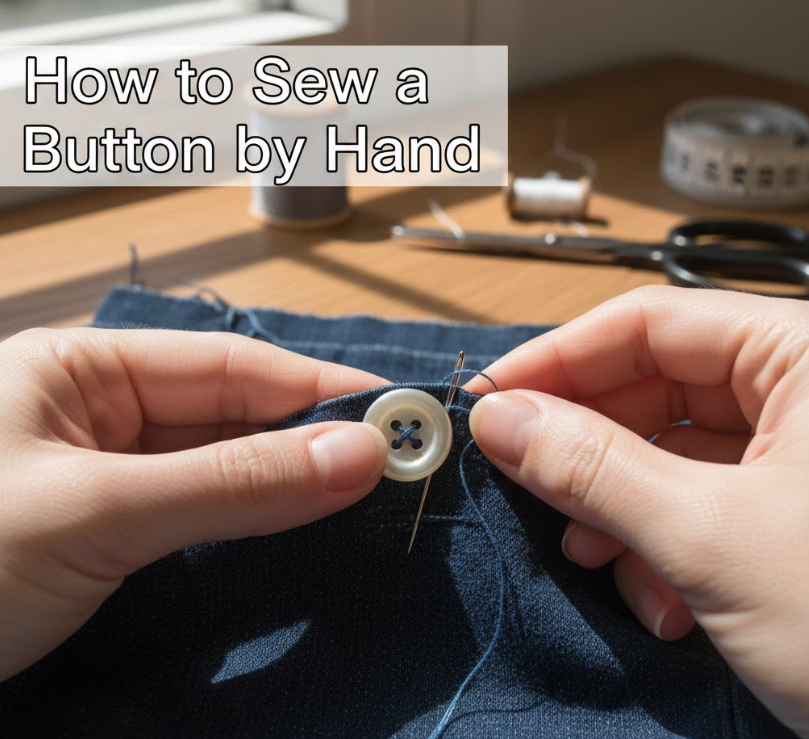
Learning how to sew a button by hand is the foundation of all button-sewing techniques. Hand sewing offers precision, control, and adaptability across different fabrics and button types.
This method works for most clothing repairs and requires only basic sewing supplies.
Preparing for Hand Sewing
. Choose a needle that fits easily through button holes without stretching them
. Select thread that matches fabric color and thickness
. Double the thread for strength and knot securely
Proper Hand-Sewing Technique
. Insert the needle from the fabric underside
. Pass through button holes evenly
. Maintain consistent tension without pulling fabric tight
Ensuring Long-Lasting Results
. Anchor stitches on the underside
. Wrap thread under the button shank if needed
. Secure with multiple knots
Also Read:- How to Tie a Gi Belt: A Step-by-Step Guide for Martial Artists
How to Sew a Button on Pants

Knowing how to sew a button on pants requires attention to stress points. Pants buttons endure constant tension from movement, sitting, and waist pressure.
Durability is the primary goal when sewing buttons onto pants.
Choosing the Right Thread for Pants
. Use thicker thread for added strength
. Polyester thread resists friction better
. Avoid thin cotton threads for waistbands
Positioning the Button Correctly
. Align with buttonhole precisely
. Ensure waistband layers are evenly stitched
. Avoid pulling fabric too tight
Reinforcing Pants Buttons
. Add extra stitches through fabric layers
. Create a thread shank for flexibility
. Secure with reinforced knots
Also Read:- How to Texture a Wall: A Comprehensive Guide to Beautiful Wall Finishes
How to Sew a Button on a Shirt
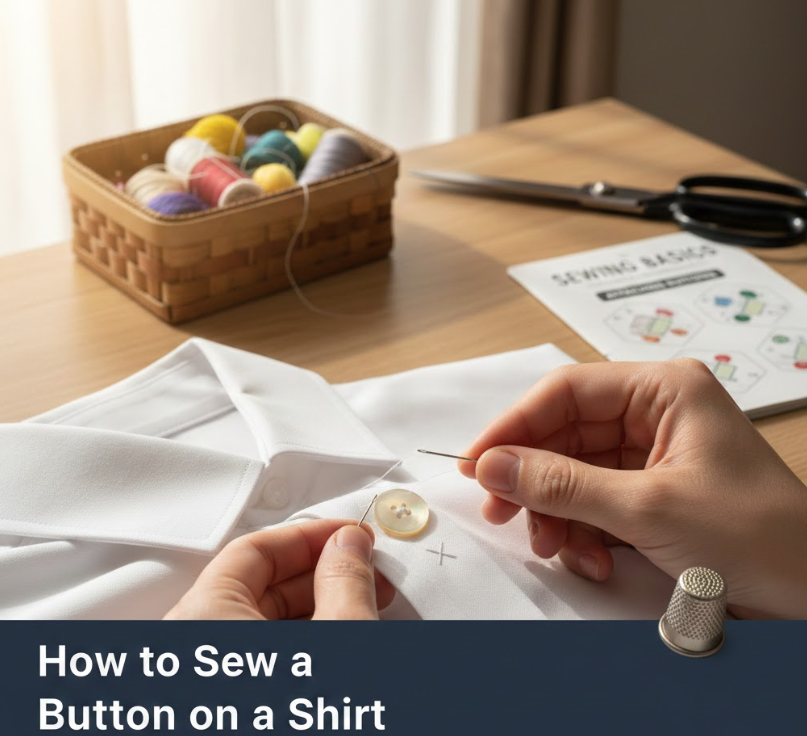
Understanding how to sew a button on a shirt focuses on comfort, alignment, and appearance. Shirt buttons must sit flat while allowing fabric to move naturally.
Shirt buttons are usually sewn with lighter tension than pants or coats.
Shirt Button Placement
. Match original button spacing
. Ensure vertical alignment with buttonholes
. Keep button centered on placket
Thread and Tension Control
. Use lighter thread than pants
. Avoid overly tight stitches
. Allow slight movement under button
Maintaining a Clean Finish
. Hide knots beneath fabric
. Keep stitches symmetrical
. Trim excess thread neatly
Also Read:- How to Tell if a Mango is Ripe: Ultimate Guide for Perfect Mangoes
How to Sew a Button with 4 Holes

Learning how to sew a button with 4 holes allows flexibility in both strength and style. Four-hole buttons distribute stress more evenly than two-hole buttons.
The stitching pattern affects both durability and appearance.
Common Stitch Patterns
. Parallel lines offer a clean look
. Cross stitches increase strength
. Decorative patterns add style
Sewing Technique for Four-Hole Buttons
. Sew holes in pairs for stability
. Keep spacing even across stitches
. Maintain consistent thread tension
Strength and Longevity Tips
. Reinforce center stitches
. Avoid skipping holes
. Secure thread firmly underneath
Also Read:- How to Stop Sneezing: Effective Tips and Remedies
How to Sew a Button on a Coat

Knowing how to sew a button on a coat requires advanced reinforcement techniques. Coat buttons face heavy pulling and thicker fabrics.
This method emphasizes strength and spacing.
Special Considerations for Coats
. Use heavy-duty thread
. Choose a strong needle
. Allow extra space for fabric thickness
Creating a Thread Shank
. Insert a spacer under button while sewing
. Wrap thread beneath button after stitching
. Remove spacer before knotting
Securing Coat Buttons Properly
. Stitch through all fabric layers
. Reinforce underside with backing button if needed
. Knot securely multiple times
Also Read:- How to Format an SD Card: The Complete Beginner-to-Advanced Guide
Common Button Sewing Mistakes to Avoid
Mistakes reduce button lifespan and garment comfort.
. Sewing too tightly restricts movement
. Weak knots cause premature loosening
. Incorrect alignment leads to gaping
Best Tools for Sewing Buttons
Having the right tools improves results.
. Sharp needles reduce fabric damage
. Quality thread improves durability
. Thimbles protect fingers during thick fabric sewing
Also Read:- How Much to Wrap a Car: Complete Cost Guide
Conclusion: Mastering How to Sew a Button with Confidence
Learning how to sew a button is a small skill with a big impact. Whether you are repairing pants, shirts, coats, or sewing a four-hole button by hand, proper technique ensures durability, comfort, and a professional appearance.
By understanding thread choice, spacing, reinforcement, and tension control, you can confidently handle button repairs on any garment. This simple skill saves time, money, and frustration—while extending the life of your clothing.
FAQs
How many stitches should a button have?
Most buttons require 8–12 passes through holes for strength.
Can you sew a button without doubling thread?
Yes, but doubled thread increases durability.
Why do buttons loosen over time?
Friction, fabric stress, and weak knots cause loosening
Visit For More Information Go To entrepreneurideas