
Learning how to mix essential oils correctly is essential for anyone who wants to use aromatherapy safely and effectively. Essential oils are highly concentrated plant extracts, and while they offer powerful benefits for relaxation, skincare, hair care, and home fragrance, improper mixing can cause irritation, allergic reactions, or reduced effectiveness.
This comprehensive guide is based on aromatherapy science, professional blending practices, and safety guidelines from certified organizations. You’ll learn how to mix essential oils with carrier oils, with water, for skin, hair growth, diffusers, candles, and perfume—with clear ratios, real-world examples, and safety-first techniques designed for beginners and advanced users alike.
Understanding Essential Oils and Why Proper Mixing Matters
Essential oils are volatile aromatic compounds extracted from flowers, leaves, bark, roots, and resins. Because they are highly concentrated, they must be diluted correctly before most uses.
According to the National Association for Holistic Aromatherapy (NAHA), improper essential oil dilution is one of the most common causes of skin sensitization and adverse reactions. Proper mixing ensures effectiveness, safety, and long-term tolerance.
Why Essential Oils Must Be Mixed Correctly
. Highly Concentrated Nature
One drop of essential oil can equal several pounds of plant material, making dilution critical.
. Skin and Scalp Sensitivity
Undiluted oils can cause redness, burning, or long-term sensitivity.
. Effectiveness Depends on Ratios
Too much oil overwhelms the senses; too little reduces benefits.
. Carrier Medium Determines Absorption
Oil, water, alcohol, or wax affects how oils behave.
. Chemical Compatibility Matters
Some oils blend well; others clash or neutralize effects.
. Safety Across Different Applications
Skin, hair, air, and candles all require different blending rules.
Also Read:- How to Make Fajita Seasoning: A Complete Homemade Spice Guide
How to Mix Essential Oils with Carrier Oil (Foundation Method)
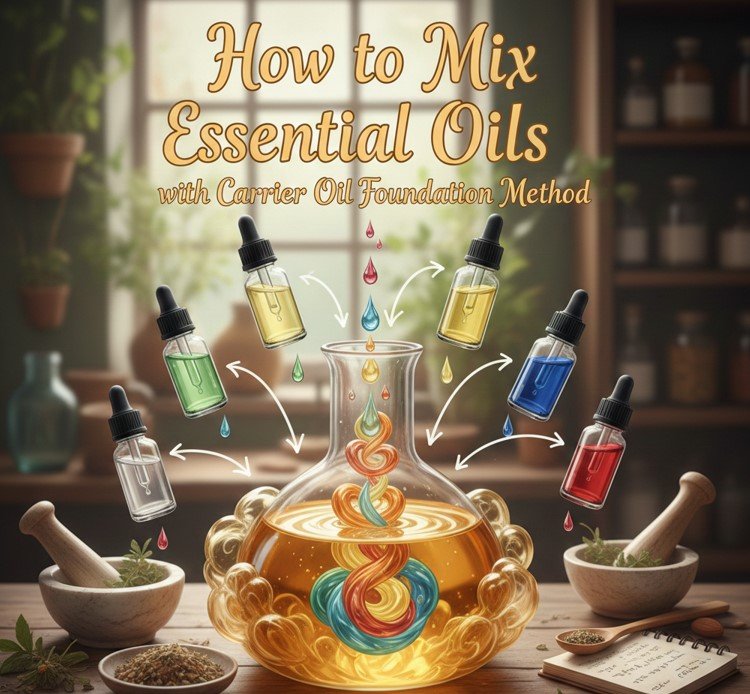
Understanding how to mix essential oils with carrier oil is the foundation of safe aromatherapy for skin, hair, and massage use.
Carrier Oil Blending Explained
. Choose the Right Carrier Oil
Jojoba, coconut, almond, and argan oils each absorb differently and suit different skin types.
. Follow Proper Dilution Ratios
Standard dilution is 1–2% for adults (6–12 drops per ounce).
. Measure Carrier Oil First
Ensures accurate dilution and prevents overuse.
. Add Essential Oils Last
This allows precise drop counting.
. Mix Gently but Thoroughly
Rolling the bottle avoids oxygen exposure.
. Label and Date the Blend
Ensures freshness and safety tracking.
Also Read:- How to Eat a Pomegranate: A Complete, Practical, and Healthy Guide
How to Mix Essential Oils for Skin Safely
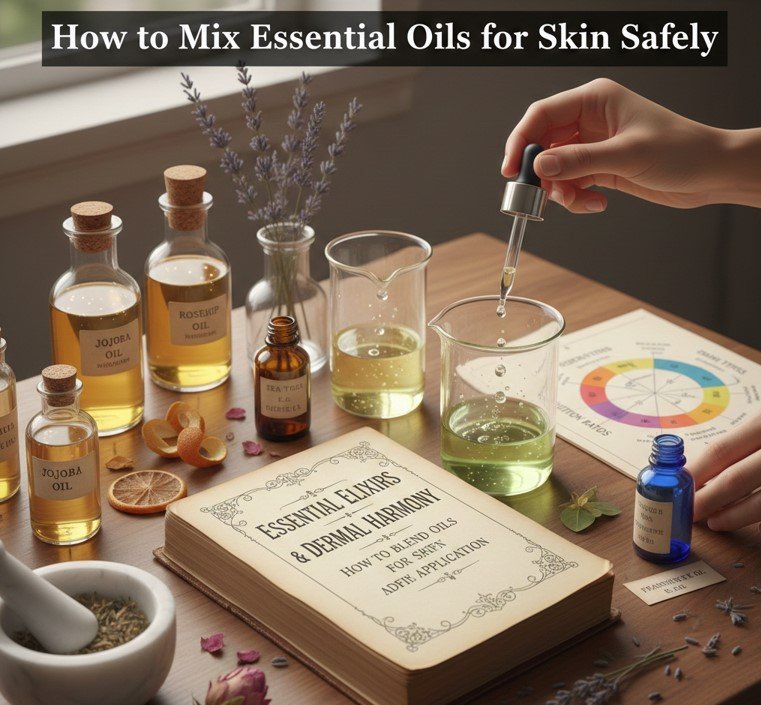
Skin application requires extra care due to absorption into the bloodstream.
Skin-Safe Essential Oil Mixing
. Understand Skin Type Needs
Dry, oily, sensitive, and acne-prone skin react differently.
. Use Lower Dilution for Face
Facial blends should stay around 0.5–1%.
. Avoid Phototoxic Oils
Citrus oils can cause sun sensitivity.
. Patch Test Every Blend
Apply to inner arm and wait 24 hours.
. Choose Non-Comedogenic Carriers
Prevents clogged pores and breakouts.
. Store Away from Heat and Light
Preserves oil integrity and effectiveness.
Also Read:- How to Draw a Bat: A Complete Step-by-Step Drawing Guide
How to Mix Essential Oils for Hair Growth and Thickness
Blending essential oils for hair requires stimulating circulation while protecting the scalp.
Hair Growth Essential Oil Blending
. Select Scalp-Stimulating Oils
Rosemary, peppermint, and cedarwood improve blood flow.
. Use Nourishing Carrier Oils
Castor, jojoba, and argan support hair follicles.
. Maintain Low Irritation Levels
Scalp skin is sensitive and absorbs quickly.
. Massage Gently After Application
Boosts circulation without damaging follicles.
. Apply Consistently Over Time
Hair growth blends require weeks to show results.
. Wash Out Properly
Prevents buildup and scalp imbalance.
Also Read:- How to Soften Brown Sugar: Complete Guide
How to Mix Essential Oils with Water for Spray
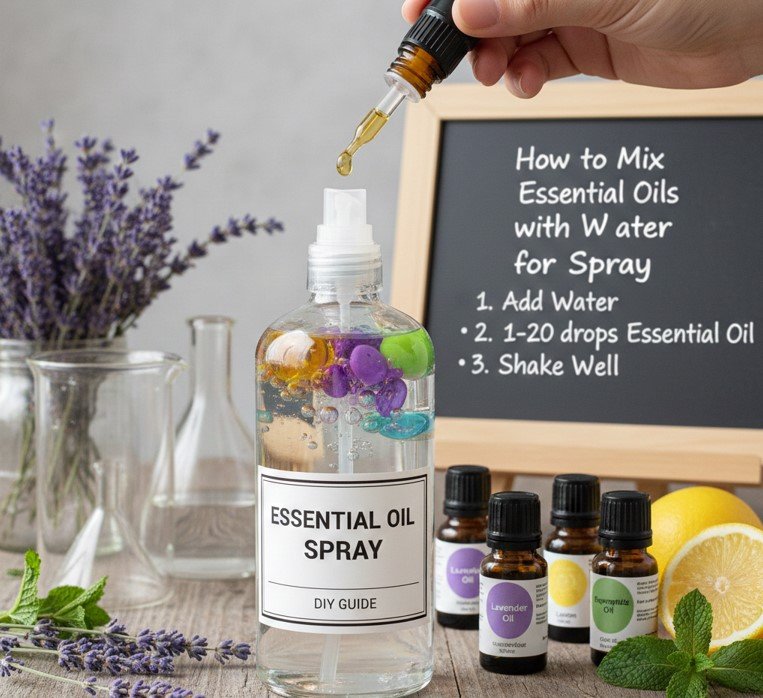
Mixing essential oils with water requires emulsification to prevent separation.
Water-Based Essential Oil Sprays Explained
. Understand Oil-Water Separation
Essential oils do not dissolve naturally in water.
. Use Solubilizers or Alcohol
Witch hazel or vodka helps disperse oils.
. Shake Before Every Use
Ensures even distribution.
. Keep Concentration Low
1–2% is sufficient for sprays.
. Use Distilled Water Only
Prevents bacterial growth.
. Store in Dark Spray Bottles
Protects oils from oxidation.
Also Read:- How to Draw Lips: The Ultimate Guide for Beginners and Artists
How to Mix Essential Oils for Diffuser Use
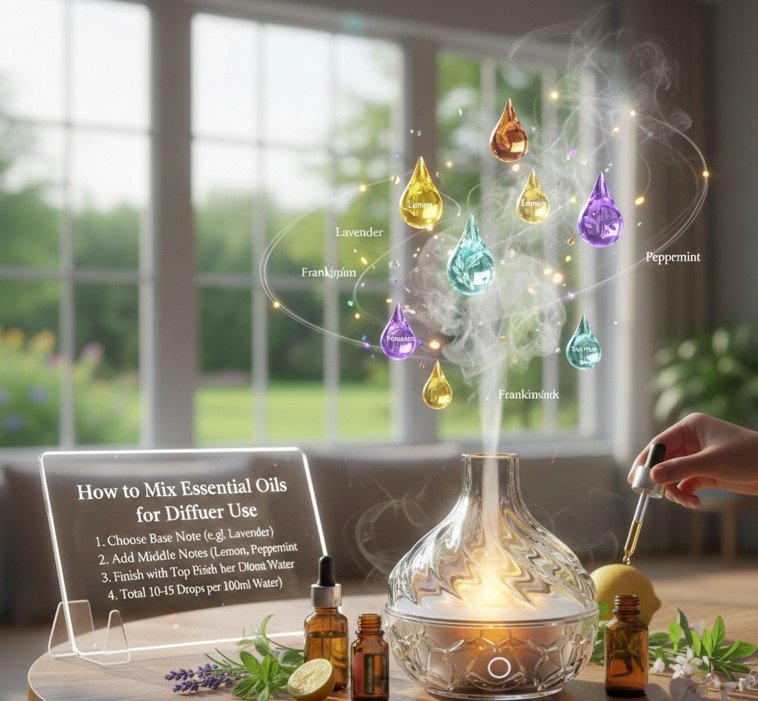
Diffusers disperse essential oils into the air, affecting mood and breathing.
Diffuser Blending Guidelines
. Follow Diffuser Capacity Instructions
Overuse can irritate airways.
. Use Complementary Oil Notes
Top, middle, and base notes balance aroma.
. Limit Diffusion Time
30–60 minutes prevents overexposure.
. Choose Purpose-Driven Blends
Relaxation, focus, sleep, or energy.
. Avoid Diffusing Around Pets
Some oils are toxic to animals.
. Clean Diffuser Regularly
Prevents oil residue buildup.
Also Read:- How to Address an Envelope: A Complete Step-by-Step Guide for Every Situation
How to Mix Essential Oils for Candles
Candle blending requires understanding heat stability and wax compatibility.
Essential Oil Candle Blending
. Use Heat-Stable Oils Only
Not all essential oils tolerate high temperatures.
. Choose Correct Wax Type
Soy, beeswax, and coconut wax differ in oil absorption.
. Measure Fragrance Load Carefully
Usually 6–10% by weight.
. Add Oils at Proper Temperature
Too hot burns aroma compounds.
. Test Burn Before Finalizing
Ensures scent throw and safety.
. Store Candles Properly After Making
Preserves fragrance integrity.
Also Read:- How to Jumpstart a Car: A Complete, Safe, and Expert-Backed Guide
How to Mix Essential Oils for Perfume
Perfume blending focuses on aroma balance and longevity.
Essential Oil Perfume Blending
. Understand Fragrance Notes
Top, middle, and base notes define scent evolution.
. Use Alcohol or Oil Base
Alcohol diffuses faster; oil lasts longer on skin.
. Balance Ratios Carefully
Common ratio is 30% top, 50% middle, 20% base.
. Allow Aging Time
Perfumes mature over 2–4 weeks.
. Test on Skin, Not Paper Only
Body chemistry affects scent.
. Store in Dark Glass Bottles
Protects volatile compounds.
Also Read:-How to Get Ink Out of Clothes: A Complete Fabric-Safe Stain Removal Guide
Common Mistakes When Mixing Essential Oils
Avoiding common errors ensures safety and effectiveness.
Essential Oil Mixing Mistakes to Avoid
. Using Oils Undiluted on Skin
Causes irritation and sensitization.
. Ignoring Usage Guidelines
More oil does not mean better results.
. Mixing Too Many Oils at Once
Creates scent confusion and reduced benefits.
. Skipping Patch Tests
Increases risk of allergic reactions.
. Using Plastic Containers
Essential oils degrade plastic.
. Not Researching Oil Safety
Some oils are unsafe for children or pregnancy.
Also Read:- How to Make French Press Coffee: A Complete Home Brewing Guide
Conclusion
Learning how to mix essential oils properly transforms aromatherapy from guesswork into a safe, effective, and enjoyable practice. Whether you’re blending oils for skin care, hair growth, diffusers, candles, or perfume, correct dilution, thoughtful oil selection, and proper storage are essential.
FAQs
Can essential oils be mixed directly together?
Yes, but they must still be diluted before most uses.
How long do essential oil blends last?
Typically 6–12 months when stored properly.
Can I mix essential oils every day?
Yes, but rotate blends to prevent sensitization.
Are essential oils safe for children?
Some are, but many require lower dilution or avoidance.
Visit For More Information Go To entrepreneurideas