

A slip knot is one of the most fundamental skills in crafting, knitting, and jewelry making. Understanding how to make a slip knot is essential because it forms the starting point for crochet, knitting projects, and adjustable bracelets.
The slip knot is versatile, easy to adjust, and can be undone effortlessly, making it an essential technique for beginners and seasoned crafters alike.
Mastering slip knots not only enhances your ability to start projects efficiently but also improves overall control of yarn tension, cord length, and project stability. Whether you are learning how to make a slip knot crochet, creating a slip knot bracelet, or preparing a slip knot for knitting, this guide provides detailed, step-by-step instructions, practical tips, and expert advice for flawless results.
How to Make a Slip Knot Crochet
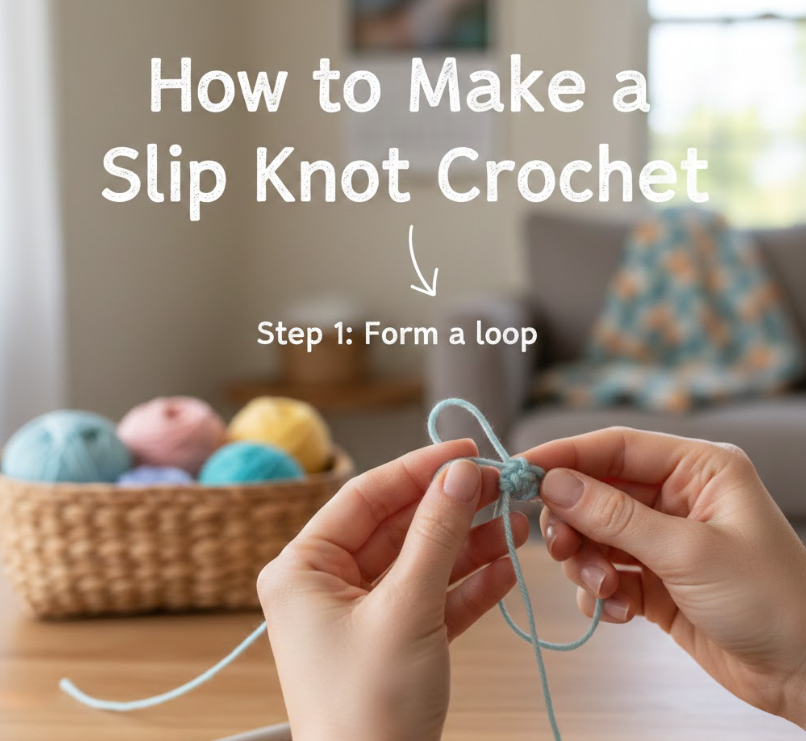
Learning how to make a slip knot crochet is the first step to starting any crochet project. A properly formed slip knot ensures the yarn is secure, provides consistent tension, and allows for easy adjustment as you begin chains or stitches.
• Select your yarn and hook – Choose yarn suitable for your project and a matching hook. Yarn weight and hook size influence the tightness and adjustability of your slip knot.
• Form a loop with the yarn – Hold the tail in one hand and wrap the working yarn over to create a circular loop. The loop size can affect stitch tension and ease of crocheting.
• Insert the hook through the loop – Slide the crochet hook under the loop, ensuring it does not twist. Proper hook placement prevents the knot from becoming tangled.
• Pull the working yarn through the loop – This creates the initial knot that will secure your starting chain. Controlled pulling ensures the slip knot is tight enough to hold but loose enough to adjust.
• Tighten the knot on the hook – Adjust by gently pulling the tail while holding the loop on the hook. The loop should slide smoothly when you pull the yarn without loosening unintentionally.
• Begin crocheting your project – Start chains or stitches directly from the slip knot, maintaining even tension to prevent irregularities.
A correctly made slip knot for crochet forms a secure, flexible foundation, enabling smooth, consistent stitching for your entire project.
Also Read:- How to Make a Paper Dart: The Ultimate Guide
How to Make a Slip Knot Bracelet
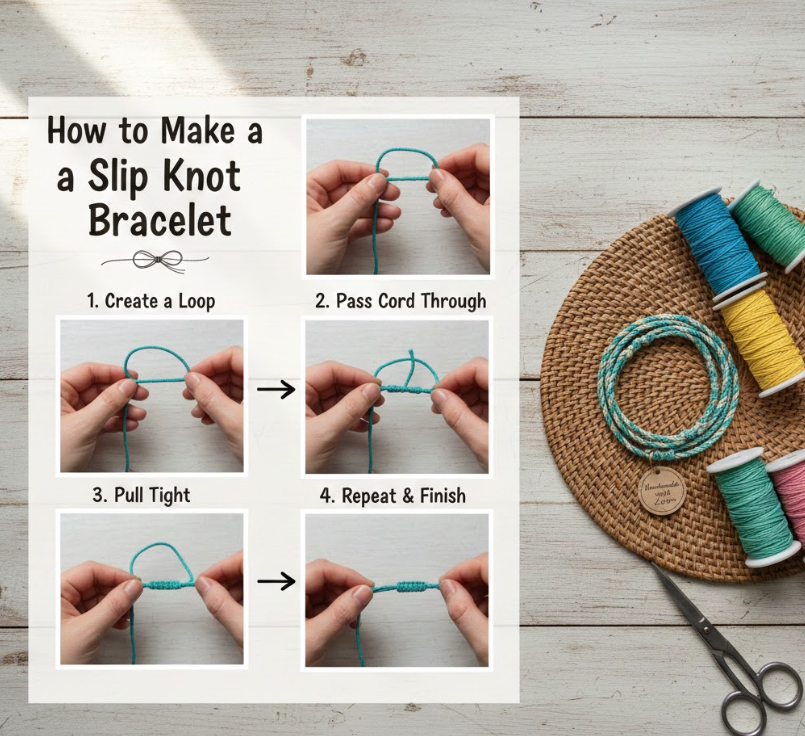
Creating a slip knot bracelet combines knotting technique with adjustable jewelry design. A slip knot bracelet is both stylish and functional because it allows the wearer to resize the bracelet for comfort.
• Select cord or thread – Choose material based on desired thickness, texture, and color. Cotton, nylon, or leather cords are commonly used.
• Create a loop with one end of the cord – Hold the loop in place with your fingers. The loop serves as the base through which the adjustable knot will slide.
• Thread the cord’s working end through the loop – Pull the working end through the loop while holding the base secure. This forms the foundation of the adjustable knot.
• Make two parallel loops for stability – Wrapping the working end through the base loop twice enhances security and prevents slippage.
• Tighten by sliding the knot along the cord – Pull gently to adjust the bracelet’s size. The slip knot design allows for smooth resizing without untying.
• Secure the ends of the cord with small knots or beads – Prevents the slip knot from loosening excessively and adds aesthetic appeal.
Slip knot bracelets are ideal for DIY jewelry projects, friendship bracelets, or gifts because they are versatile, customizable, and practical for all wrist sizes.
Also Read:- How to Shrink a Shirt: A Complete Practical Guide for the Perfect Fit
How to Make a Slip Knot Crochet for Beginners
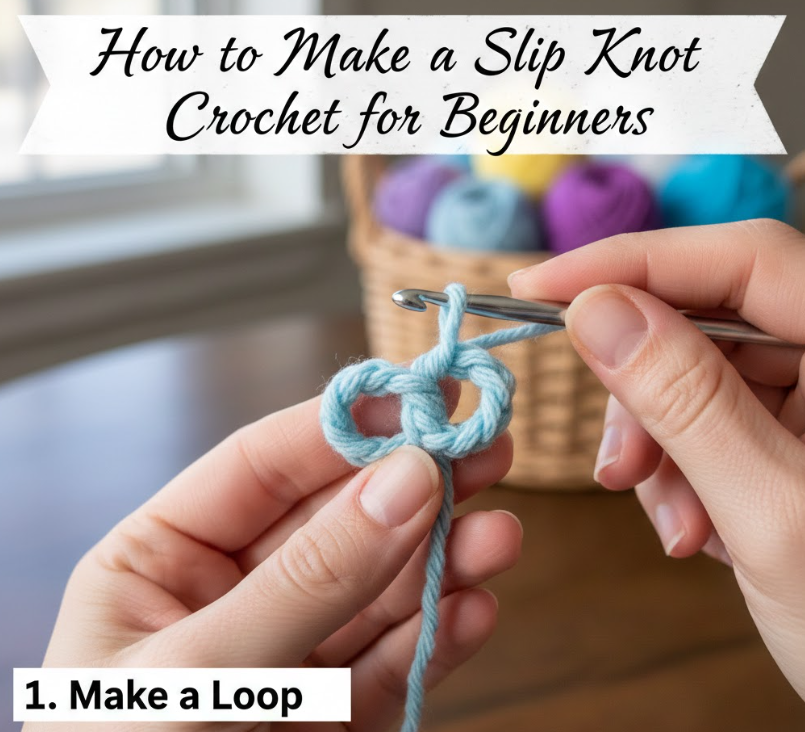
For beginners, learning how to make a slip knot crochet for beginners is crucial to starting projects with confidence. Understanding the mechanics of yarn loops, hook control, and tension ensures a smooth foundation for stitches.
• Choose easy-to-handle yarn – Smooth, medium-weight yarn is preferable for beginners. It reduces tangling and makes loops more visible for learning.
• Hold the yarn correctly in your hands – One hand controls the tail while the other manages the working yarn. Proper grip ensures consistent tension.
• Form the initial loop with your fingers – Create a circular loop and hold it gently without twisting. Loop placement affects the knot’s stability.
• Insert the hook into the loop – Ensure the hook slides under without twisting or snagging. This step is critical to prevent irregular knots.
• Pull the working yarn through the loop – This step creates the first adjustable knot on your hook. Practice controlling tension while pulling.
• Tighten gently for proper fit – Adjust the loop so it slides but stays secure on the hook. This makes it easier to begin chains or stitches for your project.
By mastering slip knots as a beginner, you establish a reliable starting point for crochet projects, making subsequent stitches and rows more uniform and easier to work with.
Also Read:- How to Sew a Button: A Complete Beginner-to-Expert Guide for Long-Lasting Results
How to Make a Slip Knot for Knitting
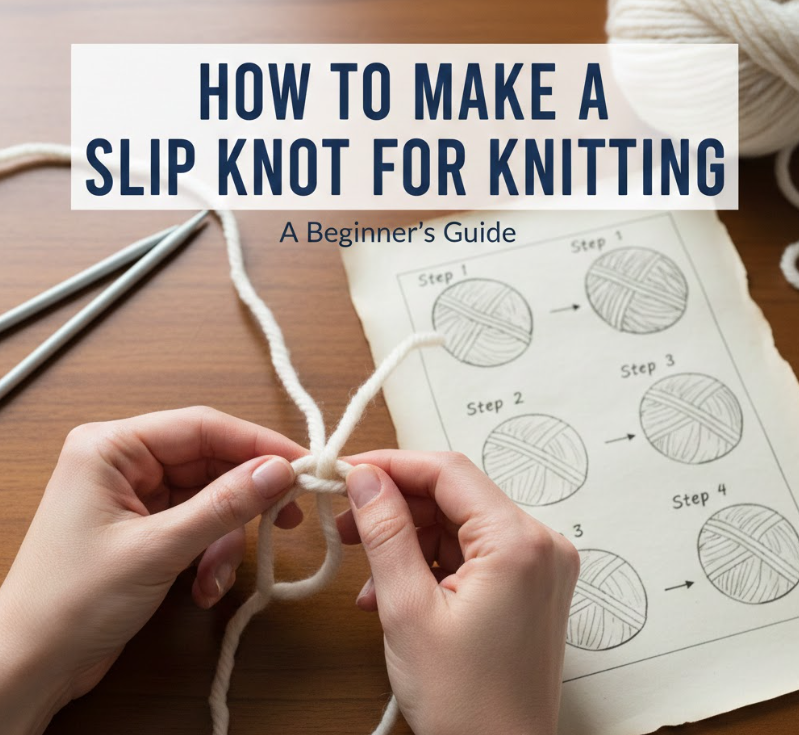
Knitting projects also rely on slip knots as starting points, forming the first stitch on your needle. Knowing how to make a slip knot for knitting ensures even tension, prevents gaps, and allows smooth addition of subsequent stitches.
• Select appropriate yarn and needles – Choose yarn that suits your project’s gauge and matching knitting needles for proper tension.
• Form a loop with the yarn tail – Hold the loop between your thumb and forefinger to control size. Loop size impacts the first stitch’s security.
• Cross the working yarn over the loop – Position the yarn correctly to create a knot that can tighten without slipping.
• Insert needle through the loop – Slide the knitting needle from front to back or vice versa depending on your technique.
• Pull the working yarn through the loop – This completes the slip knot, securing the first stitch on the needle. Controlled pulling prevents overly tight or loose loops.
• Tighten by adjusting with your fingers – Ensure the stitch is snug but slides along the needle easily. Proper adjustment affects overall tension and stitch uniformity.
A well-made slip knot for knitting ensures a smooth start to your project, reducing frustration and producing a professional-looking edge.
Also Read:- How to Tie a Gi Belt: A Step-by-Step Guide for Martial Artists
How to Make a Slip Knot for a Bracelet
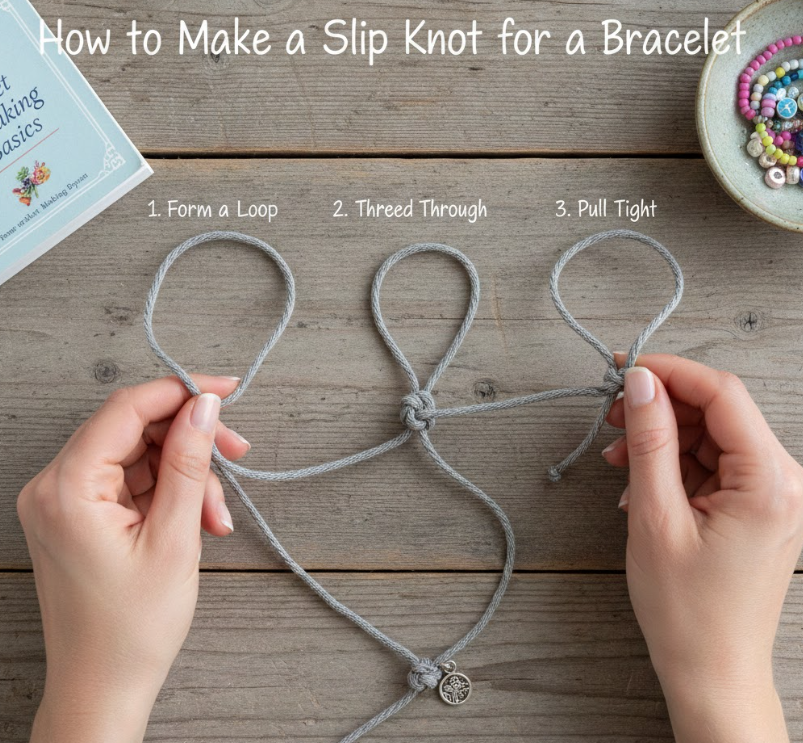
Making a slip knot for a bracelet is essential for adjustable jewelry and friendship bracelets. The slip knot allows the wearer to resize the bracelet easily while maintaining durability.
• Choose cord, string, or yarn – Select material that complements the bracelet’s style and provides flexibility.
• Create a base loop – Hold one end of the cord steady. This loop forms the foundation of the adjustable knot.
• Pass the working end through the loop – Pull the cord through the loop to form the initial slip knot. Correct alignment ensures smooth sliding.
• Wrap the cord around the loop twice for security – Ensures the knot remains adjustable without loosening during wear.
• Adjust the bracelet size by sliding the knot – Pull both ends gently to make the bracelet larger or smaller. The sliding mechanism is key for comfort and fit.
• Finish with decorative beads or knots at ends – Enhances aesthetics and prevents the slip knot from moving unintentionally.
This technique is perfect for DIY jewelry, friendship bracelets, or gift-making, allowing for simple, functional, and stylish adjustable bracelets.
Also Read:- How to Texture a Wall: A Comprehensive Guide to Beautiful Wall Finishes
Conclusion
Learning how to make a slip knot is a foundational skill for crafters, knitters, and jewelry makers. From crochet slip knots to adjustable bracelets, beginner-friendly loops, and knitting stitches, mastering slip knots improves tension control, project stability, and overall craftsmanship. Practicing these techniques ensures your projects start strong and maintain durability while allowing flexibility for adjustments.
With the methods outlined in this guide, anyone—beginner or advanced—can confidently create slip knots for any craft or jewelry project, unlocking endless creative possibilities.
FAQs:
Q: Is a slip knot necessary for crochet and knitting?
Yes, it creates a secure, adjustable starting point for both crafts.
Q: Can slip knots be undone easily?
Absolutely. They are designed to slide and release when necessary without damaging yarn or cord.
Q: Can I use slip knots for adjustable bracelets?
Yes, slip knots are ideal for resizing bracelets and maintaining comfort for all wrist sizes.
Visit For More Information Go To entrepreneurideas