

Learning how to make a paper dart is both a fun and educational activity that combines creativity, precision, and basic aerodynamics. Paper darts are simple yet fascinating crafts that anyone—kids, students, or hobbyists—can make with minimal materials. They also serve as an excellent way to understand flight principles, improve hand-eye coordination, and explore DIY engineering in a safe and entertaining manner.
Whether you want to fold a paper dart with a sticky note, create a durable dart with a staple, or design an advanced paper dart airplane, mastering the techniques requires patience, attention to detail, and understanding of balance and symmetry. This article provides a step-by-step guide for every method, along with tips, examples, and insights to help you make the perfect paper dart.
How to Make a Paper Dart with a Sticky Note
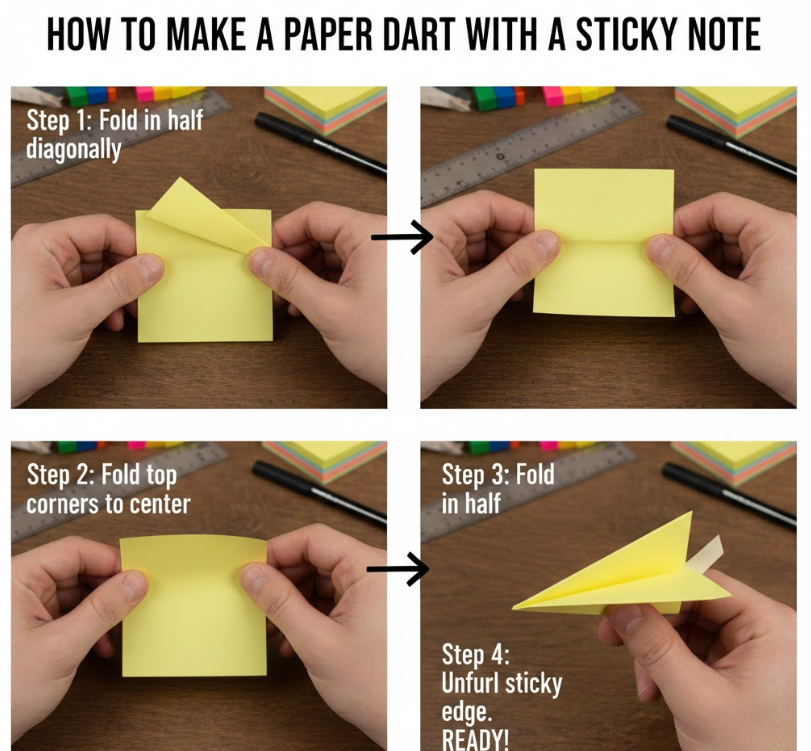
Using sticky notes to make paper darts is a convenient and playful approach. Sticky notes are readily available, lightweight, and flexible, making them ideal for quick dart folding projects. Learning how to make a paper dart with a sticky note teaches precision, folding skills, and basic principles of flight.
• Select a standard-sized sticky note – 3×3 inches works best for small darts. The size ensures balance and manageable folds for beginners.
• Fold the sticky note in half diagonally to form a triangle. This initial fold is crucial for symmetry, which affects the dart’s flight path.
• Fold the two top corners toward the center to form a pointed tip. Precision in this step ensures the dart’s nose is aerodynamic.
• Fold the sides inward again to reinforce the body. This creates a sturdier structure and enhances flight stability.
• Adjust the sticky flap for balance. Ensure that the sticky edge is used either to secure folds or act as a lightweight fin for trajectory control.
• Test the dart by throwing gently. Adjust folds or tip angles if the dart veers off course or fails to glide smoothly.
Sticky note darts are ideal for classroom projects, office fun, or a quick, safe indoor activity. With careful folding and testing, they can achieve consistent flight while using minimal materials.
Also Read:- How to Shrink a Shirt: A Complete Practical Guide for the Perfect Fit
How to Make a Paper Dart Step by Step
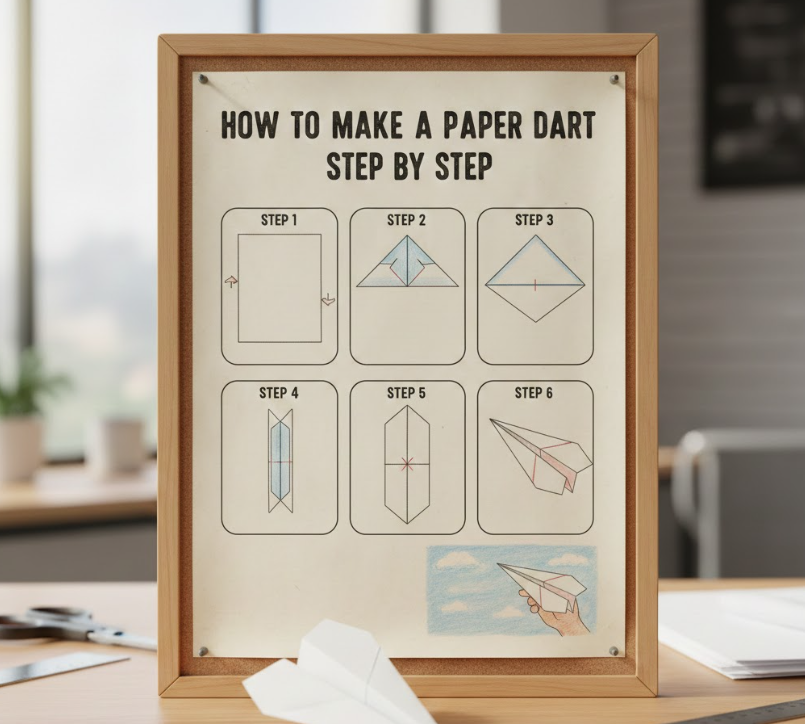
Step-by-step instructions provide a systematic way to understand how to make a paper dart. This method ensures precision and reduces mistakes, making it suitable for both beginners and experienced paper folding enthusiasts.
• Choose a rectangular sheet of paper, preferably lightweight but durable. Standard A4 or letter-sized paper is recommended.
• Fold the paper in half lengthwise to create a guideline for symmetry. Symmetry is essential for flight stability and consistent throws.
• Create a triangular nose by folding the top corners toward the center line. The pointed tip reduces air resistance and enhances glide.
• Fold the edges toward the center once more to strengthen the body. Reinforced folds prevent the dart from bending mid-flight.
• Make small adjustments to the tail, such as folding flaps upward or downward for added control. Tail modifications impact the dart’s trajectory and spin.
• Test the finished dart and fine-tune by trimming edges or adjusting folds. Experimentation ensures the dart flies straight, far, and accurately.
Following a step-by-step process not only produces functional darts but also teaches principles of aerodynamics, symmetry, and careful craftsmanship. Beginners can gradually experiment with variations for improved performance.
Also Read:- How to Sew a Button: A Complete Beginner-to-Expert Guide for Long-Lasting Results
How to Make a Paper Dart Plane
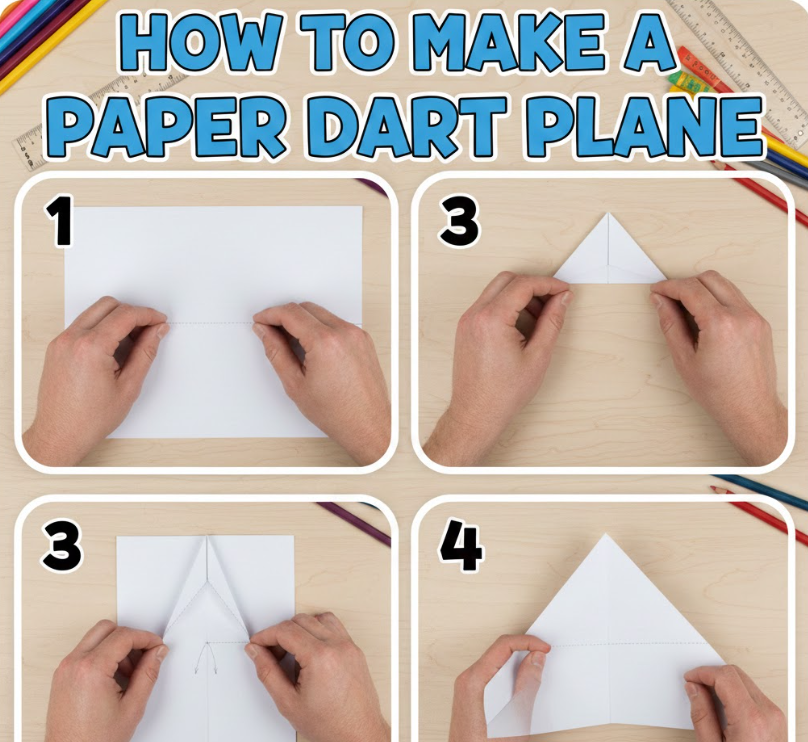
A paper dart plane combines the simplicity of a dart with the flight mechanics of a plane. Learning how to make a paper dart plane introduces advanced folding techniques and improves understanding of gliding dynamics, wing balance, and aerodynamics.
• Use thin but sturdy paper to optimize weight and glide. Lightweight paper ensures smooth air passage, while thicker paper adds durability.
• Fold the paper in half vertically for a precise centerline. This centerline acts as a reference for symmetry in all subsequent folds.
• Form a sharp triangular nose by folding the top corners toward the centerline. A pointed nose reduces drag and improves flight stability.
• Fold the wings downward along parallel lines to create a gliding surface. Wing size and angle influence lift and distance.
• Fold small winglets at the edges for improved stability. Winglets reduce wobbling and enhance accuracy during flight.
• Test and adjust throw technique based on dart plane behavior. Adjustments can include minor folds, wing tilt, or changing grip to achieve longer or straighter flights.
Paper dart planes are excellent for competitions, science projects, and educational activities. Their advanced folding introduces principles of physics in an engaging and practical manner.
Also Read:- How to Tie a Gi Belt: A Step-by-Step Guide for Martial Artists
How to Make a Paper Dart Airplane
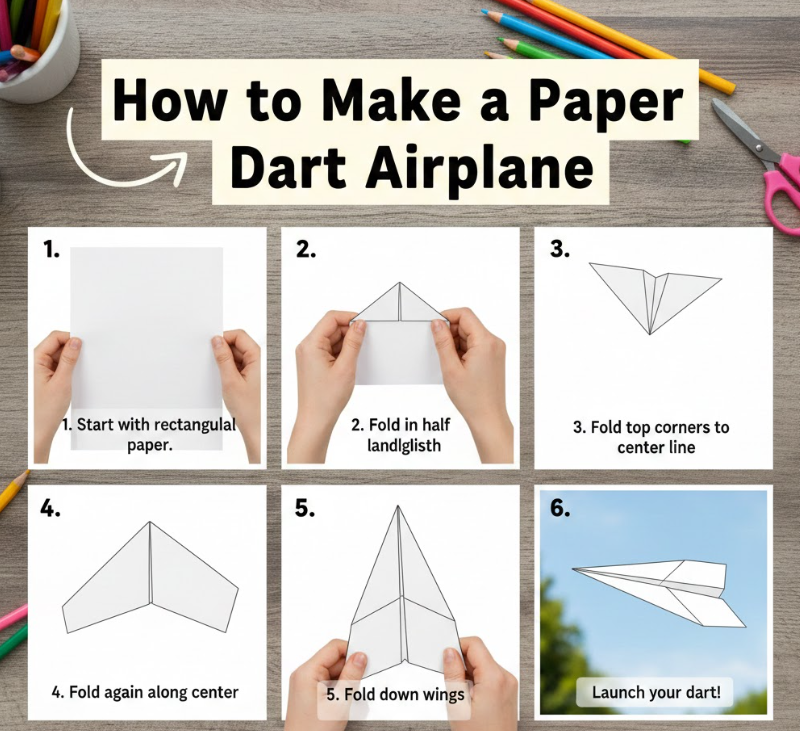
Paper dart airplanes focus on long-distance and straight flight rather than short, fast throws. Understanding how to make a paper dart airplane involves learning aerodynamic balance, weight distribution, and wing alignment to maximize glide distance.
• Start with lightweight, rectangular paper. Proper weight distribution is crucial for achieving smooth, long-distance flight.
• Fold the paper in half lengthwise to create a precise spine. The spine provides structural support and ensures symmetry.
• Fold the top corners toward the centerline to create a sharp nose. A sharp nose minimizes drag, allowing the plane to travel farther.
• Fold the edges toward the centerline again, reinforcing the body. This step ensures rigidity and prevents bending during flight.
• Create folded wings with equal width and slight upward tips. Wing size and angle affect lift, distance, and stability.
• Test and refine throwing technique, adjusting nose and wing folds for optimal flight path. Experiment with throwing angles, force, and dart grip for consistent performance.
Paper dart airplanes combine precision, experimentation, and science. Repeated trials help understand aerodynamics and provide a fun challenge for children and adults alike.
Also Read:- How to Texture a Wall: A Comprehensive Guide to Beautiful Wall Finishes
How to Make a Paper Dart with a Staple
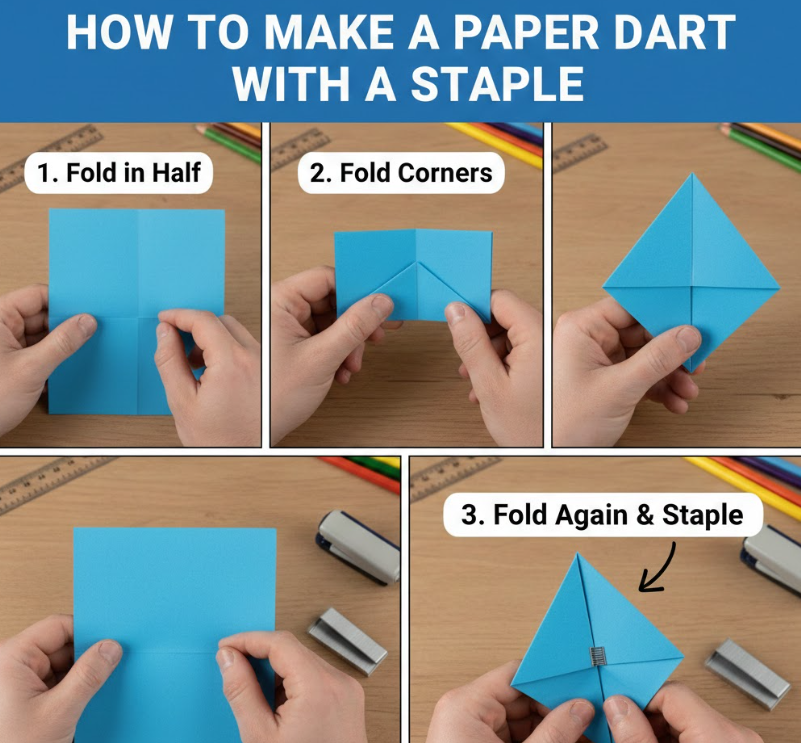
Adding a staple to a paper dart creates weight, improving straight flight and throwing distance. Learning how to make a paper dart with a staple introduces basic physics, allowing you to balance drag and momentum for maximum efficiency.
• Choose thin paper to prevent tearing from the staple. Avoid heavy paper, which may impede glide.
• Fold the paper into a standard dart shape with a triangular nose and reinforced body. Proper folds maintain structural integrity.
• Place a staple near the tip for added weight. The staple increases momentum, enabling longer throws and reduced wobble.
• Ensure the staple does not pierce crucial folds, keeping the nose intact. Placement affects balance and trajectory.
• Fold any remaining edges inward to secure the staple and maintain symmetry. Symmetry is key to flight accuracy.
• Test and adjust for flight performance, making small modifications to folds or staple placement for optimal trajectory.
Stapled paper darts are popular for competitions or classroom experiments. The added weight teaches practical lessons in mass, balance, and aerodynamics while maintaining safety and simplicity.
Also Read:- How to Tell if a Mango is Ripe: Ultimate Guide for Perfect Mangoes
Conclusion
Learning how to make a paper dart is both an entertaining and educational pursuit. From sticky note darts to stapled weighted darts, from step-by-step folding to advanced dart airplanes, each method introduces lessons in aerodynamics, balance, and precision. Following the steps in this guide allows beginners and experts alike to craft functional, enjoyable, and safe paper darts, turning a simple sheet of paper into a flying tool of creativity and fun.
FAQs:
Q: What type of paper works best for darts?
Lightweight but durable paper is ideal. Avoid overly thick sheets, which reduce glide distance.
Q: Can I add weight to a paper dart?
Yes, adding a staple or small tape strip can improve flight distance and accuracy.
Q: How do I make my paper dart fly straight?
Ensure symmetry, a sharp nose, reinforced body, and minor wing adjustments. Testing and refining throws also helps.
Visit For More Information Go To entrepreneurideas