
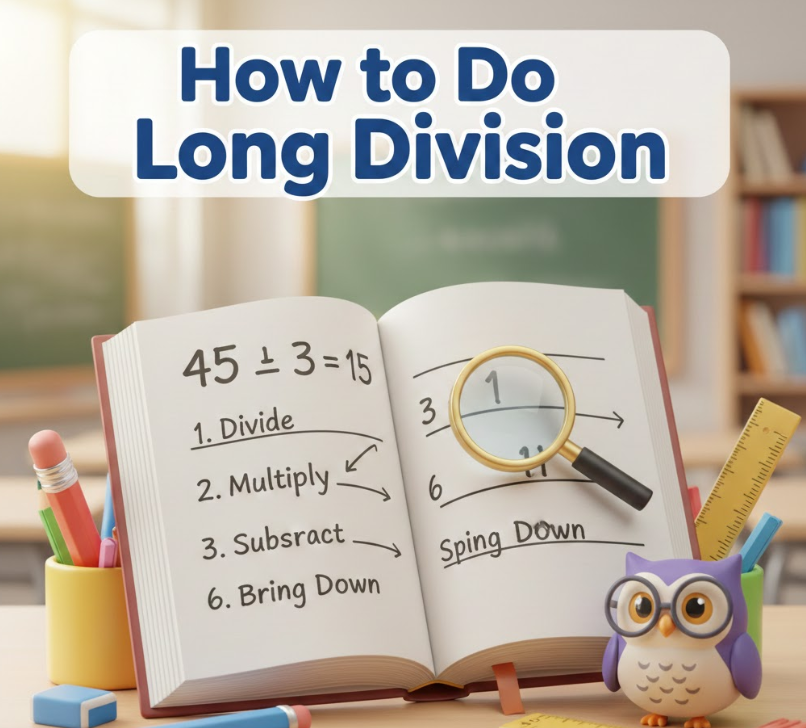
Long division is a fundamental mathematical technique used to divide large numbers, decimals, or polynomials. Understanding how to do long division is essential for students, professionals, and anyone dealing with complex calculations. It provides a systematic approach to breaking down division problems into manageable steps, ensuring accuracy and efficiency.
Long division is not just limited to whole numbers; it extends to decimals, polynomials, and multi-digit numbers. Mastering this method enhances problem-solving skills and builds a strong foundation for algebra, arithmetic, and advanced mathematics. By following step-by-step instructions and practicing regularly, learners can tackle long division problems with confidence.
How to Do Long Division with Polynomials
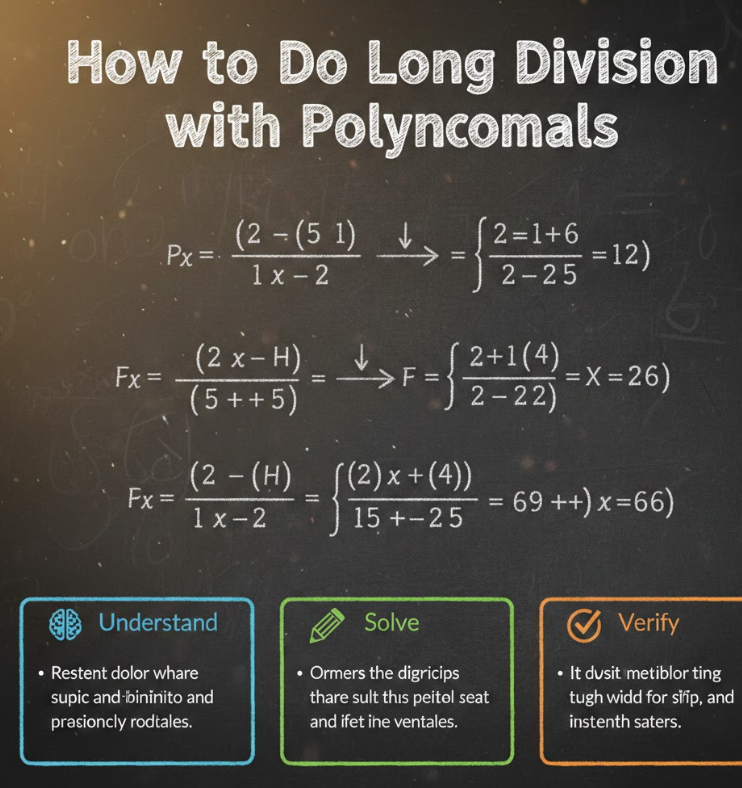
Long division with polynomials is a crucial skill in algebra. It allows you to divide one polynomial by another, simplifying complex expressions, solving rational equations, and factoring higher-degree polynomials. The method is similar to numerical long division but requires careful handling of variable terms and coefficients.
Key Points Explained
• Understanding the dividend and divisor
The dividend is the polynomial you are dividing, and the divisor is the polynomial you are dividing by. Arrange both in standard form, with terms ordered from highest to lowest degree. This organization ensures each step proceeds logically.
• Dividing the leading term
Divide the leading term of the dividend by the leading term of the divisor. This determines the first term of the quotient. Accuracy here is critical, as it sets the foundation for the entire division process.
• Multiplying and subtracting
Multiply the entire divisor by the term obtained and subtract it from the dividend. This creates a new polynomial called the remainder. Repeat this process until the remainder has a degree lower than the divisor.
• Handling negative coefficients
Pay careful attention to negative coefficients when subtracting polynomials. Mistakes with signs are common but can disrupt the entire solution. Keep operations precise and consistent.
• Writing the quotient and remainder
Once division is complete, write the quotient polynomial. If a remainder exists, express it as a fraction with the remainder over the original divisor to complete the division expression.
• Checking your work
Multiply the quotient by the divisor and add the remainder. The result should match the original dividend, confirming the accuracy of the long division.
Also Read:- How to Share Location on iPhone: The Complete Practical Guide
How to Do Long Division with Decimals
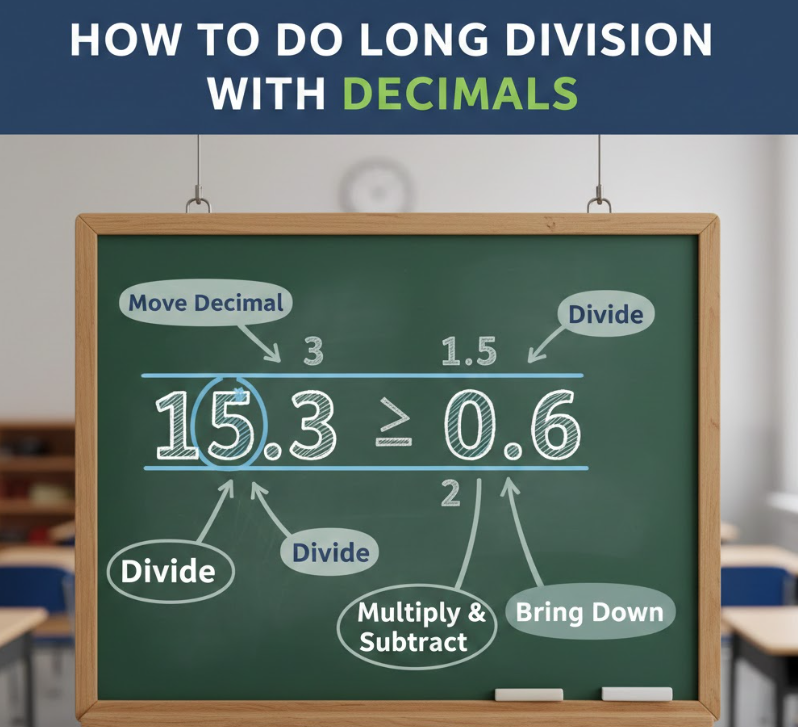
Long division with decimals is an essential skill for working with money, measurements, and precise calculations. It extends traditional long division by incorporating decimal points, ensuring accurate results in real-world applications.
Key Points Explained
• Aligning decimal points
When dividing decimals, ensure the dividend and divisor are adjusted so the divisor becomes a whole number. Move the decimal point in the dividend accordingly. Proper alignment prevents errors in the quotient.
• Performing standard long division
Carry out long division as with whole numbers. Divide, multiply, subtract, and bring down digits sequentially. Treat each step carefully, keeping track of the decimal point placement.
• Placing the decimal in the quotient
Once the divisor is adjusted, place the decimal point directly above its position in the dividend. This ensures the quotient reflects the correct decimal value.
• Handling repeating decimals
Some divisions result in repeating decimals. Identify patterns to round or denote repeating sequences accurately. This is important for reporting precise calculations in measurements or financial problems.
• Extending with zeros
If the dividend’s digits are exhausted before completing the division, append zeros after the decimal point to continue. This technique ensures accurate and complete results.
• Verifying results
Multiply the quotient by the divisor to check if it matches the original dividend. This step ensures no errors occurred during decimal handling and confirms the solution’s correctness.
Also Read:- How to Camp: A Complete Practical Guide for Every Situation
How to Do Long Division with 2 Digits
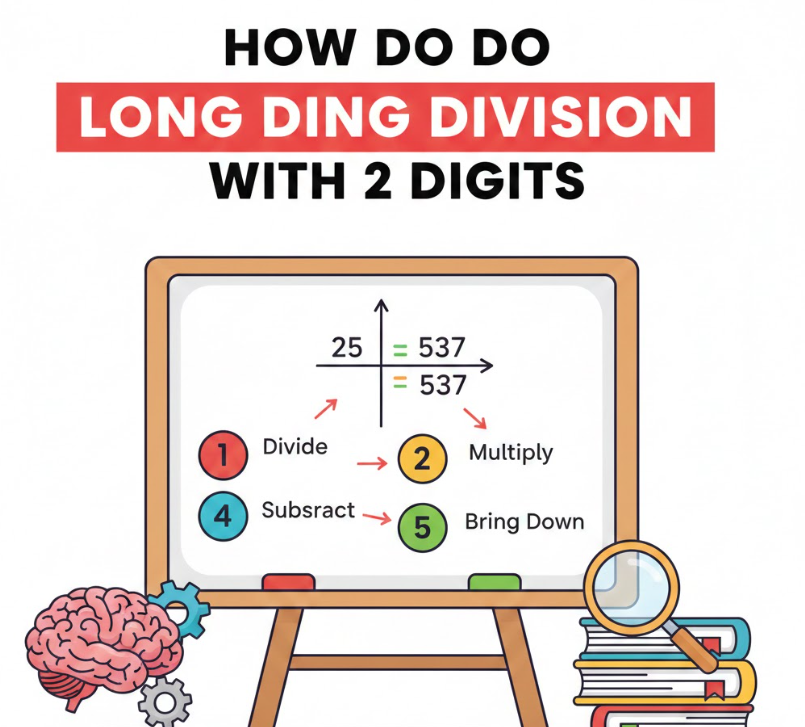
Long division with two-digit numbers is a foundational skill for arithmetic and problem-solving. Mastering this method helps handle larger numbers and prepares learners for advanced division problems.
Key Points Explained
• Identifying the divisor and dividend
The dividend is the number being divided, and the divisor is the two-digit number. Position the divisor outside the long division bracket and the dividend inside to organize the problem correctly.
• Estimating the first digit of the quotient
Estimate how many times the divisor fits into the leading portion of the dividend. For two-digit divisors, estimation requires rounding and careful multiplication to avoid overshooting.
• Multiplying and subtracting
Multiply the divisor by the estimated quotient digit and subtract the result from the dividend. Bring down the next digit from the dividend to continue the process. Accuracy in subtraction is crucial.
• Repeating the process
Continue dividing, multiplying, subtracting, and bringing down digits until all dividend digits are used. This iterative process builds the complete quotient systematically.
• Dealing with remainders
If the dividend is not fully divisible by the divisor, a remainder exists. Express the remainder as a fraction or decimal to present a complete solution.
• Double-checking calculations
Multiply the quotient by the divisor and add the remainder to ensure the result matches the dividend. Verification prevents errors and reinforces understanding.
Also Read:- How to Attract Birds: A Complete, Science-Backed Guide for Your Yard and Garden
How to Do Long Division Step by Step
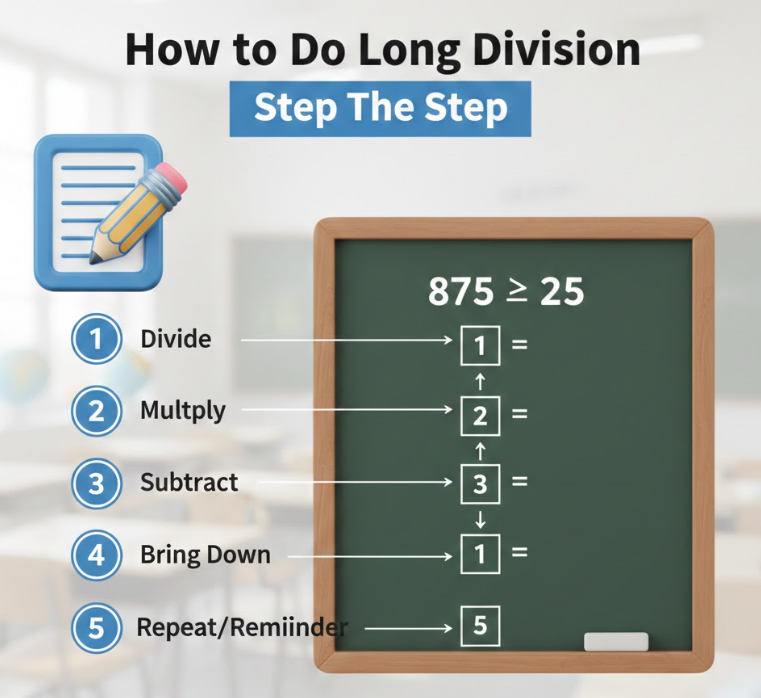
Breaking down long division step by step ensures clarity and mastery. Understanding each stage and practicing sequentially allows learners to handle any division problem efficiently.
Key Points Explained
• Step 1: Set up the division problem
Write the dividend inside the bracket and the divisor outside. Organizing the problem properly sets the stage for accurate calculations.
• Step 2: Divide the leading digit
Look at the leading digit of the dividend and determine how many times the divisor fits. This step produces the first digit of the quotient.
• Step 3: Multiply and subtract
Multiply the divisor by the quotient digit and subtract the result from the dividend. This step reduces the problem and creates a new number for the next iteration.
• Step 4: Bring down the next digit
Bring down the next digit from the dividend to form a new number. Repeat the division, multiplication, and subtraction process systematically.
• Step 5: Repeat until complete
Continue dividing, multiplying, subtracting, and bringing down digits until all digits of the dividend are used. This iterative approach ensures a complete and accurate solution.
• Step 6: Interpret the quotient and remainder
After the process, write the quotient and, if applicable, the remainder. For decimals or fractions, convert the remainder accordingly. Always verify by multiplying the quotient by the divisor and adding the remainder to confirm accuracy.
Also Read:- How to Make a Slip Knot: Step-by-Step Guide for Crochet, Knitting & Bracelets
Conclusion
Mastering how to do long division is essential for mathematical proficiency and real-life problem-solving. From polynomials to decimals, two-digit numbers, and step-by-step methods, long division provides a reliable framework for accurate calculations.
By following structured techniques, understanding each step, and practicing regularly, learners can perform division confidently, reduce errors, and solve complex problems efficiently. Long division not only strengthens arithmetic skills but also builds a foundation for algebra, calculus, and other advanced mathematics.
FAQs
What is long division used for?
Long division is used to divide large numbers, decimals, and polynomials systematically. It ensures accuracy and helps in complex calculations.
Can long division be used with decimals?
Yes, by adjusting decimal points and aligning numbers, long division can handle decimals accurately.
How do I check my long division answer?
Multiply the quotient by the divisor and add the remainder if any. The result should match the original dividend.
Is long division necessary for algebra?
Yes, especially for dividing polynomials, simplifying expressions, and solving equations efficiently.
Can I do long division mentally?
Simple long division problems with small numbers can be done mentally, but larger numbers require the systematic method for accuracy.
Visit For More Information Go To entrepreneurideas