

Learning how to attract birds is more than a hobby—it is a way to reconnect with nature, support local ecosystems, and create a peaceful outdoor sanctuary. Birds are highly sensitive to their environment, and even small changes in food, water, shelter, and safety can dramatically increase bird visits to your yard.
This in-depth guide is based on real-world birdwatching experience, wildlife conservation principles, and ornithology research. It explains how to attract birds to feeders, how to attract birds to your yard, how to attract birds to a bird feeder, and how to attract birds to a bird bath, using ethical, sustainable, and proven strategies.
How to Attract Birds to Feeder
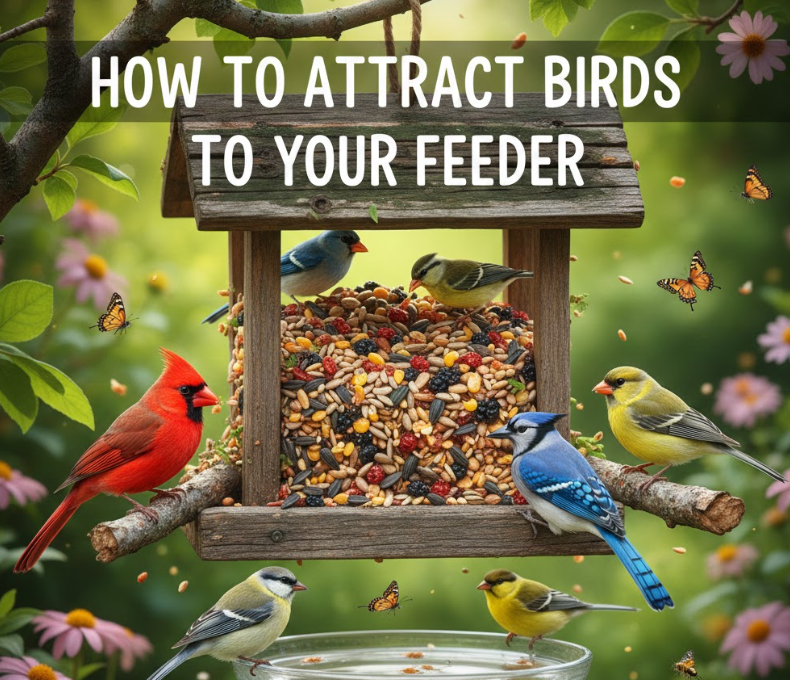
Attracting birds to a feeder requires understanding bird behavior, feeding preferences, and seasonal needs. Birds do not visit feeders randomly—they assess safety, food quality, and consistency before committing to a feeding location. A well-maintained feeder becomes a reliable food source birds return to daily.
This section explains how to make your feeder irresistible while keeping birds healthy and protected.
• Selecting bird feed that matches native species diets
Different birds prefer different foods. Finches favor nyjer seeds, cardinals prefer sunflower seeds, and woodpeckers are drawn to suet. Using species-appropriate feed increases visits while reducing waste. Matching local bird diets signals reliability and encourages repeat visits.
• Placing feeders in safe, visible locations
Feeders should be placed where birds can spot predators early but still have nearby cover. Too exposed, and birds feel unsafe; too hidden, and predators may ambush them. Proper placement balances visibility and refuge.
• Maintaining cleanliness to prevent disease
Dirty feeders spread illness quickly. Regular cleaning with mild disinfectant protects birds from harmful bacteria. Clean feeders build trust and support long-term bird health.
• Establishing consistent feeding schedules
Birds remember dependable food sources. Inconsistent feeding discourages return visits. A steady routine helps birds incorporate your feeder into their daily foraging routes.
• Using multiple feeder types to attract diversity
Tube feeders, platform feeders, and suet cages attract different species. Variety increases biodiversity and reduces competition among birds.
• Adjusting feeding strategies seasonally
Winter requires high-fat foods, while spring feeding supports nesting. Seasonal adjustments demonstrate ecological awareness and maximize effectiveness.
Also Read:- How to Make a Slip Knot: Step-by-Step Guide for Crochet, Knitting & Bracelets
How to Attract Birds to Your Yard
Learning how to attract birds to your yard involves creating a complete habitat, not just offering food. Birds seek environments that provide nourishment, shelter, nesting sites, and safety. A bird-friendly yard functions like a miniature ecosystem.
This approach leads to more species, longer visits, and even nesting behavior.
• Planting native trees, shrubs, and flowers
Native plants support local insects, which are essential bird food. They also provide natural shelter and nesting materials. Native landscaping increases bird activity naturally.
• Creating layered vegetation for shelter
Birds prefer yards with ground cover, shrubs, and canopy layers. This structure mimics natural habitats and offers protection from predators and harsh weather.
• Reducing chemical use in landscaping
Pesticides eliminate insects birds depend on. Chemical-free yards support healthier bird populations and safer feeding environments.
• Providing nesting opportunities year-round
Birdhouses and natural cavities encourage birds to stay long-term. Proper placement and species-specific designs increase nesting success.
• Minimizing noise and human disturbance
Excessive noise disrupts bird communication and feeding. Calm environments attract shy species and encourage longer stays.
• Ensuring predator deterrence naturally
Strategic plant placement and feeder positioning reduce predator access without harming wildlife. Safe environments build bird confidence.
Also Read:- How to Make a Paper Dart: The Ultimate Guide
How to Attract Birds to a Bird Feeder
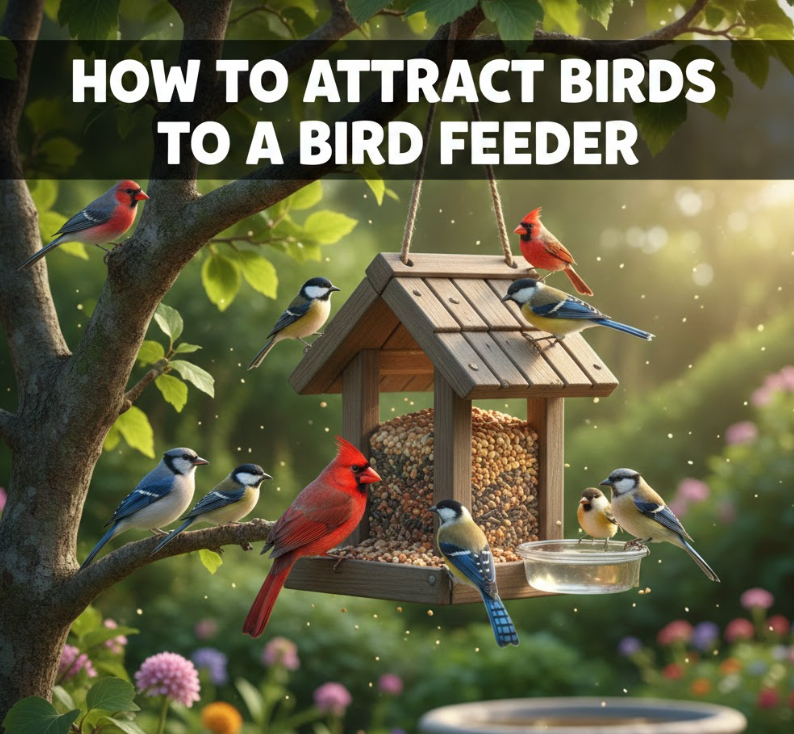
Understanding how to attract birds to a bird feeder goes beyond simply hanging food outdoors. Birds evaluate feeder safety, accessibility, and competition before using it regularly. Proper feeder management builds trust over time.
This section focuses on optimizing feeders for comfort and repeat visitation.
• Choosing feeder designs that suit bird sizes
Different birds require different perch sizes and access points. Proper design prevents dominance by aggressive species and allows fair feeding.
• Positioning feeders to reduce stress and conflict
Spacing feeders apart reduces competition and territorial behavior. Birds feel calmer when they can feed without confrontation.
• Protecting feeders from weather exposure
Rain and snow spoil seed quickly. Weather-protected feeders maintain food quality and reduce waste.
• Discouraging pests without harming birds
Squirrel baffles and seed selection limit pests. Non-toxic deterrents protect bird access while maintaining balance.
• Monitoring bird behavior and adjusting setup
Observing which birds visit helps refine feeder strategy. Adaptive management improves long-term success.
• Building trust through reliability and patience
Birds may take weeks to discover new feeders. Consistency and patience are essential for lasting attraction.
Also Read:- How to Shrink a Shirt: A Complete Practical Guide for the Perfect Fit
How to Attract Birds to Bird Bath
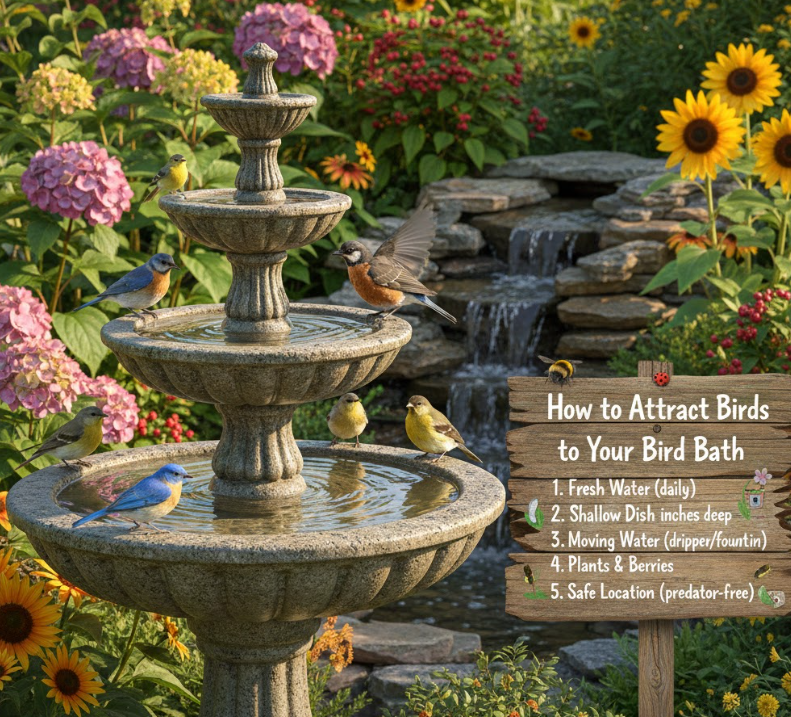
Learning how to attract birds to a bird bath is one of the most effective yet overlooked strategies. Water is essential for drinking and feather maintenance. In many areas, water availability attracts birds more than food.
This section explains how to design a bird bath birds actively seek out.
• Choosing shallow, safe water depths
Birds prefer shallow water with gradual slopes. Safe depths prevent drowning and encourage bathing behavior.
• Placing bird baths in open but protected areas
Birds need visibility to detect predators. Nearby shrubs provide escape routes without hiding threats.
• Keeping water clean and fresh daily
Dirty water discourages birds and spreads disease. Daily water changes maintain hygiene and trust.
• Adding gentle movement to attract attention
Dripping or bubbling water mimics natural sources. Sound and movement significantly increase bird visits.
• Using natural materials for comfort
Stone or textured surfaces improve grip. Natural materials feel safer and reduce slipping risk.
• Providing year-round water access
Heated bird baths in winter support survival. Consistent water availability builds long-term visitation.
Also Read:- How to Sew a Button: A Complete Beginner-to-Expert Guide for Long-Lasting Results
Conclusion
Mastering how to attract birds is about creating trust, safety, and balance. By offering proper food, clean water, natural shelter, and consistent care, your yard becomes a sanctuary rather than a feeding stop. Whether you focus on feeders, bird baths, or full habitat design, thoughtful choices lead to richer biodiversity and deeper connection with nature.
FAQs
How long does it take to attract birds?
Anywhere from a few days to several weeks depending on environment and consistency.
Do birds become dependent on feeders?
No. Birds use feeders as supplements, not sole food sources.
What attracts birds the most—food or water?
Water is often the strongest attractor, especially in dry climates.
Visit For More Information Go To entrepreneurideas