

Knowing how to toast pecans properly can transform this naturally buttery nut into a deeply aromatic, crunchy ingredient that elevates both sweet and savory dishes. Toasting enhances pecans by drawing out their natural oils, intensifying flavor, and improving texture. Whether you are preparing pecans for salads, desserts, snacks, or baking recipes, the method you choose directly impacts taste and consistency.
This comprehensive guide explains how to toast pecans in the oven, on the stove, in an air fryer, and using stovetop techniques, with expert-level detail and practical insight. Drawing from culinary best practices and food science principles, this article ensures reliable results for home cooks and professionals alike.
How to Toast Pecans in the Oven
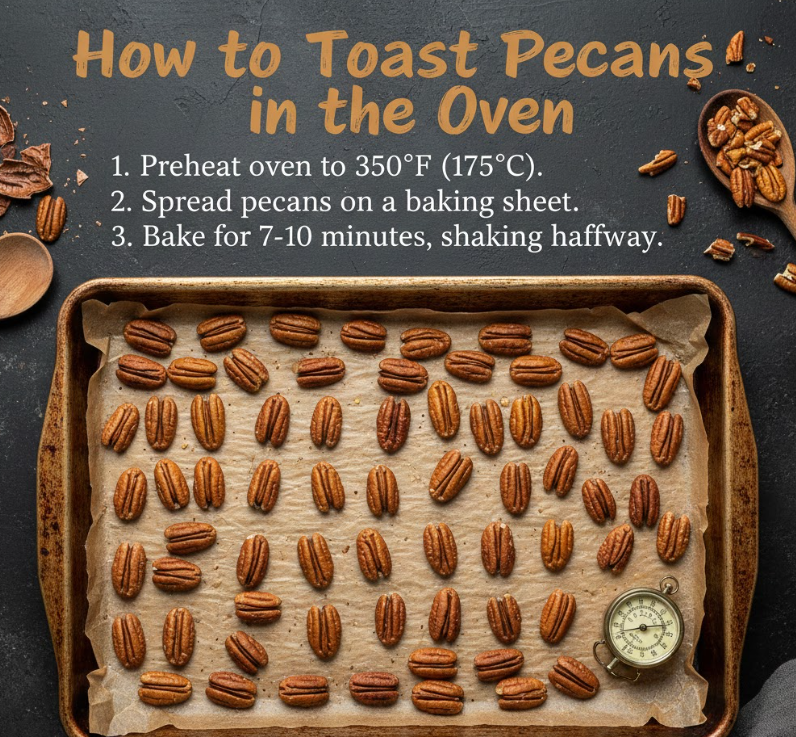
Oven-toasting is one of the most reliable and evenly controlled ways to toast pecans, making it ideal for larger batches and consistent results.
Understanding Oven-Based Pecan Toasting
• Why the Oven Works So Well for Pecans
The oven provides uniform heat distribution, allowing pecans to toast evenly on all sides. This method minimizes hot spots and reduces the risk of uneven browning compared to direct heat methods.
• Preparing Pecans for Oven Toasting
Before toasting, pecans should be clean, dry, and spread evenly on a baking sheet. Crowding the pan traps steam and prevents proper browning, which can lead to soggy or uneven results.
• Choosing the Correct Temperature
A moderate temperature, typically around 325°F (165°C), allows pecans to toast slowly. This controlled heat prevents burning while ensuring the nuts develop a rich, nutty aroma.
• Stirring for Even Toasting
Stirring or shaking the pan halfway through the cooking process ensures all surfaces are exposed to heat. This step is essential for uniform color and flavor development.
• Recognizing Doneness Accurately
Properly toasted pecans appear slightly darker and release a strong nutty fragrance. Relying on aroma rather than color alone prevents over-toasting.
• Cooling and Storage After Toasting
Allowing pecans to cool completely helps them firm up and develop crunch. Proper storage in airtight containers preserves freshness and prevents rancidity.
Also Read:- How to Thread a Needle: A Complete Step-by-Step Guide for Beginners and Experts
How to Toast Pecans in Oven (Alternative Oven Method)
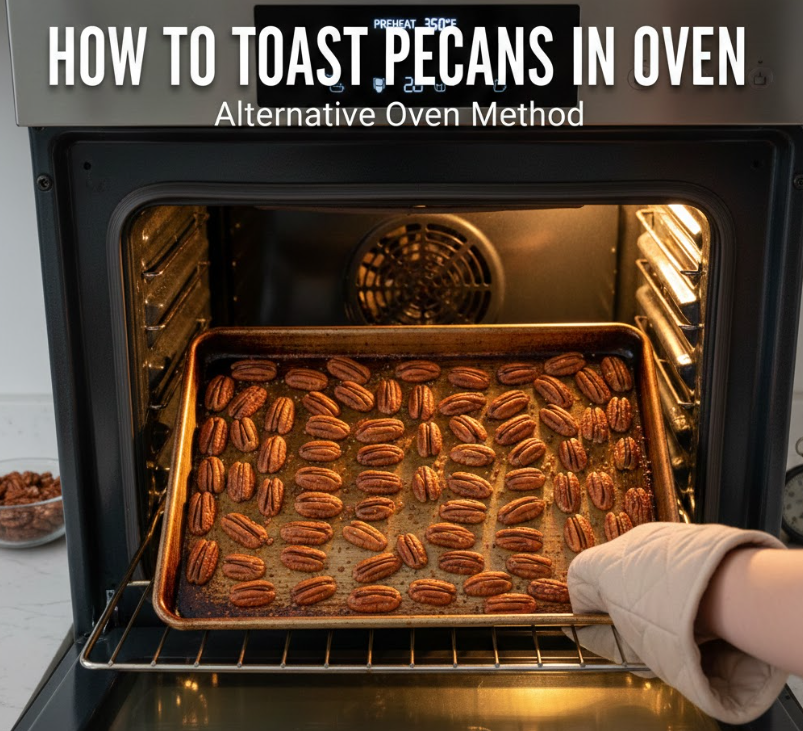
While similar to standard oven toasting, this approach focuses on technique adjustments that improve flavor control and reduce common mistakes.
Optimizing Oven Toasting Results
• Using Parchment Paper or Silicone Mats
Lining the baking sheet prevents sticking and promotes even heat reflection. It also makes cleanup easier without affecting browning quality.
• Toasting Pecans Plain or Seasoned
Pecans can be toasted plain or lightly coated with oil or seasoning. Adding seasoning before toasting allows flavors to adhere better, but sugar-based coatings require extra attention to avoid burning.
• Single-Layer Arrangement Importance
Arranging pecans in a single layer ensures consistent exposure to heat. Overlapping nuts toast unevenly and may develop bitter flavors.
• Monitoring Time Closely
Pecans toast quickly once heated. Regular visual checks prevent sudden burning, especially during the final minutes.
• Understanding Carryover Cooking
Residual heat continues cooking pecans after removal from the oven. Removing them slightly early prevents over-toasting.
• Flavor Development Through Slow Heat
Gradual heat enhances caramelization of natural sugars, resulting in deeper flavor complexity.
Also Read:- How to Shrink a Shirt: A Complete Practical Guide for the Perfect Fit
How to Toast Pecans on Stove
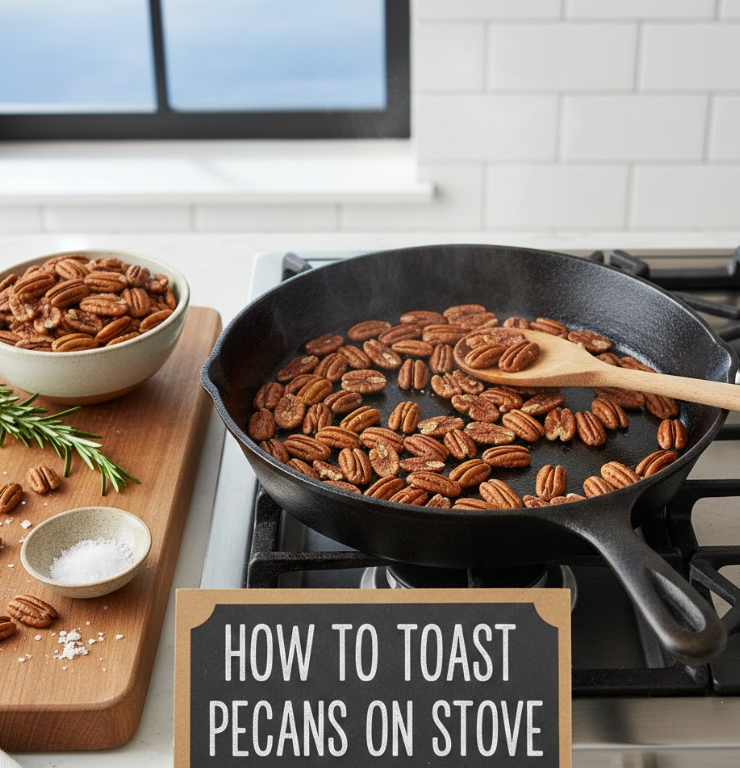
Stovetop toasting offers speed and direct control, making it ideal for small batches or quick recipes.
Stovetop Toasting Explained
• Choosing the Right Pan
A heavy-bottomed skillet distributes heat evenly, preventing hot spots that cause burning. Nonstick or cast-iron pans both work well.
• Dry Toasting vs Oil Toasting
Dry toasting highlights natural pecan flavor, while oil enhances richness. Either method works, depending on the intended use.
• Heat Control and Timing
Medium heat allows pecans to toast gradually without scorching. High heat causes uneven browning and bitter flavors.
• Constant Movement for Safety
Stirring continuously prevents localized overheating. Pecans burn quickly when left unattended on direct heat.
• Aroma as a Doneness Indicator
A strong, warm nutty scent signals readiness. Removing pecans immediately preserves optimal flavor.
• Immediate Cooling After Toasting
Transferring pecans to a cool surface stops the cooking process and locks in texture.
Also Read:- How to Sew a Button: A Complete Beginner-to-Expert Guide for Long-Lasting Results
How to Toast Pecans in Air Fryer
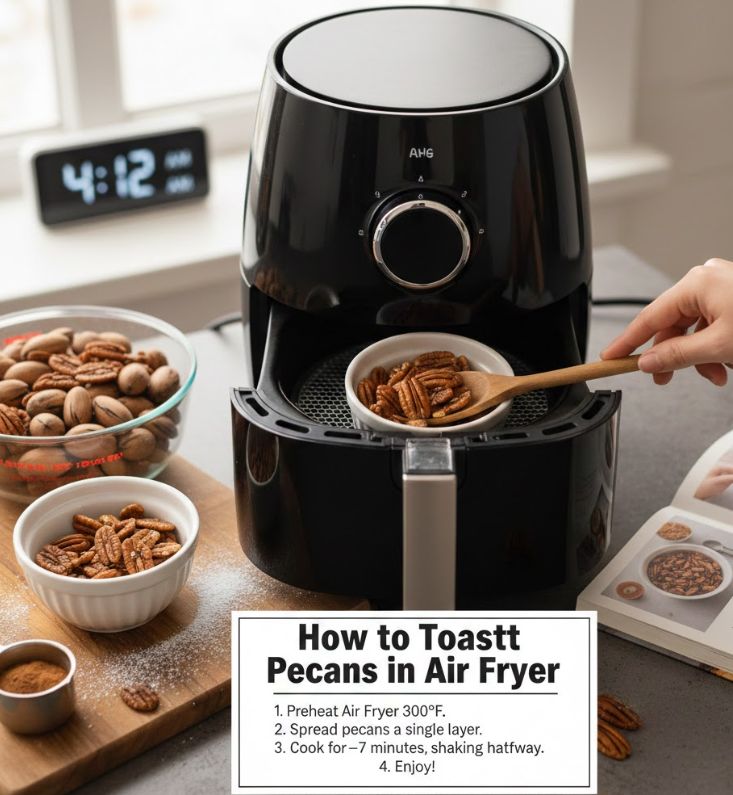
Air fryers provide rapid circulation and efficient heat, making them a modern and convenient option for toasting pecans.
Air Fryer Pecan Toasting Guide
• Why Air Fryers Work Well for Nuts
Rapid air circulation ensures even toasting with minimal oil. This method produces crisp pecans quickly.
• Preparing Pecans for Air Frying
Lightly coating pecans with oil improves browning. Over-oiling should be avoided to prevent smoking.
• Using Proper Temperature Settings
Lower temperatures, around 300°F (150°C), prevent burning while allowing flavor development.
• Shaking the Basket Frequently
Shaking ensures even exposure to circulating air, reducing uneven browning.
• Short Cooking Time Awareness
Air fryers toast pecans quickly, often within 4–6 minutes. Frequent checks prevent overcooking.
• Cooling and Storage Tips
Cooling allows pecans to crisp fully. Airtight storage preserves texture and flavor.
Also Read:- How to Tie a Gi Belt: A Step-by-Step Guide for Martial Artists
How to Toast Pecans Stovetop (Detailed Technique)
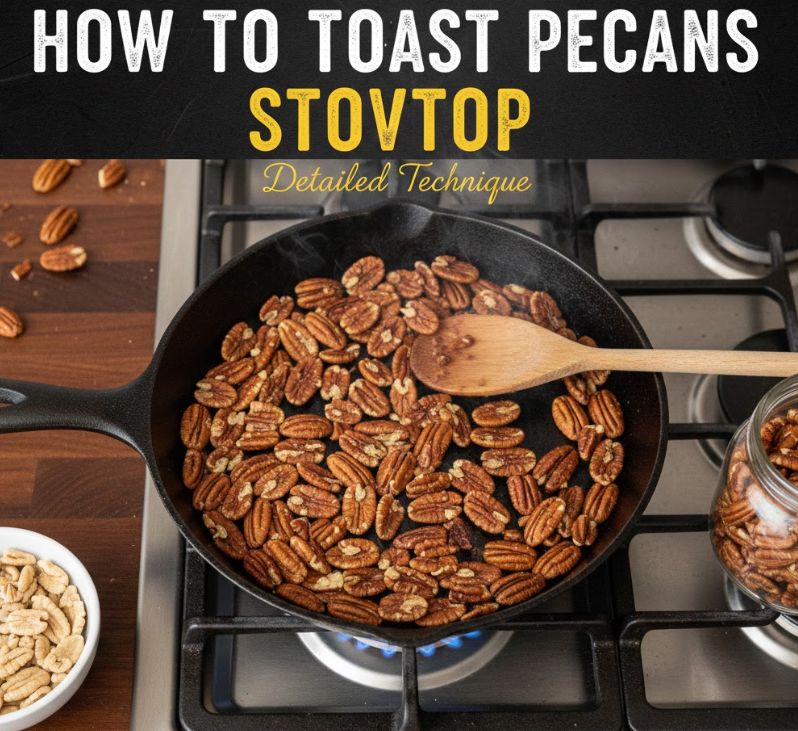
This stovetop-focused method emphasizes precision and adaptability for different recipes.
Advanced Stovetop Toasting Practices
• Adjusting Heat Based on Batch Size
Smaller batches require lower heat to avoid scorching. Larger batches benefit from slightly extended cooking times.
• Using Butter for Flavor Enhancement
Butter adds richness but requires careful temperature control to prevent burning.
• Seasoning During or After Toasting
Salt and spices can be added after toasting for better control and balanced flavor.
• Preventing Bitter Aftertaste
Immediate removal from heat prevents bitterness caused by over-toasting.
• Visual Cues for Perfect Toasting
Even golden-brown color indicates optimal doneness.
• Versatility for Recipe Integration
Stovetop-toasted pecans adapt well to salads, baked goods, and sauces.
Also Read:- How to Texture a Wall: A Comprehensive Guide to Beautiful Wall Finishes
Conclusion
Mastering how to toast pecans unlocks deeper flavor, better texture, and greater versatility in the kitchen. Whether using the oven, stovetop, or air fryer, the key lies in controlled heat, careful monitoring, and proper cooling. With the techniques outlined in this guide, pecans can consistently enhance both everyday meals and special recipes.
FAQs
Q: Can pecans burn easily?
Yes. Their high oil content causes rapid browning, so close monitoring is essential.
Q: Should pecans be toasted before baking?
Toasting enhances flavor and prevents bland results in baked goods.
Q: How long do toasted pecans last?
Stored properly, they remain fresh for up to two weeks at room temperature or longer when refrigerated
Visit For More Information Go To entrepreneurideas