

Mangoes are among the most delicious and versatile fruits, celebrated for their sweet, juicy flavor and vibrant color. However, enjoying a mango at its peak requires knowing how to tell if a mango is ripe.
Picking a mango too early results in a hard, tangy fruit, while a overripe mango can be mushy and overly fermented. In this guide.
We will explore the signs of a ripe mango, tips for selecting the best fruit, and tricks to enjoy every bite at its perfect sweetness and texture.
How to Tell if a Mango is Ripe to Eat
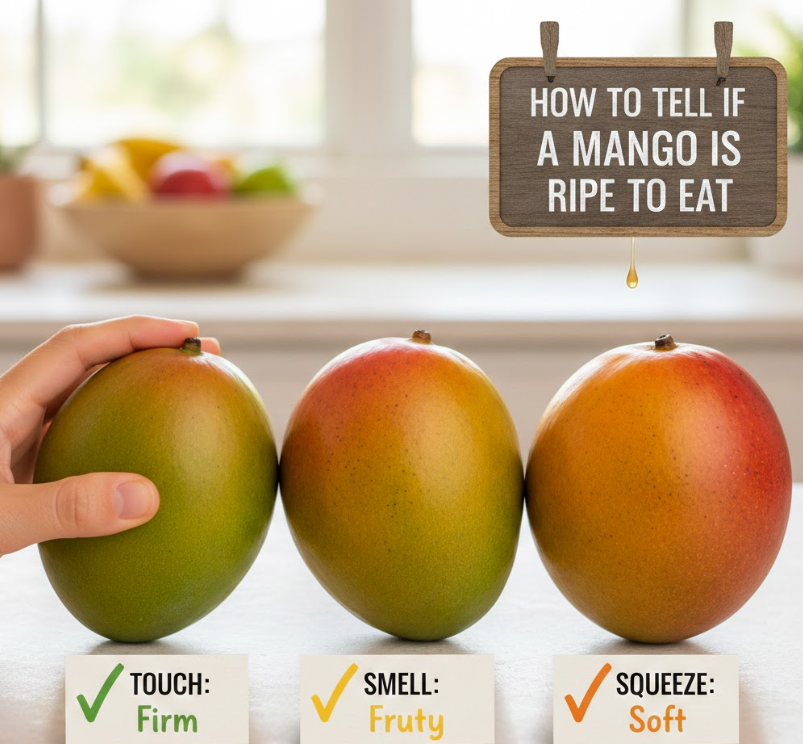
Knowing when a mango is ready to eat ensures the perfect balance of sweetness, juiciness, and flavor. Eating unripe mangoes can be sour and unpleasant, while overly ripe mangoes may be too soft and lose their taste. Understanding how to tell if a mango is ripe to eat involves checking color, touch, aroma, and texture.
- Color Indicators: The skin color of a mango can hint at its ripeness. While some varieties remain green even when ripe, many show yellow, orange, or red hues when ready to eat. Observing subtle color changes helps identify peak ripeness.
- Gentle Squeeze Test: Applying gentle pressure to the mango reveals firmness. A ripe mango yields slightly to touch without being mushy. This tactile method ensures the fruit is soft enough to enjoy yet firm enough to hold its shape.
- Aroma Detection: Ripe mangoes emit a sweet, fruity fragrance near the stem. Smelling the fruit is an effective indicator, as unripe mangoes lack aroma, while overripe ones may smell fermented.
- Texture Assessment: Examine the skin and surface texture. A smooth, slightly wrinkled skin often signifies ripeness, while hard, glossy skins may indicate an unripe mango.
- Weight Consideration: Heavier mangoes tend to have higher juice content. Picking a mango that feels dense in your hand suggests it is ripe and ready to eat.
- Stem Check: Inspect the stem end; a slight give or softening near the stem is a sign of ripeness. Avoid fruits with shriveled or overly soft stems, as this may indicate overripeness.
Using these methods together ensures that you select mangoes at their ideal eating stage, maximizing flavor and enjoyment.
Also Read:- How to Stop Sneezing: Effective Tips and Remedies
How to Tell if a Mango is Ripe and Sweet

A perfectly ripe mango is not only ready to eat but also exceptionally sweet. Sweetness is a combination of sugar content, proper ripening, and variety. Understanding how to tell if a mango is ripe and sweet involves evaluating color, aroma, and even taste hints before slicing the fruit.
- Color Ripeness: Varieties like Alphonso or Ataulfo develop a golden yellow to reddish-orange skin when sweet and ripe. Observing the uniformity of color can indicate sweetness without cutting into the fruit.
- Aroma Clues: The sweeter the mango, the stronger the fruity fragrance near the stem. A rich, tropical aroma usually signals high sugar content and a delightful eating experience.
- Skin Texture: Slight wrinkles and a pliable texture suggest the mango is fully ripened and its sugars are concentrated. Hard, smooth skins usually indicate less sweetness.
- Weight-to-Size Ratio: A mango that feels heavy for its size generally contains more juice and sugar, indicating higher sweetness. Light, pithy mangoes may be underripe or less sweet.
- Ripening Consistency: Check for consistent softness across the mango. Uneven soft spots may mean partial overripeness or inconsistent sweetness.
- Variety-Specific Indicators: Each mango variety has unique traits. For example, Ataulfo mangoes turn golden yellow, while Haden mangoes show red blushes when sweet. Familiarity with the type of mango helps predict its sweetness.
By using these techniques, you can confidently select mangoes that are not only ripe but optimally sweet for eating fresh, smoothies, or desserts.
Also Read:- How to Format an SD Card: The Complete Beginner-to-Advanced Guide
How to Tell if a Mango is Ripe or Not
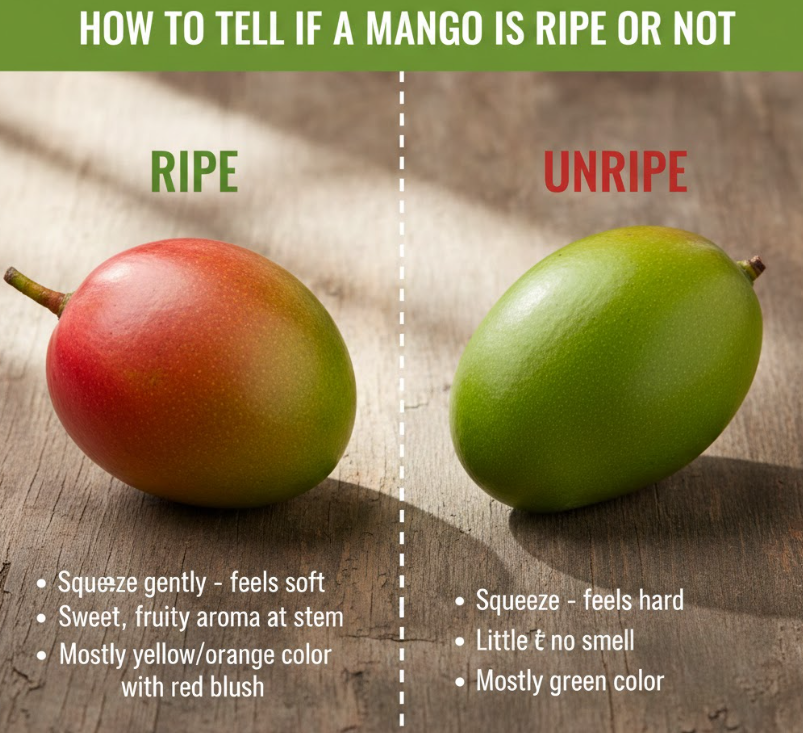
Distinguishing ripe from unripe mangoes can be tricky, especially with green-skinned varieties. Correctly identifying ripeness prevents disappointment from sour or overly mushy fruits. How to tell if a mango is ripe or not involves a combination of visual, tactile, and olfactory assessments.
- Firmness Test: Gently press the mango; unripe mangoes are hard and resist pressure, whereas ripe mangoes yield slightly to gentle squeezing. Avoid overly soft or squishy fruits.
- Skin Color Examination: Although some mangoes remain green when ripe, a subtle change in hue toward yellow, red, or orange often indicates ripeness. Observe the areas near the stem for early ripeness signs.
- Aroma Check: Lack of fragrance generally signals that the mango is not yet ripe. If the mango smells sweet and fruity, it is likely ready to eat.
- Visual Imperfections: Minor wrinkles or slight blemishes are normal and often indicate ripeness, but extensive dark spots or bruises may suggest overripeness.
- Weight Perception: Compare mangoes of similar size; unripe mangoes feel lighter due to lower juice content. Heavier fruits often indicate ripeness and better eating quality.
- Stem Flexibility: A firm stem signifies unripe mango, while slight softness near the stem indicates that the mango is ripening. Avoid stems that are completely shriveled or darkened.
Using these combined methods allows you to avoid unripe or spoiled mangoes, ensuring consistent quality and taste.
Also Read:- How Much to Wrap a Car: Complete Cost Guide
How to Tell if a Mango is Ripe Enough to Eat
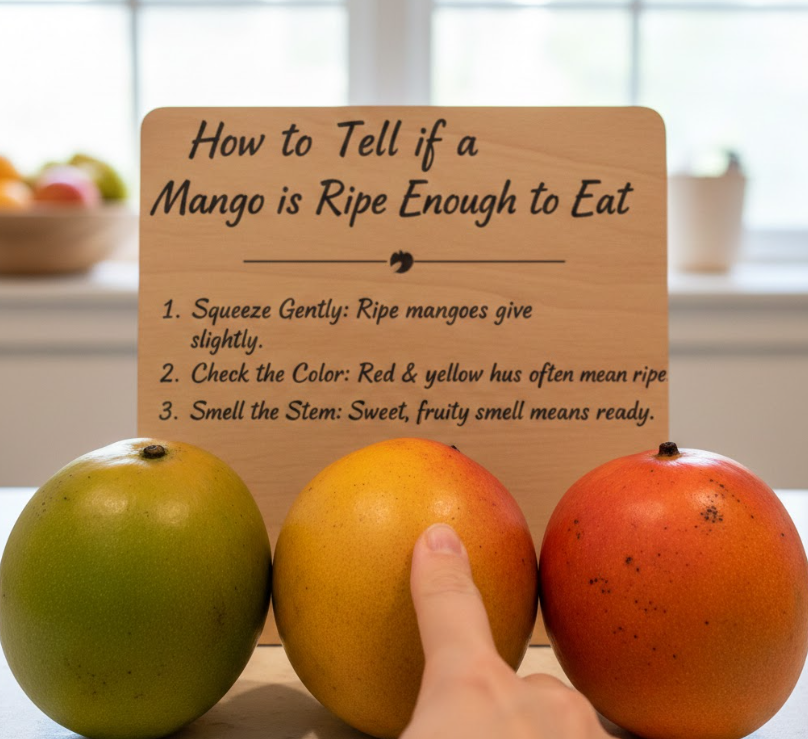
Sometimes a mango may look ripe but is not yet ready to be eaten. Knowing how to tell if a mango is ripe enough to eat ensures maximum flavor without compromising texture. This evaluation includes careful observation, gentle handling, and a keen sense of aroma.
- Visual Color Gradient: Examine the mango for a gradient of colors. Areas of yellow, orange, or red mixed with green often indicate it is approaching ideal ripeness. Fully green mangoes are likely not ready.
- Gentle Pressure Test: Apply light pressure across the mango’s surface. If it gives slightly without being squishy, the fruit is ripe enough to eat. Too hard means underripe, too soft means overripe.
- Smell Assessment: A faint, sweet aroma at the stem suggests ripeness. Strong or fermented scents indicate overripeness, while no scent means the mango is still unripe.
- Texture Observation: Look for subtle wrinkling, which often signifies that sugars have developed and the mango is ready to eat. Smooth, shiny skin may indicate further ripening is needed.
- Weight Check: Hold the mango; if it feels heavier than expected for its size, it indicates proper juice content and readiness to eat. Lighter mangoes may still need ripening.
- Taste Sampling: If uncertain, cut a small slice. Underripe mangoes taste tart, whereas ripe mangoes are sweet, aromatic, and juicy. Sampling is the ultimate test for ripeness.
Evaluating mangoes carefully prevents disappointment and ensures every bite is flavorful, sweet, and juicy.
Also Read:- How to Mix Essential Oils: A Complete Guide for Safe and Effective Blending
How to Tell if a Mango is Ripe and Ready to Eat

A mango that is ripe and ready to eat combines optimal color, aroma, texture, and taste. Choosing such mangoes guarantees maximum flavor whether eaten fresh, blended, or in desserts. Understanding the subtle cues ensures every mango is at its peak.
- Uniform Color Development: Ripe mangoes display vibrant hues with minimal green. Varieties differ, so understanding the type of mango helps assess ripeness.
- Aromatic Signature: Ripe mangoes emit a fragrant, sweet aroma at the stem. This is a reliable indicator of peak readiness.
- Tender Texture: The mango yields gently under pressure without feeling mushy. This tactile assessment ensures the fruit is juicy but firm enough for handling.
- Plump Appearance: Look for a full, rounded shape without shriveled areas. Well-formed mangoes indicate internal ripeness and good sugar concentration.
- Weight and Juiciness: A heavier mango signals high water content and optimal juiciness, confirming readiness to eat.
- Taste Verification: Cutting a slice confirms flavor, sweetness, and texture. A ripe mango is aromatic, soft yet firm, and bursting with natural sugar and juice.
Selecting mangoes with these traits ensures maximum enjoyment and minimizes waste. Perfectly ripe mangoes can elevate salads, desserts, smoothies, and even savory dishes.
Also Read:- How to Make Fajita Seasoning: A Complete Homemade Spice Guide
Conclusion
Knowing how to tell if a mango is ripe ensures that you enjoy the perfect balance of sweetness, juiciness, and flavor. By assessing color, aroma, texture, weight, and taste, you can select mangoes that are ready to eat, ripe enough for desserts, or perfectly sweet for fresh consumption. Understanding these cues also helps reduce food waste and enhances your culinary experience with this tropical fruit.
FAQs
Q1: Can green mangoes ever be ripe?
A: Yes, some varieties like certain Ataulfo mangoes remain green even when fully ripe. Use aroma, texture, and weight as indicators.
Q2: How long does it take for an unripe mango to ripen?
A: At room temperature, it typically takes 2–7 days depending on variety and initial ripeness.
Q3: Can I ripen mangoes in a paper bag?
A: Yes, placing mangoes in a paper bag traps ethylene gas, which accelerates ripening. Adding bananas or apples speeds the process.
Q4: How do I store ripe mangoes?
A: Ripe mangoes can be stored in the refrigerator for up to 5 days to slow further ripening.
Q5: Can I tell ripeness by mango skin color alone?
A: No, color is just one indicator. Aroma, texture, and weight must also be assessed for accurate ripeness detection
Visit For More Information Go To entrepreneurideas