

Learning how to make cold foam at home can instantly upgrade your iced coffee, cold brew, or espresso drinks into café-quality beverages. Cold foam is the light, airy, velvety topping popularized by specialty coffee shops—especially for cold drinks—because it adds creaminess without heaviness.
Unlike hot milk foam, cold foam relies on protein structure, temperature control, and aeration rather than heat. When done correctly, it floats smoothly on top of coffee, enhances flavor balance, and delivers a luxurious mouthfeel. According to coffee science research and barista standards, cold foam also allows better flavor perception because it melts slowly into the drink.
This guide explains how to make cold foam using different tools and ingredients—from frothers to jars, from dairy to dairy-free options—so you can find the method that fits your kitchen and preferences.
How to Make Cold Foam for Coffee
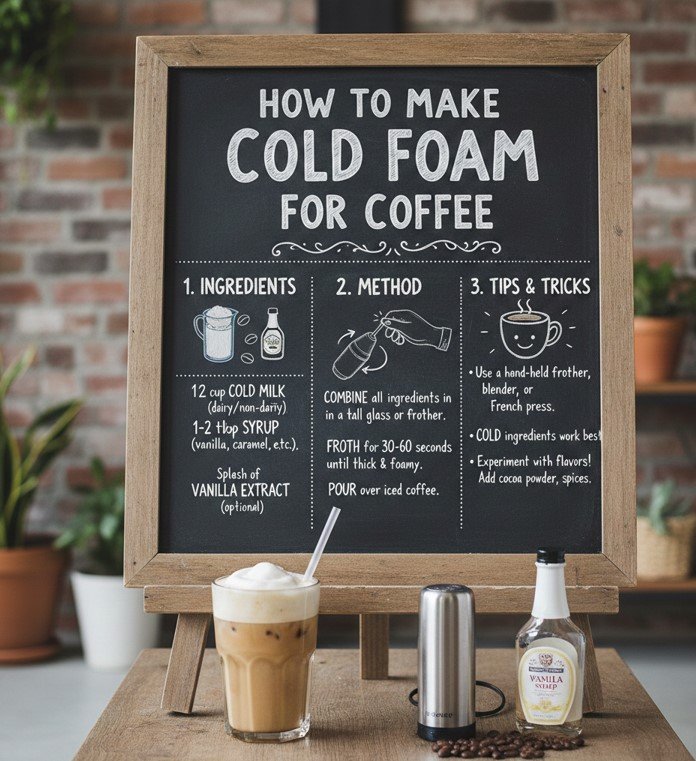
Cold foam is designed specifically to complement coffee, especially iced drinks and cold brew.
Why Cold Foam Works So Well with Coffee
• Enhances Mouthfeel Without Overpowering Flavor
Cold foam adds creaminess and body while allowing coffee’s acidity and aroma to remain present. Unlike whipped cream, it doesn’t mask flavor.
• Floats Naturally on Cold Drinks
Properly aerated cold foam has microbubbles that help it sit on top instead of sinking immediately.
• Balances Bitterness
The foam’s milk proteins and optional sweetness soften bitter notes in espresso and cold brew.
• Improves Temperature Contrast
Cold foam stays cold, preserving the refreshing quality of iced coffee.
• Visually Appealing Layering
Clear separation between coffee and foam enhances presentation.
• Customizable for Different Coffee Styles
Vanilla, caramel, or plain cold foam can match different roasts and brew methods.
Also Read:- How to Make Jello Shots: The Ultimate Step-by-Step Guide for Perfect Results
How to Make Cold Foam at Home
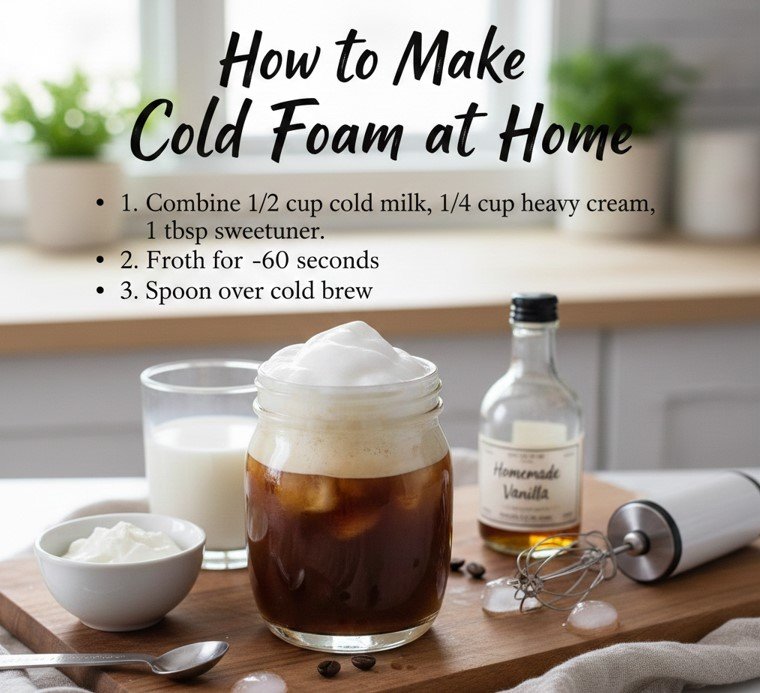
Making cold foam at home is simple once you understand the basic principles.
Core Principles of Homemade Cold Foam
• Cold Ingredients Are Essential
Milk or cream must be cold (ideally below 40°F / 4°C). Cold temperatures stabilize air bubbles and improve foam longevity.
• Protein Content Matters
Milk proteins (casein and whey) trap air. Higher protein equals better foam structure.
• Controlled Aeration Is Key
Too much air creates stiff foam; too little creates flat milk. Aim for fine microfoam.
• Minimal Ingredients Work Best
Classic cold foam uses just milk (and optional sweetener).
• Short Mixing Time
Over-mixing breaks down bubbles and turns foam watery.
• Immediate Use Is Ideal
Cold foam is best poured fresh before bubbles collapse.
Also Read:- How to Draw Stitch (Complete Beginner-to-Pro Drawing Guide)
How to Make Cold Foam with Milk
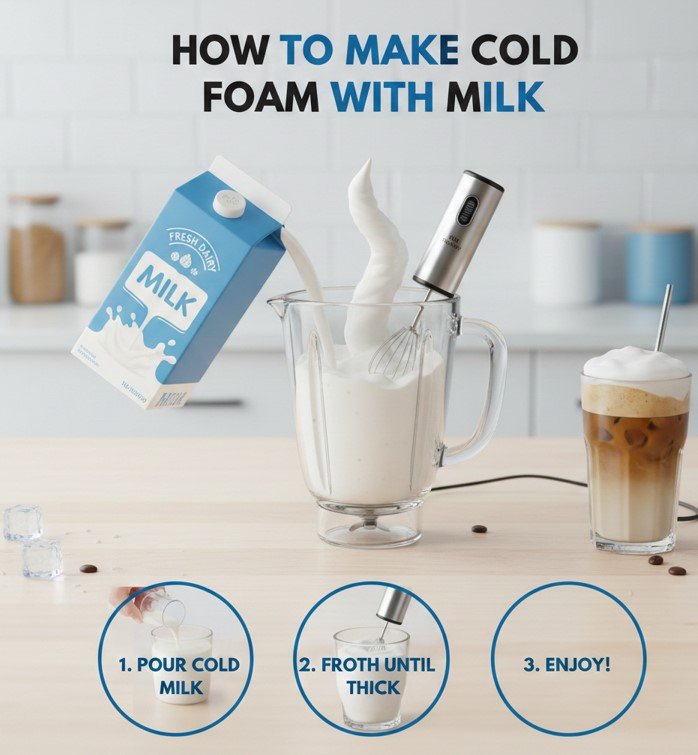
Milk-only cold foam is the most common and versatile option.
Choosing the Right Milk for Cold Foam
• 2% Milk Is the Gold Standard
It balances fat and protein, producing stable foam with a creamy texture.
• Whole Milk Creates Richer Foam
Higher fat adds creaminess but slightly reduces foam volume.
• Skim Milk Foams the Most
High protein, low fat creates large volume but thinner mouthfeel.
• Ultra-Filtered Milk Foams Better
Brands with higher protein content produce superior foam.
• Lactose-Free Milk Still Works
Protein remains intact, so foaming ability is preserved.
• Avoid Warm or Room-Temperature Milk
Warm milk collapses foam quickly.
Also Read:- How to Delete Stickers on iPhone (Complete Step-by-Step Guide)
How to Make Cold Foam with Frother
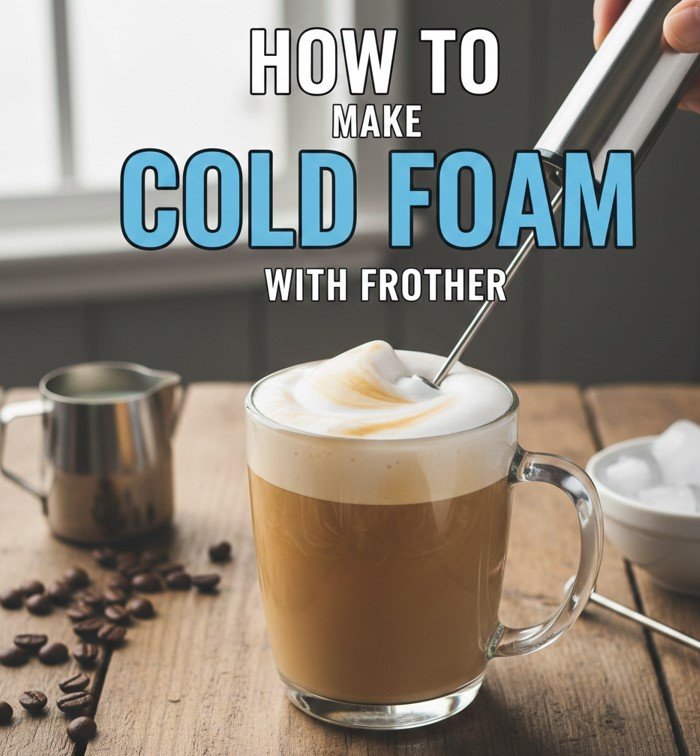
A handheld or electric frother is the easiest and most consistent tool.
Frother-Based Cold Foam Method
• Use a Tall, Narrow Container
This helps incorporate air evenly and prevents splashing.
• Submerge Frother Just Below Surface
This position pulls air in without over-whipping.
• Froth for 15–25 Seconds
Stop when foam thickens but remains pourable.
• Tilt Container Slightly
This improves vortex formation and microbubble creation.
• Avoid Over-Frothing
Too much air creates stiff foam that won’t pour.
• Pour Immediately Over Coffee
Fresh foam has the best texture and stability.
Also Read:- How to Descale a Keurig (Complete Expert Maintenance Guide)
How to Make Cold Foam Without a Frother
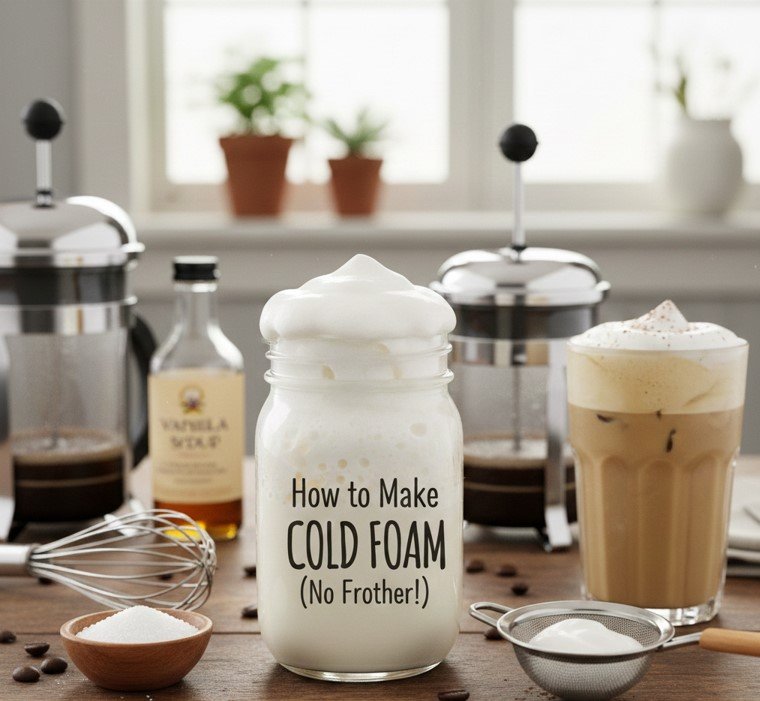
You don’t need special equipment to make good cold foam.
No-Frother Cold Foam Methods
• Mason Jar Shake Method
Add cold milk to a jar, seal tightly, and shake vigorously for 30–45 seconds.
• French Press Technique
Pump the plunger up and down rapidly to aerate milk.
• Blender Method
Pulse briefly—avoid high speed to prevent over-aeration.
• Whisk Method (Manual)
Works in a pinch but requires effort and consistency.
• Protein Shaker Bottle
The internal wire ball helps trap air effectively.
• Texture Control Requires Practice
Manual methods need attention to avoid foam collapse.
Also Read:- How to Drop a Pin: The Complete Step-by-Step Location Sharing Guide
How to Make Cold Foam Without Heavy Cream
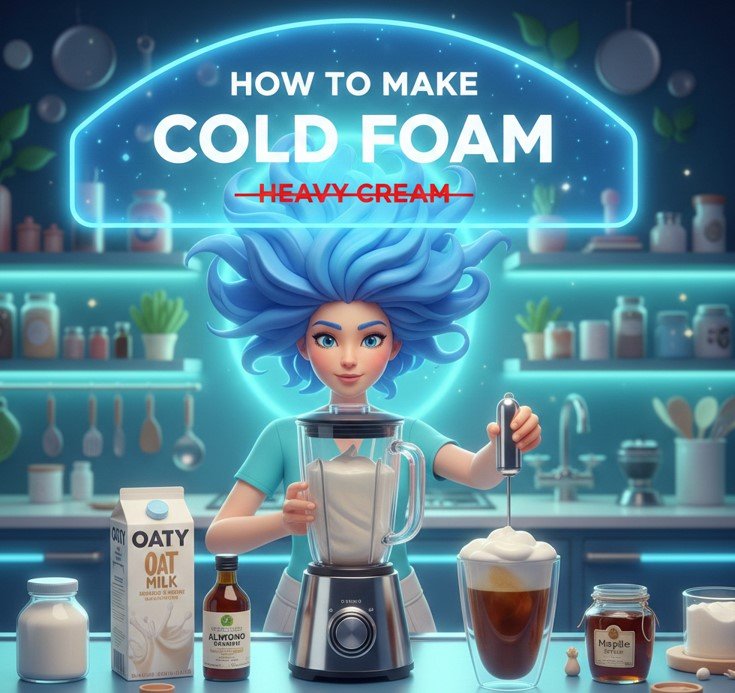
Cold foam does not require heavy cream—many café versions avoid it entirely.
Cream-Free Cold Foam Explained
• Milk Proteins Do the Work
Foam structure comes from protein, not fat.
• Lower Calories, Lighter Texture
Cream-free foam is less dense and more refreshing.
• Better Flavor Clarity
Coffee flavors shine without heavy dairy richness.
• Works with Sweetened or Unsweetened Milk
Sweetness is optional and adjustable.
• More Stable for Cold Drinks
Cream can sink faster in iced beverages.
• Ideal for Daily Coffee Drinkers
Less richness means easier digestion and balance.
Also Read:- How to Cook Green Beans: The Complete Healthy Cooking Guide for Every Method
How to Make Cold Foam at Home Without Heavy Cream (Dairy-Free Options)
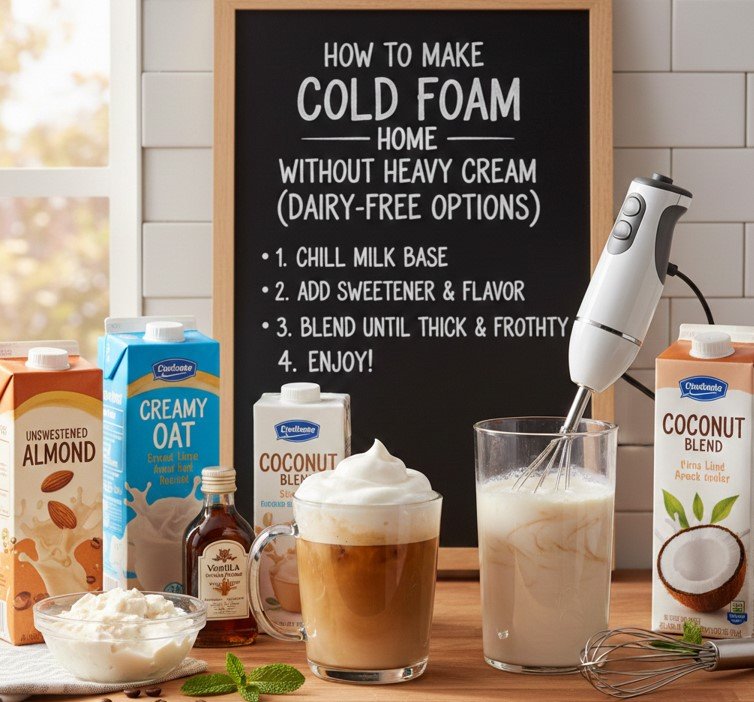
Plant-based cold foam requires specific choices.
Non-Dairy Cold Foam Tips
• Oat Milk (Barista Version) Works Best
Added proteins and stabilizers improve foam quality.
• Soy Milk Foams Reliably
High protein content makes it one of the best alternatives.
• Almond Milk Is Tricky
Lower protein means less stable foam—use barista blends.
• Coconut Milk Creates Thin Foam
Best for flavor, not structure.
• Add Sweetener Sparingly
Sugar affects bubble stability.
• Expect Faster Collapse Than Dairy
Use immediately for best results.
Also Read:- How to Clean TV Screen Safely Without Damaging It (Complete 2026 Guide)
Conclusion
Mastering how to make cold foam gives you café-level control over your coffee at home. By understanding milk proteins, temperature, and aeration, you can create smooth, stable foam using simple tools—whether you prefer dairy or non-dairy options, frothers or jars. Cold foam isn’t just a trend; it’s a practical, delicious upgrade to everyday coffee.
FAQs
Why won’t my cold foam thicken?
The milk may be too warm, too low in protein, or over-mixed.
Can I sweeten cold foam?
Yes—use simple syrup or flavored syrups sparingly.
How long does cold foam last?
It’s best used immediately; foam collapses within minutes.
Visit For More Information Go To entrepreneurideas